August 30, 2026
674,207 Federal Employees Answered the Last OPM-Run Survey. The New 10-Question Core Cannot Recreate Its Main Indices.
OPM's last centrally run workforce survey received 674,207 responses. The decentralized 2026 core preserves 10 comparable questions, but not the complete Employee Engagement or Global Satisfaction indices.
By Evan Mercer
Published August 30, 2026Last edited August 30, 2026
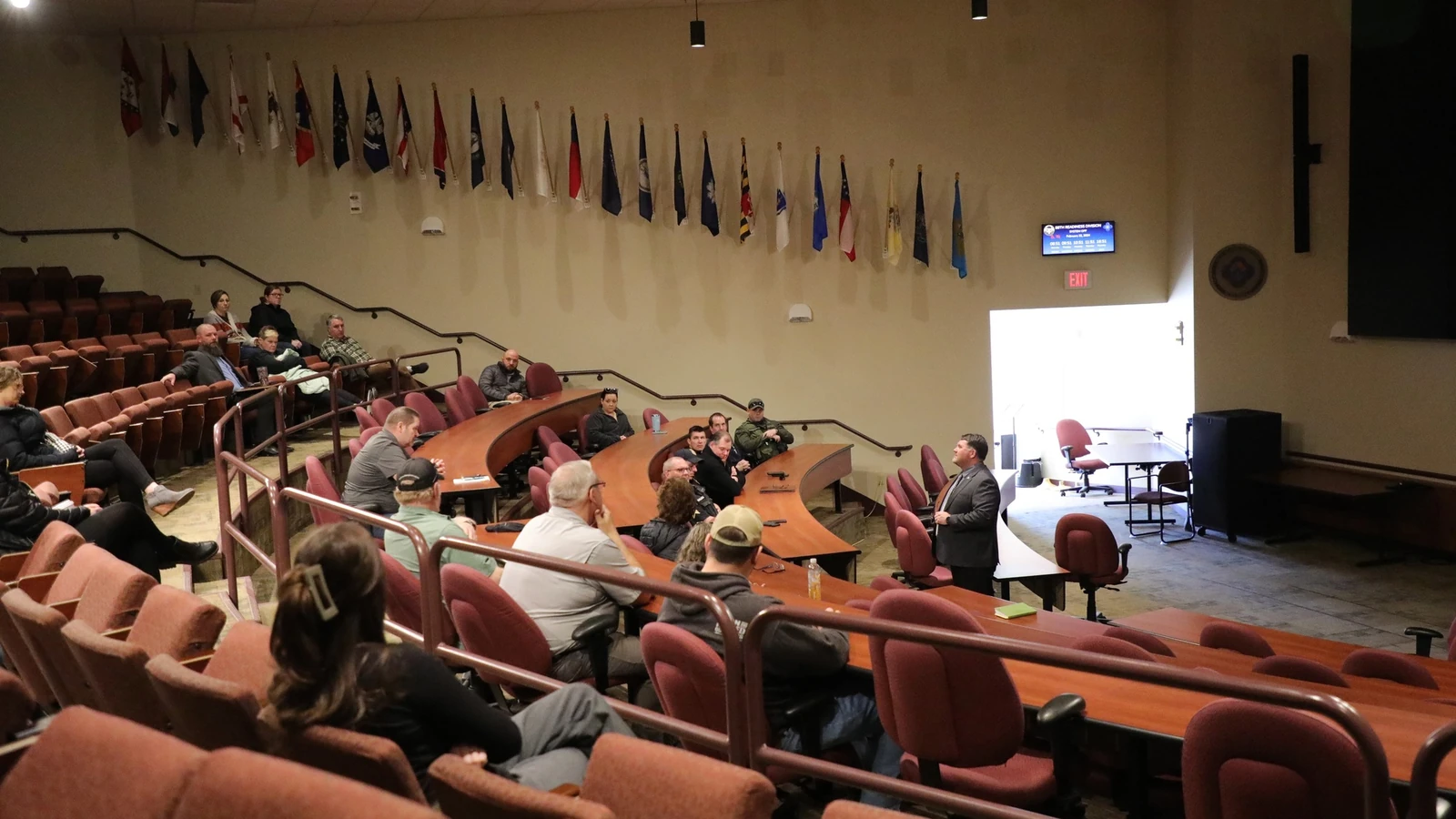
The last workforce survey run across the federal government by the Office of Personnel Management invited 1,645,841 employees and received 674,207 responses.
That 2024 response pool was the largest in at least a decade. It gave agency leaders, Congress, employees and researchers one instrument, one administration period and one governmentwide reference point for questions about leadership, workload, accountability, job satisfaction and pay.
OPM will not run that survey again in 2026.
In a July 9 memorandum, OPM Director Scott Kupor told agencies to administer their own annual employee surveys beginning with the 2026 cycle. Agencies may choose the timing, approach and methodology that fit their needs. They are supposed to collect a common set of 10 proposed questions and send those results, plus information about their methods, to OPM and the Office of Management and Budget within 90 days after each survey ends.
That is not the same as abandoning governmentwide measurement. If agencies use the common questions and submit usable results, OPM can compare answers to those questions. Agencies can also retain more of the old survey on their own.
But FederalHiringData's review found a consequential break in the minimum design: the 10-question common core does not contain the complete questions needed to calculate either of the old survey's two best-known measures, the 15-item Employee Engagement Index or the four-item Global Satisfaction Index. Unless agencies voluntarily repeat the missing questions in a sufficiently consistent way, the core cannot extend those headline benchmarks.
The distinction matters because OPM is changing two things at once. The administration is moving from one centrally operated survey to many agency-run surveys. A related regulatory proposal would cut the mandatory question set from 16 to 10. The first change is already in OPM's 2026 operating instructions. The second was still a proposed rule as of Aug. 30, not a final regulation.
The result is narrower continuity than either side of the debate sometimes suggests. Comparable governmentwide data need not disappear. Yet the government is no longer guaranteed to produce the same broad, centrally administered evidence that turned millions of employee responses into a 15-year public record.
The last central survey was a 674,207-response operation
OPM conducted the 2024 Federal Employee Viewpoint Survey from May 20 through July 5. Its technical report describes a governmentwide census: eligible employees onboard as of November 2023 were invited, rather than a sample being drawn from the workforce.
The official response-rate workbook reports:
| 2024 measure | Count |
|---|---|
| Employees invited | 1,645,841 |
| Responses | 674,207 |
| Governmentwide response rate | 41.0% |
| Named organizations in the workbook | 85 |
| Separate governmentwide total rows | 1 |
The organization count corrects a small but revealing error in recent coverage. One account described the survey as covering 86 agencies. The official workbook contains 85 named organization rows and a separate row labeled Governmentwide. Counting that total as another agency produces 86, but it is not an additional organization.
The workbook's organization list is broader than cabinet departments and is not a clean count of independent agencies. Defense appears as an overall organization and also through the Army, Navy, Air Force and Fourth Estate. Small independent bodies also appear. Those rows should not be added together as though every one were mutually exclusive.
What is clear is the scale. FederalHiringData compiled OPM's annual management reports and response-rate files from 2015 through 2024. They contain 5,303,913 responses over those 10 administrations. Annual responses rose from 421,748 in 2015 to 674,207 in 2024, an increase of 59.9%.

Invitations nearly doubled over the same period, from 848,237 to 1.65 million. That growth is one reason raw response counts cannot substitute for response rates. A larger survey can collect more answers even while reaching a smaller share of the invited population.
The governmentwide response rate was 52.2% in 2010 and 41.0% in 2024. It reached a low of 33.8% in 2021, then rose in each of the next three administrations.

That line needs two cautions. OPM made major questionnaire and administration changes in 2020. In 2021 it sampled employees at the 10 largest agencies while continuing census administration at most others. The 2021 invitation total therefore fell to 865,425 and is not directly comparable with the census totals around it.
The old central system did not make every agency equally visible. In 2024, Defense's overall row contained 181,361 responses, while three organizations reported fewer than 10 and had their rates suppressed. Among the 82 named organizations with numeric response rates, the median was 64.7%. Four were below 30%, and 12 were below 40%.

The differences did not invalidate the survey. OPM weighted responses to represent the eligible workforce and published technical documentation. But they show why one questionnaire alone is not enough. Governmentwide comparison also depends on aligned eligibility, field periods, follow-up, weighting and disclosure rules.
The main indices are not inside the new core
The 2024 questionnaire had 112 items, including 20 demographic questions. OPM retained questions required by regulation and the questions used in its regularly reported indices.
The Employee Engagement Index measured conditions associated with engagement through 15 questions divided among three subindices: Leaders Lead, Supervisors and Intrinsic Work Experience. The Global Satisfaction Index averaged four questions: satisfaction with one's job, pay and organization, plus whether the employee would recommend the organization as a good place to work.
Related research
Put this finding in context

Federal workforceAugust 29, 2026
Nearly One in Three OPM-Covered Federal Employees Was in the Excepted Service
The excepted service held 649,975 covered employees before the 2026 policy-career transfers, with nearly half working at Veterans Affairs.

Federal workforceAugust 29, 2026
17 Federal Watchdog Offices Lost 1,787 Employees. 27 Inspector General Posts Are Vacant.
FederalHiringData found an 18% headcount decline across 17 measurable watchdog offices while 27 Inspector General posts remained vacant.
Those measures created a recognizable historical signal. The Employee Engagement Index moved from 66 in 2010 to 73 in 2024. Global Satisfaction was 67 in 2010 and 65 in 2024, with substantial movement between those endpoints. The series should not be treated as perfectly unchanged because the instrument shifted, especially in 2020, but OPM kept publishing the index definitions and agency results.

The proposed 2026 core asks whether managers communicate organizational goals, coworkers cooperate, performance differences are recognized, supervisors provide feedback and accountability, employees understand how their work relates to agency goals, employees feel empowered, workers can report violations without fear, and agencies address poor performance.
Those are substantive workplace questions. Several overlap with themes measured by the old survey. They do not, however, reproduce the complete 15 questions in the Employee Engagement Index. None of the four Global Satisfaction questions appears in the proposed common core.
| Measure | Item count | Reproducible from the 10-question core alone? |
|---|---|---|
| 2024 full survey | 112 | No, the core is a much smaller instrument |
| Employee Engagement Index | 15 | No, the complete item set is absent |
| Global Satisfaction Index | 4 | No, all four satisfaction items are absent |
| 2026 common core | 10 | Yes, for those 10 questions if methods and submissions support comparison |

That finding is narrower than saying there will be no governmentwide survey evidence. OPM's proposed common-form notice says agencies will submit prescribed-question results annually so the government can compare agencies. The 10 shared questions can create a new common series.
It is also stronger than a simple concern that agencies might phrase questions differently. Even if every agency uses the 10 questions word for word, the old headline indices cannot be calculated from those questions alone. Preserving them requires agencies to add the missing items, field them consistently and make the results available in a form that can be combined.
OPM could later publish guidance or a product that restores more continuity. Agencies could coordinate voluntarily. A final rule could change from the proposal. As of publication, none of those possibilities was a demonstrated governmentwide replacement for the complete old indices.
The rule is proposed; decentralization is already directed
The legal and operational status can be confusing because the documents overlap.
On July 2, OPM published a proposed rule to revise strategic human-capital requirements and reduce annual employee survey questions from 16 to 10. The public-comment period closed Aug. 3. The federal government's current regulatory agenda still listed the measure at the proposed-rule stage as of Aug. 30.
One week after the proposal appeared, OPM issued its administration memo. It said that, starting with the 2026 cycle, agencies are responsible for their own surveys and OPM will no longer administer the Federal Employee Viewpoint Survey. At a minimum, the memo says, surveys "should capture" responses to the 10 proposed questions.
That memo makes decentralization the present operating instruction even though the regulatory wording is not final. It does not turn the proposal into a final rule. An agency remains responsible for complying with the annual survey law and existing regulation while following OPM's 2026 guidance.
OPM's public rationale is that the central survey became too long, slow and detached from agency action. In a July essay titled Measure What Matters, Kupor wrote that the government postponed the survey in 2025 and would stop centrally administering it. He argued for shorter, more frequent and more actionable measurement rather than what he characterized as an annual popularity contest.
That critique has force. A 112-item survey administered once a year can take substantial employee time, and a governmentwide score does not tell a manager why a work unit is struggling. An agency may learn more from a focused pulse survey tied to a specific operational problem.
But speed and local relevance do not automatically replace a common public benchmark. A cabinet department can improve its own survey while making it harder to compare with another department. An agency can change eligibility or timing for valid local reasons and still create a break in the national series.
The most accurate description is not that OPM stopped measuring. It changed who operates the surveys, narrowed the minimum common content and shifted more methodological responsibility to agencies.
Federal Hiring Data Weekly
Get the biggest federal workforce changes in your inbox.
Subscribe to Federal Hiring Data Weekly for federal hiring trends, salary data, agency movements, and original investigations, with email confirmation before delivery.
Six choices can change what an agency result means
OPM's Employee Survey Playbook gives agencies a practical sequence for designing and fielding their surveys. It also exposes the number of choices that used to be held more centrally.
An agency may survey every eligible employee or draw a sample. It may use an anonymous open link or confidential unique links. It defines eligibility, including onboarding cutoffs, employee categories, leave status and which organizational components participate. It chooses timing, added questions, communications, reminders, nonresponse analysis and reporting.

None of those choices is inherently improper. Census administration can support small-unit reporting but creates more invitations. Sampling can reduce burden while producing statistically sound estimates if the design and weighting are strong. Unique links can support reminders and response-rate analysis; anonymous access may affect employee trust. A short survey can improve completion while omitting context an agency needs.
The comparability risk comes from variation. Suppose one agency surveys all permanent employees in April, another samples employees in July, and a third excludes workers onboard less than six months. Their answers to an identical question may each be useful. They do not necessarily represent the same population or conditions.
OPM's memo requires agencies to submit methodology along with common-question results. That is an important safeguard. A public governmentwide product would need to use those methods, apply appropriate weights and disclose where designs differ. Merely averaging agency percentages would give a small agency the same influence as a department with hundreds of thousands of employees and could ignore sampling error.
The playbook also assigns work that spans survey management, HR or people analytics, statistics, privacy, legal review, information technology, communications, leadership and Paperwork Reduction Act compliance. It recommends beginning governance and platform decisions eight to 12 weeks before launch, finalizing items and privacy materials six to eight weeks before launch, preparing communications four to six weeks before launch, and allowing two to six weeks after closing for analysis and reporting.
OPM's proposed common-form notice estimates 619,184 annual respondents, 20 minutes per response and 206,395 burden hours. That is respondent burden, not the labor hours required to build dozens of agency survey programs. The public record does not provide a reliable governmentwide cost for administration.
OPM offers survey design, administration, analysis and reporting through its Human Resources Solutions organization, including reimbursable support. That gives agencies a path to shared expertise. It also means the degree of central consistency may depend partly on which agencies purchase or adopt the same services.
The transition arrives while the broader federal HR workforce is smaller. FederalHiringData's local OPM data shows combined Human Resources Management and Human Resources Assistance employment fell from 51,163 in December 2024 to 41,711 in May 2026, a decline of 18.5%.
Those occupation series cover far more than survey work, so the decline cannot be called a loss of 9,452 survey specialists. It is useful only as capacity context: agencies are taking on additional survey design and governance choices while the broad HR workforce that may support those functions has contracted.
What remains public is still unsettled
The old OPM system produced more than an annual press release. Its governmentwide reports published item results, indices, trend tables and agency-size comparisons. Its data reports allowed agency and demographic comparisons. Public-use files supported independent analysis subject to privacy protections.
As of Aug. 30, those OPM pages still ended with the 2024 administration. FederalHiringData did not find a public OPM governmentwide 2025 or 2026 result file, a central list of agency-run 2026 surveys, or a published cross-agency replacement index. That does not prove agencies have not fielded surveys. Results may not yet be complete, and agency materials may appear on separate sites.
The Partnership for Public Service launched a nongovernmental Public Service Viewpoint Survey in 2025 to fill part of the gap. It says it replicated the old methodology where possible. The effort can provide evidence, but it is not an OPM administration, does not carry the same participation structure and cannot by itself satisfy the government's statutory survey requirements.
For Congress, the loss at risk is a common oversight baseline. A committee can ask whether one agency's engagement or satisfaction changed relative to governmentwide conditions only if the measures, populations and timing remain comparable.
For researchers, the issue is continuity. A 2026 answer to a new common question can begin a useful series but cannot be spliced into an old index simply because both concern engagement. A break must be marked, definitions preserved and any bridge study documented.
For job seekers, employee-survey data has never been a guarantee of workplace experience. Large agencies contain very different components, occupations and supervisors. Still, a transparent agency result can provide context unavailable in a vacancy announcement: whether employees understand mission goals, trust supervisors, feel empowered or would recommend the organization.
Agency-specific surveys could improve that context if they publish more timely and granular results. They could weaken it if results remain internal, methods differ without clear notes, or only favorable measures are released. The decentralization itself does not determine which outcome occurs. Publication rules, common data standards and agency practice will.
The proposed regulation would require agencies to post survey results publicly within 120 days after completion. Because that rule was not final as of Aug. 30, readers should not treat the proposed deadline as an existing result guarantee. The July memo requires submission to OPM and OMB within 90 days but does not establish a central public dashboard.
A useful replacement system would therefore need more than a folder of agency PDFs. It would need a machine-readable file for the common questions, a population count for each survey, field dates, response and completion rates, sampling and weighting notes, suppression rules and stable organization identifiers. Without those fields, analysts could see an agency percentage but could not determine whether it represents all eligible employees, a sample or a differently defined workforce.
Versioning matters too. If an agency changes a question, answer scale or eligibility rule, a public file should identify the break rather than silently extending the old series. OPM did this imperfectly but visibly in its technical reports. The decentralized model can preserve that discipline if OPM publishes a data dictionary and validates submissions before combining them.
There is also a timing tradeoff. A survey released quickly at one agency may be more operationally useful than a governmentwide report released later. But agencies fielding surveys in different months can capture different policy, budget and workplace conditions. A national comparison should disclose those windows instead of presenting every score as though employees answered on the same day.
Methodology and limitations
FederalHiringData reviewed OPM's July 9 memorandum and attached Employee Survey Playbook, the July 2 proposed rule, the related proposed common-form information collection, OPM's current regulatory status, 2010-2024 governmentwide management reports, the 2024 technical report and official response-rate workbooks.
Invitation, response and response-rate totals were preserved in their published units. The 2015-2024 response sum is a FederalHiringData calculation across annual administrations, not a count of unique people; the same employee may have answered in multiple years. The 2024 organization count excludes the separate governmentwide total and does not imply all organization rows are mutually exclusive.
Index charts use published governmentwide percent-positive scores. They mark the 2020 instrument and administration change and the 2021 sampling departure. No causal claim is made from movement in those scores.
The index-continuity finding compares the complete published item sets for the 15-item Employee Engagement Index and four-item Global Satisfaction Index with the 10 proposed common questions. It does not assume agencies will ask only 10 questions. It says the minimum common core alone is insufficient to calculate the complete legacy indices.
HR capacity uses OPM-covered headcount in occupational series 0201 and 0203. It excludes some federal populations and is not a count of survey professionals. The common-form burden estimate describes respondent time, not administrative cost.
FederalHiringData found no central public 2026 result set by Aug. 30. Absence from the reviewed OPM pages is not proof that no agency has collected or published information elsewhere.
Research, calculations, writing, headline testing and graphics used no OpenAI API calls.
OPM's old survey was imperfect, long and sometimes slow. It was also a shared measurement system that accumulated more than 5.3 million responses in its final decade. The 2026 model can produce faster local evidence and still preserve 10 common questions. Whether it also preserves a trustworthy national workforce record now depends on choices dozens of agencies make separately - and on what OPM ultimately requires, combines and publishes.
Related research
More from FederalHiringData

Hiring processAugust 30, 2026
AI May Screen Federal Resumes. OPM Says Human Review Cannot Be a Rubber Stamp.
OPM now permits AI-assisted resume screening and scoring under strict human-review conditions. FederalHiringData measures the hiring system and workforce behind that safeguard.

Data investigationsAugust 26, 2026
The Treasury Sanctions Office's Last Comparable Public Staffing Count Was 204. The Sanctions System Kept Expanding.
OFAC's last comparable office-specific public series ended at 204 actual FTE, while sanctions programs, list entries and operational demands continued to expand.

Data investigationsAugust 26, 2026
DOJ Runs 1,663 Task Forces. The Four Components Leading Them Have Shed 3,444 Employees Since 2024.
DOJ's task-force network extends federal authority through thousands of nonfederal officers, but public records cannot measure the full hybrid workforce.
Federal Hiring Data Weekly
Get the biggest federal workforce changes in your inbox.
Subscribe to Federal Hiring Data Weekly for federal hiring trends, salary data, agency movements, and original investigations, with email confirmation before delivery.