August 25, 2026
The Civil Rights RIF Was Rescinded. OCR's Workforce Still Fell 50%.
Education rescinded its Office for Civil Rights RIF, but OPM data show the component had 298 fewer covered employees by June 2026 as complaint timeliness worsened.
By Evan Mercer
Published August 25, 2026Last edited August 25, 2026
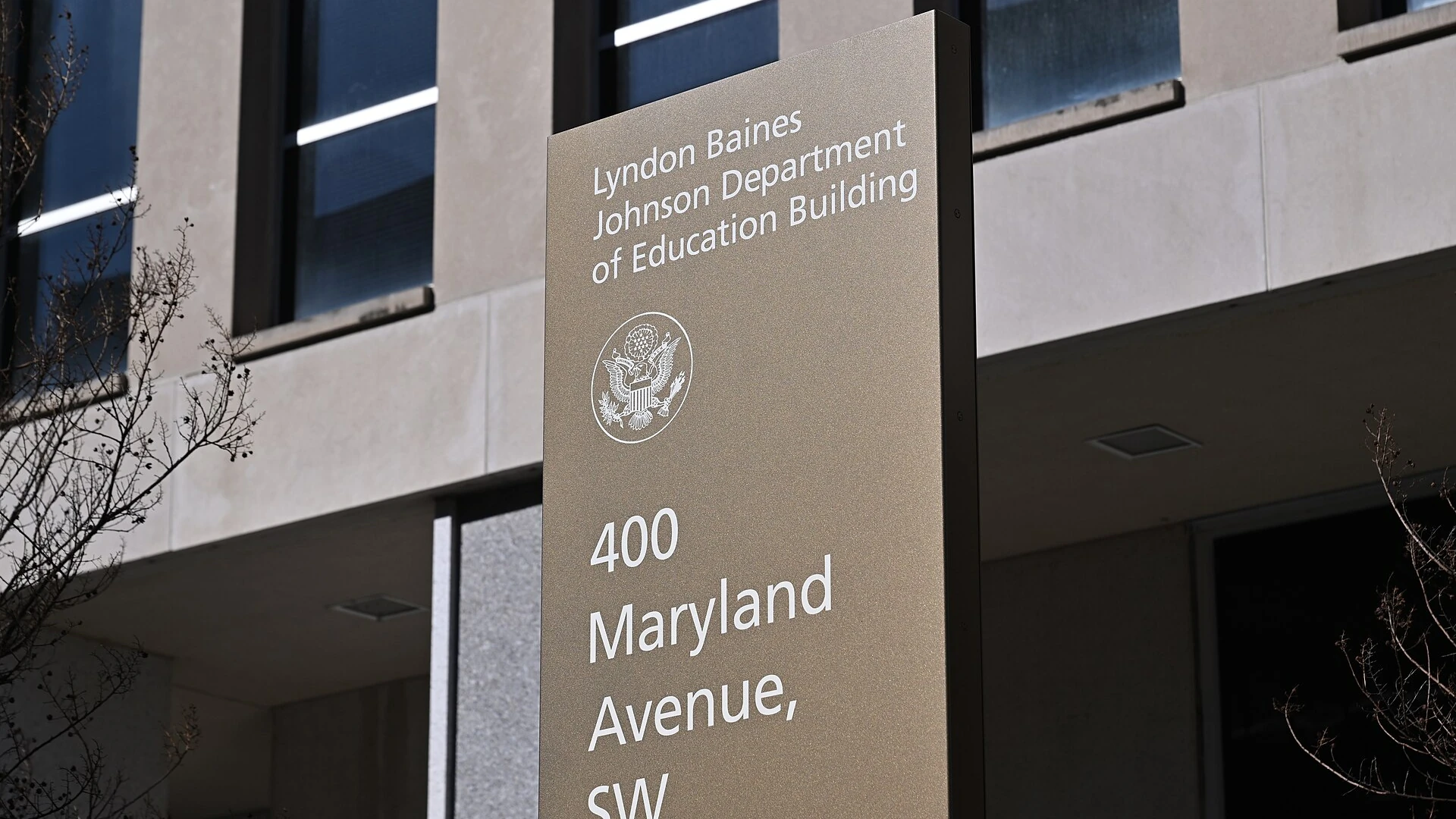
The Education Department rescinded its attempt to cut nearly half of the Office for Civil Rights in January 2026. That did not restore the office shown in public workforce data.
The Office of Personnel Management counted 598 covered OCR employees in January 2025. By June 2026, it counted 300. The loss of 298 employees, or 49.8%, closely resembles the scale of the abandoned reduction-in-force plan, but the two figures cannot be treated as a roster match. OPM publishes coded employment aggregates, while the Government Accountability Office tracked specific RIF notices, paid leave and legal events. Reassignment or coding changes may be part of the difference.
The operational evidence is less ambiguous. OCR still operated from five regional offices after seven of twelve offices were closed and their caseloads reassigned. Its general-attorney count fell from 456 to 209. The share of newly received complaints resolved within 180 days declined from 70% in fiscal 2024 to 62% in fiscal 2025, then to 55% in the first quarter of fiscal 2026. The share of older inventory that had already exceeded 180 days moved in the opposite direction, from 61% to 72.5% and then 77%.
Education told GAO that OCR kept up with its workload and met its mission while hundreds of employees were barred from working. The office did continue closing cases. From March 11 through Sept. 23, 2025, it resolved 7,072 complaints. That is meaningful counterevidence to a simple shutdown narrative.
It is not proof that capacity was unchanged. Resolution totals do not disclose investigative depth, wait times for every case, regional strain or complainant experience. The best available public measures show an office that kept processing complaints while its staff, geographic footprint and timeliness deteriorated.
A RIF notice became months of paid leave
The sequence began on March 11, 2025, when Education announced a department-wide reduction in force and restructuring. According to GAO-26-108320, OCR issued RIF notices to 299 of its roughly 575 staff. On March 21, those employees were placed on paid administrative leave and prohibited from working.
The plan would have closed seven regional offices and separated the affected employees in early June. Litigation changed the schedule. A broad injunction was issued May 22. A second injunction focused on OCR followed June 18. The Supreme Court stayed the broader injunction on July 14, while the OCR order remained in place until the U.S. Court of Appeals for the First Circuit stayed it on Sept. 29.
Education then planned to reinstate about 260 employees who had not voluntarily left. GAO reported that 85 were reinstated in September. In October, Education issued another 137 RIF notices. By Nov. 21, GAO counted 446 OCR staff, 384 of whom had received a RIF notice during one of the two rounds. Of the original 299 recipients, 247 remained on leave and 52 had departed.
The department began recalling the 247 employees in December. As of Dec. 16, 85 had been recalled. In early January 2026, Education rescinded the RIF notices and reinstated the affected positions of record. It did not provide GAO with the final number of people who returned.
That last distinction matters. Rescinding a personnel action restores positions and removes the planned involuntary separation. It does not establish that every employee returned, remained in OCR, or was captured under the same component code in later public data.

The OPM series shows the workforce beginning to decline before the March notices. OCR had 605 covered employees in December 2024, 598 in January 2025 and 581 in March. It fell to 503 in June, 447 in October and 403 in December. After the RIF was rescinded, the count continued downward: 351 in January 2026, 327 in February and 300 in June.
OPM personnel-action files show large separation months in March, September and December 2025, with 51, 48 and 88 separation actions respectively. Accessions were nearly absent. From April through October, the public file recorded no OCR accessions. Personnel actions can include more than one action for a person, so they are most useful for timing rather than a unique-person total.
Public data put OCR at half its January 2025 workforce
The 2025 reduction was not merely a return from an unusually high OCR staffing peak. FederalHiringData reconstructed the component's covered employment from OPM legacy FedScope files and current Federal Workforce Data, using component code EDEC.
OCR had 529 covered employees in September 1998. Its September count remained between 478 and 550 from 1999 through 2015, then rose to 584 in 2016. It reached 598 in September 2024. The June 2026 count of 300 was lower than every annual September observation in the reconstructed series.
The Education Department also shrank sharply. Its covered employment fell from 4,111 in January 2025 to 2,279 in June 2026, a 44.6% reduction. OCR's 49.8% decline was steeper.

These counts are not budgeted full-time equivalents. Headcount is a point-in-time count of covered employees under a public organizational code. FTE measures labor time over a fiscal year. Education's fiscal 2027 budget justification reports 530 actual OCR FTE in fiscal 2025 and requests 271 for fiscal 2027. Those measures describe the same organization from different accounting perspectives and should not be substituted for one another.
The budget request also moves OCR funding from $140 million in fiscal 2025 and fiscal 2026 to $91 million in fiscal 2027. Personnel compensation and benefits would move from $105.95 million in fiscal 2025 to $62.503 million under the request. A request is a policy proposal, not an enacted staffing result. It nevertheless shows that the current planning baseline is far below the office that entered 2025.
Attorneys accounted for most of the occupational loss
OCR is a civil-rights enforcement office, and its workforce was heavily concentrated in legal work. General attorneys fell from 456 in January 2025 to 209 in June 2026, a decline of 247 employees or 54.2%. That occupation alone accounted for 82.9% of OCR's net headcount reduction.
Equal opportunity compliance employees fell from 61 to 33. Information-technology employees fell from eight to three. Smaller administrative, clerical and paralegal series also declined.
| Selected occupation | January 2025 | June 2026 | Change | Percent change |
|---|---|---|---|---|
| General attorney | 456 | 209 | -247 | -54.2% |
| Equal opportunity compliance | 61 | 33 | -28 | -45.9% |
| Management and program analysis | 15 | 11 | -4 | -26.7% |
| Clerks and assistants | 12 | 9 | -3 | -25.0% |
| Paralegal specialist | 12 | 9 | -3 | -25.0% |
| Administrative officer | 10 | 7 | -3 | -30.0% |
| Information technology | 8 | 3 | -5 | -62.5% |
| Statistician | 5 | 5 | 0 | 0.0% |

Occupation counts do not reveal required staffing. They also do not show contractors, detailees or legal support provided elsewhere in Education. The figures do establish that the contraction reached the occupational series most directly associated with reviewing allegations, applying civil-rights law and negotiating remedies.
The public data also cannot show which legal specialties were lost. OCR enforces statutes covering race, color, national origin, sex, disability and age across schools and education programs receiving federal assistance. An attorney count does not identify experience with Title VI, Title IX, disability law, data analysis or complex systemic investigations.
The workforce pipeline narrowed faster than the permanent ranks
The tenure data show a broad reduction and a much sharper loss in the group containing career-conditional employees and people serving probationary or trial appointments.
Permanent employees with unrestricted tenure fell from 512 in January 2025 to 277 in June 2026, a 45.9% decline. The conditional, probationary or trial group fell from 76 to 13, an 82.9% decline. Term and provisional employment increased from two to six, far too little to offset either loss.

Tenure group 2 is not synonymous with young, entry-level or newly hired staff. It includes career-conditional employees and other workers serving probationary or trial periods, including some people moving into new roles. It is still a useful measure of the layer through which an organization brings in employees and develops future permanent staff.
Length-of-service data point in the same direction. Employees with less than five years of federal service fell from 187 to 54, a 71.1% reduction. The group with five to 9.9 years fell from 116 to 58. Employees with 10 to 19.9 years fell from 143 to 99, while those with at least 20 years fell from 152 to 89.
The loss was therefore not limited to one career stage. OCR had fewer newer employees and fewer long-serving employees. Employees under age 40 fell from 184 to 71. Those age 55 or older fell from 134 to 87. Public aggregates cannot identify who held particular institutional knowledge or leadership responsibilities, but they show that both succession depth and experienced capacity narrowed.
Complaint demand had already reached record levels
OCR's staffing change came after the office received its highest annual complaint total in the available reports. It recorded 22,687 complaints in fiscal 2024, up from 19,201 in 2023 and 18,804 in 2022. The 2024 total was more than twice the 9,992 received in 2014.

Complaint receipts are not a count of investigations, findings, institutions or affected students. A single complaint can raise multiple statutes or issues. Repeated filings can also change the annual total materially.
Federal Hiring Data Weekly
Get the biggest federal workforce changes in your inbox.
Subscribe to Federal Hiring Data Weekly for federal hiring trends, salary data, agency movements, and original investigations, with email confirmation before delivery.
OCR reported that one filer submitted 7,339 complaints in fiscal 2022, 5,590 in fiscal 2023 and 6,749 in fiscal 2024. In fiscal 2016, a multiple filer accounted for 6,204 complaints. These campaigns are part of the office's real intake workload, but they make the top-line series an imperfect measure of distinct incidents or people.
The annual reports also do not provide one continuously comparable inventory measure across every year. OCR resolved 10,185 complaints in fiscal 2020 and ended that year with an inventory of 4,246. It resolved 8,238 in fiscal 2021, 16,515 in fiscal 2022 and 16,448 in fiscal 2023. The fiscal 2024 annual report does not state a clean all-statute resolution total that can be compared without reconstructing overlapping categories.
That gap is important. A record number of receipts can coexist with high throughput, a growing backlog, or both. The current public documents publish percentages describing aged work but do not provide a current total complaint inventory. No defensible public calculation can turn those percentages into an exact number of pending cases.
OCR closed cases while timeliness worsened
GAO examined the period when 299 employees were unavailable for work. From March 11 through Sept. 23, 2025, OCR received 9,269 complaints, opened 635 investigations and resolved 7,072 complaints. Of the resolutions, 6,353 were dismissals and 719 were resolved in other ways, including insufficient-evidence determinations, voluntary resolution agreements, settlements and technical assistance.
The 6,353 dismissals represented about 90% of resolutions. That percentage cannot be interpreted as a finding that 90% of complaints lacked merit. GAO identified more than 15 dismissal reasons. They include jurisdictional, procedural and other grounds that cannot be separated in the aggregate total.
Education officials told GAO that OCR kept up with its workload and met its mission. The 7,072 resolutions support the narrow claim that substantial case processing continued. GAO also found that OCR's caseload grew by an average of about 98 cases per week from June 27 through Sept. 23. That is evidence that intake and resolution activity did not prevent the inventory from expanding over that period.
The department's own timeliness measures provide a longer view. The share of complaints both received and resolved within 180 days fell from 92% in fiscal 2019 to 70% in fiscal 2024, then 62% in fiscal 2025. It was 55% in the first quarter of fiscal 2026. The agency's target was 80%.
The share of prior-year inventory older than 180 days rose from 50% in fiscal 2021 to 61% in fiscal 2024, 72.5% in fiscal 2025 and 77% in the first quarter of fiscal 2026. The target was below 25%.

Fiscal 2026 is a first-quarter observation, not a full-year result. The two measures also describe different cohorts: newly received complaints resolved within 180 days, and older inventory that has passed 180 days. They should not be added or treated as a single backlog rate.
Together, they explain why raw closure volume is insufficient. An office can resolve thousands of complaints and still resolve a smaller share of new matters within six months while more older work ages beyond that mark.
Five offices inherited a twelve-office map
The reorganization closed regional offices in Boston, Chicago, Cleveland, Dallas, New York, Philadelphia and San Francisco. Their states and caseloads were reassigned to the retained offices in the Washington, D.C. metropolitan area, Atlanta, Denver, Kansas City and Seattle.

Education's current OCR overview and fiscal 2027 budget describe five regional offices. The overview says the office covers more than 79 million individuals, about 18,100 local educational agencies, roughly 6,000 postsecondary institutions and 78 state vocational-rehabilitation agencies.
Those jurisdiction counts are scale indicators, not a caseload-per-employee denominator. Many institutions receive no complaint in a given period. Complaints vary from straightforward jurisdictional questions to multi-issue investigations. Regional travel, local knowledge, language access and the distribution of cases also affect workload in ways the public totals do not capture.
The public website itself contains inconsistent structure descriptions. OCR's annual-report index and a hiring page still refer to twelve enforcement offices, while the current overview and budget use five. That inconsistency does not prove an operational problem, but it makes the public record harder to interpret and supports using the current budget and core office page as the best evidence of the present structure.
The government paid tens of millions while staff could not work
GAO estimated that salaries and benefits for sidelined OCR employees cost between $750,000 and just under $1 million per week. For the 24 weeks from March 21 through Sept. 5, that produces $18 million to $24 million. For the 14 weeks from Sept. 8 through Dec. 12, it produces $10.5 million to $14 million.
Related research
Put this finding in context

Data investigationsAugust 25, 2026
The SEC Workforce Fell 18%. Its Conditional and Trial Ranks Fell 78%.
The SEC had 885 fewer covered employees in June 2026 than in January 2025, while the tenure group containing conditional and trial appointments fell 78.2%.
Data investigationsAugust 18, 2026
FEMA's Public Workforce Count Fell 22% as GAO Warned of Readiness Risks
FEMA had 5,793 fewer covered civilian employees in June 2026 than in January 2025. GAO says the agency cut staff without the workforce planning needed to assess mission capacity.
The bounded total is $28.5 million to $38 million over 38 weeks. It is not a complete cost estimate. Education did not document all implementation costs, litigation-related work, leave administration, office changes, attrition savings or other effects. GAO recommended that the department develop a full estimate of costs and savings; the recommendation remained open when the report was published.
The paid-leave estimate also should not be framed as compensation for no public value. Employees were barred from working by the department while court orders and personnel decisions changed. The policy and litigation sequence, not the employees, created the period GAO measured.
Public recruiting stopped before the headcount stabilized
FederalHiringData's historical USAJOBS archive contains 444 distinct EDEC-coded announcements opened from April 10, 2018 through Nov. 15, 2024. It contains 32 in the partial 2018 period, 59 in 2019, 69 in 2020, 55 in 2021, 128 in 2022, 40 in 2023 and 61 in 2024.
The archive contains no EDEC-coded announcements opened in 2025 or from Jan. 1 through Aug. 25, 2026. That does not prove OCR made no hires. Positions can be filled through internal placement, reassignment, noncompetitive authorities or announcements coded at another organizational level. It does show that the historical archive found no return to the component's earlier pattern of public recruiting under its own code.
An announcement is not a vacancy, position, selection or hire. One announcement can advertise several openings or locations, remain open as a register, or produce no selection. The series is evidence of public recruiting activity only.
The combination is more informative than either measure alone. OPM shows OCR coded employment continuing to decline after the RIF rescission. USAJOBS history shows no EDEC-coded public recruiting to rebuild it through Aug. 25. Education's budget requests 271 FTE for fiscal 2027, close to the reduced scale rather than the office's fiscal 2025 actual FTE.
What the evidence supports
The public record does not establish that OCR stopped enforcing civil-rights laws. It processed thousands of complaints during the disruption, opened hundreds of investigations and continued operating from five regions. Education's claim that the office kept up has a factual basis if "kept up" means cases continued to move and large numbers were closed.
The record does establish that the operating context changed profoundly. OPM's OCR count was 49.8% lower in June 2026 than in January 2025. The attorney corps was 54.2% smaller. The conditional and trial tenure group was 82.9% smaller. Seven offices remained closed, no EDEC-coded public announcements appeared after 2024, and the department's published timeliness measures moved farther from their targets.
None of those indicators alone proves a failure to protect a particular student's rights. Public aggregate data cannot identify an investigation that should have opened, a remedy that should have been stronger, or a complainant who waited because of staffing. It also cannot measure productivity improvements, priority changes or support provided from elsewhere in Education.
The unanswered questions are concrete. How many of the employees who received RIF notices ultimately returned? What is the current total complaint inventory? How are cases distributed across the five regions? How have investigation depth, voluntary resolution agreements and complainant wait times changed? What were the complete costs and savings of the RIF and restructuring?
Education did not give GAO a final return count or a comprehensive cost ledger. Its current budget gives percentages for aged complaints but not the total inventory needed to translate them into case counts. Until those gaps are filled, output totals cannot settle whether the smaller office has enough capacity.
The RIF was rescinded. The public workforce data show that the institution it targeted was not restored.
Methodology and limitations
FederalHiringData used GAO-26-108320 for the RIF timeline, affected staff, paid-leave cost range, office closures, March-September 2025 complaint activity and Education's response. The weekly paid-leave amount is reported as a bounded range because GAO described the upper value as nearly $1 million. The resulting $28.5 million to $38 million is a FederalHiringData calculation for 38 weeks, not a complete government cost estimate.
The workforce series uses OPM legacy FedScope September files and Federal Workforce Data through June 2026. OCR is component code EDEC. Department-wide legacy counts sum Education subelements; current data use department code ED. These are covered employees, not a roster of RIF recipients, budget FTE, contractors or everyone supporting civil-rights work. Reassignment and organizational recoding cannot be excluded.
Occupation, tenure, age and length-of-service comparisons use January 2025 and June 2026. Tenure group 2 includes career-conditional employees and other probationary or trial appointments and is not an entry-level-only measure. Personnel-action counts describe actions, not necessarily unique people.
Complaint receipts and historical resolutions come from OCR annual reports. Repeat-filer totals are disclosed because they materially affected fiscal 2016 through 2018 and 2022 through 2024. Timeliness measures come from Education's fiscal 2024, 2026 and 2027 budget justifications. Fiscal 2026 values cover the first quarter only. No current exact total inventory was found.
Recruiting totals are distinct controls in the FederalHiringData historical USAJOBS archive with agency code EDEC. Coverage begins April 10, 2018 and runs through Aug. 25, 2026. Announcements are not positions, vacancies, applications, selections, hires or employees.
The regional map uses GAO's March 2025 office closures, Education's current five-office structure and a 2024 U.S. Census Bureau cartographic boundary file. It depicts office locations and reassignment status, not caseload volume.
Analysis was completed Aug. 25, 2026. Article research and writing used no OpenAI API calls.
Official records and further reading
- GAO-26-108320: Education OCR RIF, restructuring, costs and workload
- Education Office for Civil Rights overview
- Education OCR fiscal 2027 Congressional Budget Justification
- OPM Federal Workforce Data downloads
- Wikimedia Commons image credit: G. Edward Johnson, CC BY 4.0
- Browse current federal jobs
- Explore FederalHiringData statistics
- Read more FederalHiringData investigations
Continue reading
More from FederalHiringData
Data investigationsAugust 18, 2026
IRS Workforce Fell 29% as GAO Warned of Filing-Season Risks
The IRS had 29,663 fewer covered civilian employees in June 2026 than in January 2025. GAO says workforce-planning gaps and post-filing pressures pose risks to future operations.

Data investigationsAugust 24, 2026
NSF's Proposal Workload Rose 8%. Its Federal Workforce Fell 36%.
NSF received 43,532 competitive proposals in fiscal 2025 as its covered federal workforce fell by 615 employees from December 2024 through June 2026.

Data investigationsAugust 24, 2026
IRS Had 126 AI Use Cases. Its Technical Workforce Fell 28%.
Most IRS AI use cases were still in development as a selected technical-workforce proxy fell by 2,459 employees from January 2025 through June 2026.
Federal Hiring Data Weekly
Get the biggest federal workforce changes in your inbox.
Subscribe to Federal Hiring Data Weekly for federal hiring trends, salary data, agency movements, and original investigations, with email confirmation before delivery.