August 25, 2026
The SEC Workforce Fell 18%. Its Conditional and Trial Ranks Fell 78%.
The SEC had 885 fewer covered employees in June 2026 than in January 2025, while the tenure group containing conditional and trial appointments fell 78.2%.
By Evan Mercer
Published August 25, 2026Last edited August 25, 2026

The Securities and Exchange Commission entered 2025 with 4,812 covered employees in public Office of Personnel Management data. By June 2026, it had 3,927. The loss of 885 employees, or 18.4%, brought the agency below every September staffing level it had reported since 2010.
The contraction was much steeper in one part of the workforce. OPM's tenure group for career-conditional employees and people serving other probationary or trial appointments fell from 683 to 149, a 78.2% decline. That group alone accounted for 534 employees, or 60.3% of the SEC's net headcount loss.
At the same time, the regulated system did not become simpler. The SEC inspector general described an agency overseeing roughly $120 trillion in capital markets and about 40,000 regulated entities. The agency's fiscal 2027 budget says gross assets managed by investment advisers have grown nearly 50% since 2019, while the number of private funds has nearly tripled over a decade.
The public record does not establish that the workforce reduction caused an examination failure, a missed fraud case or a market disruption. In fiscal 2025, the SEC exceeded its examination-coverage targets, brought 456 enforcement actions and closed 1,095 investigated matters. Those results are important counterevidence to a simple collapse narrative.
They do not settle the longer question. Hundreds of attorneys, accountants, securities compliance examiners and information-technology specialists were no longer on the payroll by mid-2026. The group most closely associated with conditional tenure and trial periods had nearly disappeared. The SEC was still producing measurable results, but public output counts cannot show how much expertise, spare capacity or succession depth remained behind them.
The long climb reversed in one year
The SEC's workforce had expanded over a quarter century in response to a growing and changing securities system. FederalHiringData reconstructed the agency's covered employment from OPM's legacy FedScope files and current Federal Workforce Data, using agency code SE00 throughout.
The public series begins with 2,952 employees in September 2000. It rose to 3,907 by 2005, declined to 3,498 in 2007, then climbed after the financial crisis and the Dodd-Frank era. The agency reached 4,912 in September 2023 and 4,905 in September 2024.
By December 2025, the count was 3,992. It declined again to 3,927 in June 2026. That remained above the 3,728 employees recorded in September 2009, but below every September observation from 2010 through 2024.

These are onboard covered employees, not budgeted full-time equivalents. The SEC's fiscal 2027 Congressional Budget Justification reports a different but complementary measure: 4,542 actual FTE in fiscal 2025, 4,024 enacted for fiscal 2026 and 4,177 requested for fiscal 2027. Headcount is a point-in-time count of people; FTE measures labor time over a budget period. They should not be substituted for one another.
The Government Accountability Office provides the clearest account of how the 2025 change unfolded. GAO-26-107813 reported 871 departures during fiscal 2025, about 18% of the SEC workforce measured from an October 2024 baseline. Of those departures, 430 involved early retirement or separation incentives, 169 involved a deferred-resignation program and 272 were categorized as other departures. GAO found no involuntary terminations in response to the executive actions it reviewed.
The GAO and OPM figures answer different questions. GAO used SEC personnel-system data, a fiscal-year period and an October baseline. FederalHiringData's 18.4% calculation compares OPM headcount in January 2025 with June 2026. Similar percentages should not obscure the different periods and definitions.
Four specialist occupations carried three-quarters of the decline
The contraction reached the occupations at the center of legal interpretation, financial reporting, examinations and market systems. General attorneys fell from 2,091 employees in January 2025 to 1,681 in June 2026, a loss of 410. Accounting fell by 126, securities compliance examining by 64 and information technology by 60.
Together, those four occupational series lost 660 employees. That was 74.6% of the SEC's total net headcount decline over the period.
| Selected occupation | January 2025 | June 2026 | Change | Percent change |
|---|---|---|---|---|
| General attorney | 2,091 | 1,681 | -410 | -19.6% |
| Accounting | 773 | 647 | -126 | -16.3% |
| Securities compliance examining | 437 | 373 | -64 | -14.6% |
| Information technology | 341 | 281 | -60 | -17.6% |
| Miscellaneous administration and program | 243 | 188 | -55 | -22.6% |
| Management and program analysis | 174 | 135 | -39 | -22.4% |
| Economist | 133 | 115 | -18 | -13.5% |
| Paralegal specialist | 80 | 56 | -24 | -30.0% |
| Financial analysis | 77 | 69 | -8 | -10.4% |
| Human resources management | 72 | 58 | -14 | -19.4% |
| Contracting | 50 | 40 | -10 | -20.0% |

The selection is not a complete definition of the SEC's mission workforce. Program assistants, records staff, litigation support, managers and many other employees contribute to regulatory work. Contractors are also outside these civil-service counts. The occupation results nevertheless show that the reduction was not confined to general administration.
The same pattern appears in the SEC's own budgeted FTE. Enforcement moved from 1,302 actual FTE in fiscal 2025 to 1,114 enacted in fiscal 2026. Examinations moved from 1,066 to 942. Corporation Finance moved from 405 to 370, and Trading and Markets from 252 to 221. The fiscal 2027 request would restore part of those reductions, but not return those divisions to their fiscal 2025 levels.
GAO's division-level departure data add another dimension. Enforcement lost the largest number, 235 employees, equal to 18% of its October 2024 staff. Examinations lost 150, or 13.9%. Smaller specialist offices recorded higher proportional losses: Investment Management lost 24.2%, while the Offices of the Chief Accountant and Credit Ratings each lost 23.3%. Trading and Markets lost 21.7%.

A percentage decline in a small office is not automatically more consequential than a larger numerical loss in Enforcement. The responsibilities differ, and public records do not reveal the required staffing level for any division. But the distribution matters because expertise in investment-company law, accounting standards, credit-rating oversight or market structure cannot necessarily be replaced by moving any available employee from another office.
The succession layer narrowed fastest
The sharpest change appears in tenure, not occupation. OPM tenure group 1, which covers permanent employees with unrestricted tenure, fell from 4,054 in January 2025 to 3,682 in June 2026. That was a decline of 372, or 9.2%.
Tenure group 2 fell from 683 to 149. OPM describes this group as career-conditional and other employees serving probationary or trial periods. It includes more than newly hired or entry-level workers. An experienced employee moving into a supervisory role can serve a trial period, and the public aggregate does not separate those cases.
Even with that limitation, the scale is unusual. A 78.2% reduction means that the part of the workforce containing many employees still establishing permanent tenure or serving a trial period shrank much faster than the agency as a whole. Term and provisional employees, tenure group 3, rose from 72 to 93, too small an increase to offset the decline.

Age data point to a broad contraction rather than an exclusively early-career one. Employees under age 40 fell from 772 to 523, a decline of 32.3%. Employees age 60 or older fell from 734 to 540, a decline of 26.4%. The younger group contracted faster, but the agency also lost hundreds of older employees who may have held long experience.
OPM personnel-action files show when separations arrived. The current files record 36 accessions and 890 separations in calendar 2025. March accounted for 316 separation actions and September for 189, creating two visible waves. Voluntary retirement was the largest category at 370 actions, followed by 293 quits and 202 early-out retirements.

Personnel actions are not necessarily unique people. A person can have more than one action, and the current OPM extract differs from GAO's fiscal-year count. The action data are most useful for timing and composition, not as a replacement for the agency's 871-departure total.
The historical comparison makes 2025 stand out. OPM action files record 226 accessions and 353 separations in 2024. In 2023, the agency recorded 942 accessions and 655 separations. The 36 accessions in 2025 were therefore not simply lower than the prior year; they came while separations more than doubled.
Accessions began to recover in 2026. OPM recorded 58 from January through June, alongside 114 separations. That was still a negative action balance, and six months cannot be compared as a full year. It does show that hiring activity did not remain frozen at the 2025 level.
The recruiting record shows interruption, then a partial return
FederalHiringData's historical USAJOBS archive provides a separate view of public recruiting. It contains 601 distinct SEC announcement controls opened in 2023, followed by 190 in 2024 and 72 in 2025. From Jan. 1 through Aug. 25, 2026, it contains 124.
Federal Hiring Data Weekly
Get the biggest federal workforce changes in your inbox.
Subscribe to Federal Hiring Data Weekly for federal hiring trends, salary data, agency movements, and original investigations, with email confirmation before delivery.

An announcement control is not a vacancy, a position, a selection, a hire or a person. One announcement can recruit for several openings or locations, remain open as a register, be canceled, or produce no hire. The archive begins on March 3, 2017, and 2026 is partial. The chart therefore measures public recruiting activity, not workforce inflow.
The break remains clear within those limits. Recruiting announcements peaked before the 2025 contraction, dropped sharply in 2024 and again in 2025, then partially recovered in 2026. OPM accessions confirm that the 2025 low-announcement period coincided with very little workforce entry, though they do not establish which announcement led to which accession.
The SEC has long faced a specialized labor market. A May 2025 inspector-general review identified attorneys, accountants, examiners, economists and information-technology specialists as five mission-critical occupation groups comprising more than 75% of agency positions. It also reported that about 24% of SEC employees would be eligible to retire within two years.
The review examined 2023 recruiting, when the SEC received 19,739 applications, referred 7,166 candidates and selected 293. Those counts belong to an earlier hiring environment and should not be treated as 2025 conversion rates. The inspector general found that the agency did not have adequate measures for judging whether paid recruiting sources were producing applicants and hires efficiently.
Special pay is part of the historical context. Congress authorized the SEC to establish pay comparability after the agency reported difficulty retaining attorneys, accountants and examiners against private-sector and other regulatory employers. In June 2026, the dominant SK pay plan covered 3,760 employees in OPM data, with average adjusted basic pay of about $235,469. Average pay exceeded $240,000 in several selected professional occupations.
That does not prove compensation caused or prevented the 2025 departures. Voluntary separation programs, retirement eligibility, return-to-office policy, a hiring freeze, career choices and private-sector opportunities all may affect decisions. Public records do not provide a causal exit survey that can assign shares to each factor.
A vast oversight universe did not shrink with headcount
The SEC inspector general's December 2025 management-challenges report placed the workforce change against an unusually large mandate: approximately $120 trillion in U.S. capital markets and about 40,000 registered or regulated entities. It reported an agency attrition rate of 17.8%, more than five times the prior year's rate, and an approximately 27% reduction in contractors.
Those market and contractor figures are contextual, not workload-per-worker calculations. Market value does not translate into regulatory hours, and contract reduction does not reveal contractor headcount. The number and complexity of registrants also vary widely.
Still, several official measures show that parts of the oversight universe continued expanding. The fiscal 2027 budget says gross assets managed by investment advisers increased nearly 50% from fiscal 2019. It says private funds grew from roughly 38,000 to more than 109,000 over a decade. The SEC must oversee those entities alongside broker-dealers, exchanges, public-company disclosures, clearing agencies, credit-rating organizations and market technology.
Examination coverage offers one bounded operational measure. The SEC or self-regulatory organizations examined 13% of registered investment advisers in fiscal 2025, down from 15% in 2020 and 16% in 2021. Broker-dealer coverage was 53%, up from 45% in 2020. The agency said both fiscal 2025 targets were exceeded.
For fiscal 2026, the budget estimates adviser coverage at 9% and broker-dealer coverage at 45%. Fiscal 2027 estimates are 11% and 45%. Those dashed forecast points are plans, not observed results.

Coverage itself has limits. An examination can vary greatly in depth and scope, and a percentage does not show whether the highest-risk entities were selected. A lower adviser rate could reflect staffing, growth in the registrant population, risk-based targeting, examination duration or other operational choices. The published metric cannot isolate those causes.
Fiscal 2025 results argue against a simple failure story
The SEC's fiscal 2025 enforcement release reported 456 total actions: 303 standalone actions and 69 follow-on administrative proceedings, with the remainder categorized separately. The agency closed 1,095 investigated matters and received 53,753 tips, complaints and referrals, 19% more than in fiscal 2024. It reported returning $262 million to harmed investors and awards of more than $60 million to 48 whistleblowers.
The agency also reported monetary remedies, but the headline total included amounts deemed satisfied by other payments and a judgment connected to the long-running Stanford matter. After exclusions described by the SEC, it reported about $1.4 billion in disgorgement and prejudgment interest and $1.3 billion in civil penalties.
Those figures demonstrate continued activity. They are not a productivity score. Case totals change with legal strategy, market conditions, case complexity and timing. Monetary remedies can be dominated by a few matters and accounting conventions. The SEC itself cautioned that raw case and penalty counts do not fully measure enforcement effectiveness.
Related research
Put this finding in context

Data investigationsAugust 18, 2026
FEMA's Public Workforce Count Fell 22% as GAO Warned of Readiness Risks
FEMA had 5,793 fewer covered civilian employees in June 2026 than in January 2025. GAO says the agency cut staff without the workforce planning needed to assess mission capacity.

Data investigationsAugust 18, 2026
IRS Workforce Fell 29% as GAO Warned of Filing-Season Risks
The IRS had 29,663 fewer covered civilian employees in June 2026 than in January 2025. GAO says workforce-planning gaps and post-filing pressures pose risks to future operations.
The same restraint applies in the other direction. A smaller workforce does not prove that misconduct went undetected. Public data cannot identify the cases an agency did not open, examinations it deferred or rules it delayed. It also cannot reveal whether employees absorbed more work, priorities narrowed, contractors filled gaps or lower-priority work accumulated.
GAO's interviews provide evidence of internal strain, but not a representative survey. Among 61 employees interviewed, 48 raised concerns about departures; 33 discussed lost knowledge or expertise; and 18 described added work or responsibility. Thirteen said they did not expect goals to change, were unsure whether goals would change, or said goals had been lowered. One supervisor said a disclosure-review goal had been reduced by 20%.
Return-to-office and telework changes appeared in those interviews as retention concerns. Forty-three interviewees raised issues related to return-to-office or telework, 29 discussed morale and 20 discussed recruiting or retention. A few also described benefits from increased in-person contact. GAO explicitly said the interviews were nongeneralizable, so their counts should not be projected to all SEC employees.
The agency is trying to rebuild selectively
The SEC did not treat the losses as a simple headcount problem. GAO reported that divisions were conducting human-capital reviews and skill-and-resource gap assessments. Investment Management identified lost expertise in rulemaking and the Investment Company Act, along with gaps related to crypto assets and rulemaking support. Offices combined groups, shifted staff, used temporary promotions and reviewed supervisory ratios.
The agency developed a staffing plan in December 2025 and created a strategic hiring committee. Its fiscal 2027 budget requests 153 more FTE than fiscal 2026 enacted staffing. Enforcement would receive 54 of that increase, with smaller additions across Examinations, Corporation Finance, Trading and Markets, Investment Management and administrative functions.
That request is a plan, not an onboard workforce result. OPM's June 2026 count and the partial return of USAJOBS announcements show some recruiting activity, but not a broad restoration. Public data also do not show how long it takes a new attorney, accountant, examiner or systems specialist to become fully effective in SEC-specific work.
This is where the 78.2% tenure-group decline matters most. The SEC can preserve current output by concentrating on priority cases and examinations. Rebuilding the layer from which permanent specialists and future supervisors emerge is a slower task. A new headcount can replace a number before it replaces institutional knowledge.
What the public record can and cannot answer
The most defensible conclusion is not that SEC oversight failed. Fiscal 2025 enforcement and examination results show that the agency continued substantial work and exceeded published examination targets. SEC officials told the inspector general that current staffing could carry out the mission, while also warning that the effects of skill gaps may not be immediate.
The record instead establishes a capacity question with a long horizon. The SEC's covered workforce was 885 employees smaller in June 2026 than in January 2025. Four core legal, accounting, examining and technology occupations accounted for nearly three-quarters of that decline. The conditional and trial tenure group fell by more than three-quarters. Meanwhile, the investment-management universe continued to grow.
No public dataset supplies the missing denominator: how many employees, with which expertise, are required to examine a changing market and pursue the right cases. Enforcement totals cannot supply it. Market value cannot supply it. Neither can a count of job announcements.
The next meaningful evidence will be whether the SEC's planned hiring appears in onboard OPM counts, whether investment-adviser examination coverage recovers from its fiscal 2026 estimate, and whether specialist divisions rebuild without simply moving work among a smaller group. The agency has shown that it can keep producing through a rapid contraction. The unresolved issue is how long that operating margin can substitute for a replenished workforce.
Methodology and limitations
FederalHiringData used GAO-26-107813 for fiscal 2025 departures, voluntary programs, division-level departure rates, employee interviews and SEC mitigation steps. GAO's rates use Oct. 5, 2024 staffing as the denominator. The 61 employee interviews were nongeneralizable and are characterized that way.
The long-run workforce series uses OPM legacy FedScope September agency files for 2000 through 2014 and Federal Workforce Data September files for 2015 through 2024. December 2024, January 2025, December 2025 and June 2026 come from current monthly Federal Workforce Data. The SEC is agency code SE00. These are covered employees, not budget FTE, contractors or all people supporting securities regulation.
Occupation, tenure and age comparisons use January 2025 and June 2026. Tenure group 2 includes career-conditional employees and other probationary or trial appointments; it is not an entry-level-only measure. Personnel actions come from OPM current-version calendar-period files and may count more than one action for a person. They are not interchangeable with GAO's fiscal-year departure count.
Recruiting counts are distinct control numbers in the FederalHiringData historical USAJOBS archive for code SE00 or the exact agency name. Coverage begins March 3, 2017 and runs through Aug. 25, 2026. Announcements are not vacancies, positions, applications, selections, hires or employees. The first and last years are partial.
Market, FTE, examination and private-fund measures come from the SEC fiscal 2027 Congressional Budget Justification. Fiscal 2026 and 2027 examination rates are estimates, not observed outcomes. Fiscal 2025 enforcement measures come from the SEC's official results release. Market value and entity counts are oversight-scale context, not productivity denominators.
Analysis was completed Aug. 25, 2026. Article research and writing used no OpenAI API calls.
Official records and further reading
- GAO-26-107813: SEC personnel changes in fiscal 2025
- SEC fiscal 2027 Congressional Budget Justification
- SEC Office of Inspector General: 2025 management and performance challenges
- SEC Office of Inspector General: recruitment and retention review
- SEC fiscal 2025 enforcement results
- OPM Federal Workforce Data downloads
- Browse current federal jobs
- Explore FederalHiringData statistics
- Read more FederalHiringData investigations
Continue reading
More from FederalHiringData
Data investigationsAugust 25, 2026
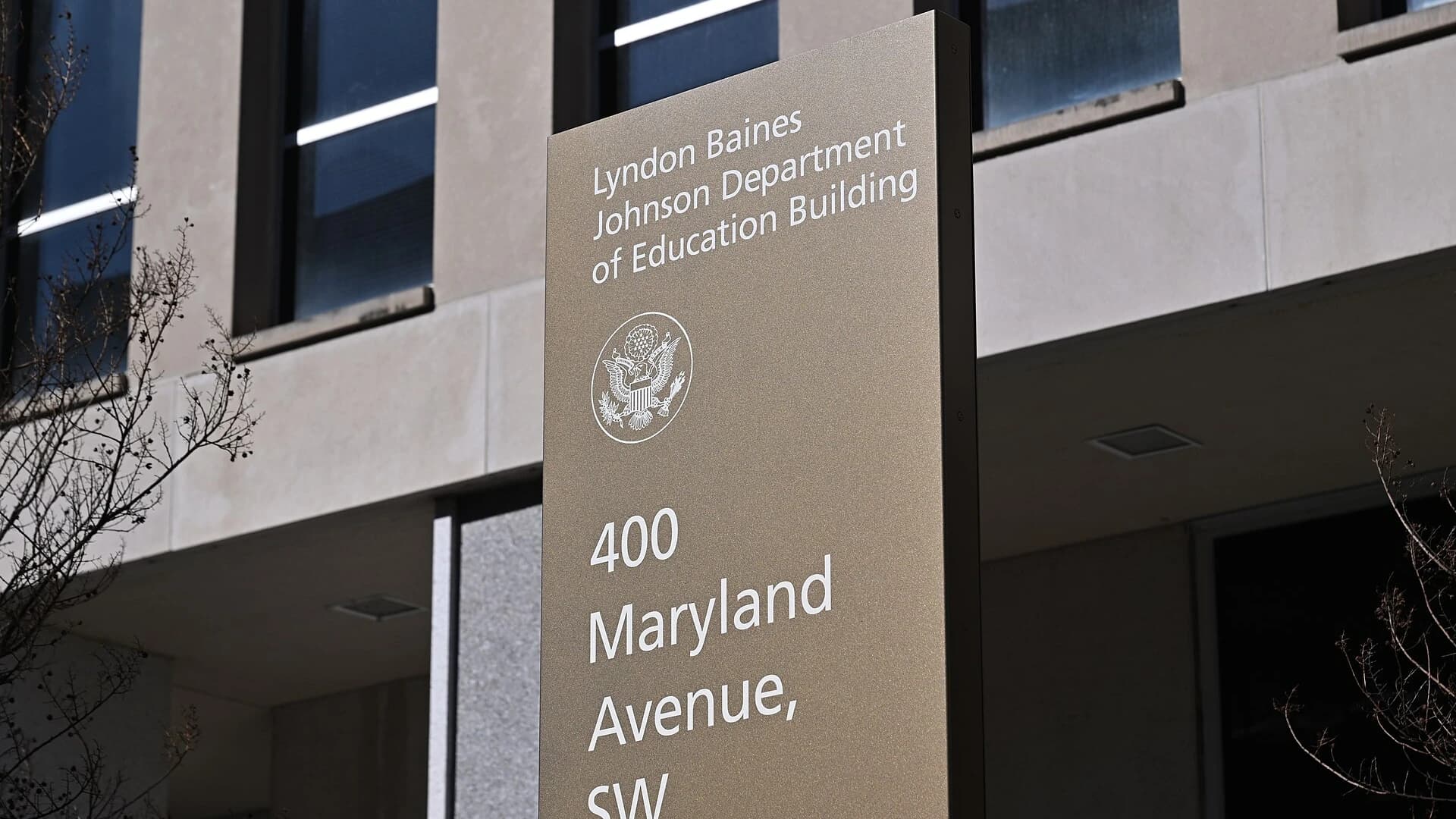
The Civil Rights RIF Was Rescinded. OCR's Workforce Still Fell 50%.
Education rescinded its Office for Civil Rights RIF, but OPM data show the component had 298 fewer covered employees by June 2026 as complaint timeliness worsened.

Data investigationsAugust 24, 2026
NSF's Proposal Workload Rose 8%. Its Federal Workforce Fell 36%.
NSF received 43,532 competitive proposals in fiscal 2025 as its covered federal workforce fell by 615 employees from December 2024 through June 2026.

Data investigationsAugust 24, 2026
IRS Had 126 AI Use Cases. Its Technical Workforce Fell 28%.
Most IRS AI use cases were still in development as a selected technical-workforce proxy fell by 2,459 employees from January 2025 through June 2026.
Federal Hiring Data Weekly
Get the biggest federal workforce changes in your inbox.
Subscribe to Federal Hiring Data Weekly for federal hiring trends, salary data, agency movements, and original investigations, with email confirmation before delivery.