August 25, 2026
EEOC Lost 447 Covered Employees. Its Federal Hearings Docket Rose 24%.
EEOC's private charge throughput held up as covered employment fell 21%, but its federal hearings docket rose while available judges declined.
By Evan Mercer
Published August 25, 2026Last edited August 25, 2026
The Equal Employment Opportunity Commission entered fiscal 2025 with roughly 2,170 employees and a private-sector discrimination charge inventory that had begun rising again. Eighteen months later, the staffing picture was sharply different.
Federal workforce records show 1,677 covered EEOC employees in June 2026, down 447 from December 2024. General attorneys and equal-opportunity investigators accounted for 255 of those losses. The tenure group that includes career-conditional, probationary and trial appointments fell by nearly four-fifths.
Yet the agency did not simply stop processing cases. In fiscal 2025, EEOC received 88,201 private-sector charges and resolved about 90,744. Its pending private charge inventory fell 4.4%, and the agency reported almost $660 million in monetary relief across private, litigation and federal-sector programs.
The clearer pressure point is elsewhere. EEOC's pending federal hearings docket rose 23.8% from fiscal 2023 to fiscal 2025, while the number of available administrative judges fell. The agency now projects that 58 judges will be available in fiscal 2026, down from 97 three years earlier, as pending hearings rise again.
That split is the central fact in EEOC's current capacity story: a smaller workforce has kept important private-charge measures moving, while one of its most specialized adjudication programs is heading toward fewer judges and a larger docket.
A 21% workforce decline in 18 months
FederalHiringData analyzed Office of Personnel Management records for the EEOC agency subelement. Covered headcount fell from 2,124 in December 2024 to 1,677 in June 2026, a loss of 447 employees, or 21.0%.

The contraction is large in both recent and long-run context. The comparable series begins with 2,779 employees in September 2000. By June 2026, covered employment was 1,102 lower, a 39.7% decline. Headcount has moved in cycles across that period, rising above 2,900 in 2001, falling through much of the 2000s, rebuilding around 2010 and again from 2021 through 2023, then turning down.
The long line has one timing break that matters. September snapshots are used through 2008, December snapshots from 2009 through 2025, and June for the partial 2026 observation. It shows scale and direction, not a perfectly uniform anniversary comparison.
EEOC's internal reports tell a similar story with different dates and definitions. Its fiscal 2025 financial and performance reports say the agency began that year with approximately 2,170 employees and began fiscal 2026 with 1,809. OPM recorded 2,124 in December 2024 and 1,771 in December 2025. Those series should not be forced into exact equality: an agency's onboard count, budget full-time equivalents and OPM's covered payroll snapshot are related but distinct measures.
The independent records agree on the essential point. EEOC entered 2026 with hundreds fewer employees than it had at the end of 2024.
Separations overwhelmed a narrow hiring pipeline
OPM personnel-action data show how the decline accumulated. EEOC recorded 16 accessions and 362 separations in calendar 2025. The first six months of 2026 added 36 accessions and 102 separations.

The 2025 separation mix was not dominated by a single formal reduction-in-force category. OPM recorded 154 quits, 134 voluntary retirements and 23 early-out retirements. Transfers, expired appointments and other actions made up the remainder.
| Calendar 2025 separation category | Actions |
|---|---|
| Quits | 154 |
| Voluntary retirements | 134 |
| Early-out retirements | 23 |
| Individual transfers out | 21 |
| Other separations | 14 |
| Expired appointments or other terminations | 12 |
| Mass transfers out | 3 |
| Other retirements | 1 |
Personnel actions do not bridge mechanically to the difference between two headcount snapshots. An employee can enter and leave between snapshots, action timing can differ from effective payroll counts, and corrections can appear later. They do show the underlying imbalance: during 2025, EEOC recorded more than 22 separations for every accession.
That imbalance followed an unusually weak 2024 hiring year. EEOC recorded 17 accessions and 221 separations, after 426 accessions and 269 separations in 2023. The series therefore describes more than one burst of departures. The replenishment pipeline narrowed before the largest calendar-year separation total arrived.
Attorneys and investigators bore most of the loss
The decline was concentrated in occupations that process, adjudicate and litigate discrimination matters.
General Attorney, occupational series 0905, fell from 479 covered employees in December 2024 to 346 in June 2026, a loss of 133 or 27.8%. Equal Opportunity Investigation, series 1860, fell from 706 to 584, a loss of 122 or 17.3%.
Together, those two occupations accounted for 57.0% of the agency's net covered workforce decline.

| Covered occupation | Dec. 2024 | June 2026 | Change |
|---|---|---|---|
| General Attorney | 479 | 346 | -133 |
| Equal Opportunity Investigation | 706 | 584 | -122 |
| Compliance Inspection and Support | 121 | 88 | -33 |
| Office Automation Clerical and Assistance | 59 | 37 | -22 |
| Miscellaneous Administration and Program | 147 | 127 | -20 |
| IT Management | 65 | 52 | -13 |
| Management and Program Analysis | 95 | 82 | -13 |
| Miscellaneous Clerk and Assistant | 46 | 36 | -10 |
| Secretary | 30 | 20 | -10 |
The occupation labels do not map one-for-one onto EEOC organizational units. A general attorney may work in litigation, federal operations, legal counsel or another office; investigators can be assigned across field operations. Public OPM data do not identify how many of each occupation remained in every district or field office.
That limitation prevents a responsible office-by-office staffing claim. OPM duty station is a geographic work location, not a reliable organizational assignment. EEOC operates headquarters and 53 field offices, but a city count cannot establish which office or program an employee supports.
The occupational pattern still matters. Attorneys and investigators are not generic administrative capacity. They are central to developing charges, conducting systemic investigations, litigating cases, adjudicating federal complaints and advising on enforcement. Support, information technology and program-analysis occupations also fell, narrowing the infrastructure around that work.
EEOC's own fiscal 2025 reports identify the Office of Field Programs and Office of Federal Operations as the organizational areas with the largest staffing effects. The OPM occupation losses are consistent with that statement, but they do not independently allocate every departure to those offices.
The newer-tenure workforce thinned fastest
The composition of the remaining workforce also changed.
OPM's Tenure Group 2 includes career-conditional employees and other appointments that require a probationary or trial period. At EEOC, that group fell from 480 employees in December 2024 to 103 in June 2026, a decline of 377 or 78.5%.
Tenure Group 1, which includes career employees or appointments carrying no restriction or condition, fell much less: from 1,573 to 1,525. The residual group for temporary, term, Senior Executive Service and other employees outside the first three tenure groups fell from 48 to 37, while Tenure Group 3 fell from 23 to 12.
| OPM tenure group | Dec. 2024 | June 2026 | Change |
|---|---|---|---|
| Group 1: career or no restriction/condition | 1,573 | 1,525 | -48 |
| Group 2: career-conditional, probationary or trial | 480 | 103 | -377 |
| Group 3: term, provisional or similar | 23 | 12 | -11 |
| Outside Groups 1-3, including temporary/SES categories | 48 | 37 | -11 |
This is not a count of every employee affected by one probationary-workforce policy. OPM tenure groups combine several appointment circumstances. It is nevertheless a strong composition measure: the part of the payroll containing many newer and conditional employees contracted far more sharply than the established career group.
Age patterns point in the same direction without identifying cause. Employees under 40 fell from 539 to 373, a 30.8% decline. Employees 40 and older fell from 1,585 to 1,304, a 17.7% decline. Retirements were an important part of the 2025 separation total, but the workforce also lost a disproportionate share of younger employees.
That creates a longer-run question that raw headcount cannot answer. A workforce can preserve experienced case capacity in the short term while weakening its future bench. The public record does not show how quickly EEOC can replace the legal, investigative and case-management expertise lost through departures.
Private charge processing remained resilient
The strongest counterevidence to a simple breakdown narrative is the private-sector charge program.
EEOC's official enforcement workbook reports 88,201 charge receipts in fiscal 2025 and 90,744 resolutions. The agency's performance report gives 90,743 resolutions, a one-record discrepancy between two official sources. FederalHiringData uses the workbook figure in the long series and notes the difference rather than silently choosing between them.

The charge flow had recovered substantially from pandemic-era lows. Receipts rose from 61,331 in fiscal 2021 to more than 88,000 in each of fiscal 2024 and 2025. Resolutions rose from 62,187 to more than 90,700 over the same span.
These figures cover charges under EEOC-enforced laws filed against covered private employers, state and local governments, employment agencies and labor unions. They are not a count of proven discrimination. A person can allege more than one basis in a charge, and the number of charges depends on reporting, jurisdiction, intake rules and labor-market conditions.
The pending private charge inventory ended fiscal 2025 at 49,807, down from 52,080 a year earlier. That is well below the 86,338 pending at the end of fiscal 2010, although it remains above the 41,951 recorded in fiscal 2020.

Federal Hiring Data Weekly
Get the biggest federal workforce changes in your inbox.
Subscribe to Federal Hiring Data Weekly for federal hiring trends, salary data, agency movements, and original investigations, with email confirmation before delivery.
Annual reports can revise beginning inventories as activity is adjusted across fiscal years. FederalHiringData uses the consistently labeled ending figures from EEOC performance and budget reports. It does not combine incompatible beginning and ending definitions.
The result is meaningful: despite a shrinking workforce, EEOC resolved slightly more private charges than it received in fiscal 2025 and lowered the pending inventory. That is evidence of throughput, not proof that every case was timely, equally complex or resolved with the same investigative depth.
Technology and case-management changes are part of the explanation EEOC offers. The agency has expanded digital intake, portal access, remote processing, cross-office workload sharing and standardized case tools. Realignment beginning in fiscal 2026 reassigned staff and responsibilities in an effort to preserve mission work with fewer people.
Those measures can sustain output. They can also change what the output count represents. A charge resolution is one completed matter whether it required a short jurisdictional disposition or a lengthy investigation. Comparing resolutions directly with employee counts would turn a workload measure into a false productivity score.
Federal hearings moved in the opposite direction
Federal-sector discrimination complaints follow a different process. Federal employees generally begin with their own agency's EEO system. After the agency investigation, a complainant can request a hearing before an EEOC administrative judge. EEOC also decides federal-sector appeals.
The hearings inventory declined for years, from 14,885 pending matters in fiscal 2017 to 5,642 in fiscal 2023. It then reversed: 6,009 were pending at the end of fiscal 2024 and 6,986 at the end of fiscal 2025.

Available administrative judges fell from 97 in fiscal 2023 to 89 in fiscal 2025. EEOC's fiscal 2027 budget justification projects 58 available judges in both fiscal 2026 and fiscal 2027. It projects pending inventory rising to 7,735 and then 8,484.
| Federal hearings measure | FY2023 actual | FY2024 actual | FY2025 actual | FY2026 estimate | FY2027 estimate |
|---|---|---|---|---|---|
| Pending hearings | 5,642 | 6,009 | 6,986 | 7,735 | 8,484 |
| Administrative judges available | 97 | 96 | 89 | 58 | 58 |
The fiscal 2026 and fiscal 2027 figures are agency estimates, not completed-year results. EEOC says its administrative-judge projections were updated March 11, 2026, using current staffing levels.
Fiscal 2025 receipts and resolutions show why the inventory is expected to rise. The hearings program received 7,175 requests and resolved 6,178. Before inventory adjustments and consolidations, receipts exceeded resolutions by 997.
Dividing pending cases by available judges produces a rough workload-context ratio: about 58 pending matters per available judge in fiscal 2023, 79 in fiscal 2025 and 133 under the fiscal 2026 estimate. That is not a productivity measure. Cases differ greatly in complexity, age, discovery burden, settlement posture and the work performed by support staff. It does show the direction of the resource relationship assumed in EEOC's own budget plan.
The appeals program offers another counterpoint. EEOC resolved 5,292 appeals in fiscal 2025, up 67% from fiscal 2024, against 3,779 receipts. Pending appeals fell from an adjusted beginning inventory of 5,186 to 3,680. The federal program therefore contains two different trajectories: a hearings docket moving higher and an appeals inventory moving lower.
Monetary relief was substantial, but it is not productivity
EEOC reported approximately $659.6 million in fiscal 2025 monetary relief for 17,680 people. Most came through private-sector pre-litigation resolutions, with additional relief through litigation and the federal-sector program.
| FY2025 program | Monetary relief | People benefiting |
|---|---|---|
| Private-sector pre-litigation | $528.0 million | 13,351 |
| Private-sector litigation | $27.0 million | 2,505 |
| Federal sector | $104.6 million | 1,824 |
| Total | $659.6 million | 17,680 |
The categories should not be treated as a per-employee output calculation. Recoveries depend on the facts, remedies and timing of particular cases. A year with fewer large settlements could represent more or less effective enforcement; the dollar total alone cannot decide that.
Systemic enforcement presents a similar interpretive boundary. EEOC reported resolving 444 systemic investigations and obtaining more than $55 million in fiscal 2025. It also reported that more than 90% of investigators and trial attorneys had received systemic training.
But the agency's separate staffing goal remained unfinished. Its strategic target called for every district to have two dedicated Enforcement Unit systemic staff by fiscal 2026. EEOC marked that target “partially met” in fiscal years 2022, 2023, 2024 and 2025.
Training a broad workforce to recognize systemic issues is not the same as assigning two dedicated specialists in every district. The first measure describes skill exposure; the second describes sustained organizational capacity. The public record supports progress on one and an unresolved gap on the other.
A smaller federal-sector budget and a broader realignment
Related research
Put this finding in context

Data investigationsAugust 25, 2026
CFPB Lost 670 Covered Employees as Complaint Intake Reached 6.6 Million
Covered CFPB employment fell 38.2% while complaint intake reached 6.6 million and leadership narrowed supervision and enforcement priorities.

Data investigationsAugust 24, 2026
NOAA Lost 2,630 Employees. Its Technical Workforce Was Still Thinner in June 2026.
NOAA's covered workforce fell 21.1% from December 2024 through June 2026, with broad losses across science and technical occupations and only selective rebuilding.
The fiscal 2027 budget justification requests $455.45 million for EEOC, compared with $435.382 million enacted for fiscal 2026. Within that total, the program allocations do not all move together.
| Program | FY2025 actual | FY2026 enacted | FY2027 request |
|---|---|---|---|
| Private-sector enforcement | $346.254M | $334.858M | $352.926M |
| Federal-sector program | $72.746M | $64.524M | $64.524M |
| Federal hearings | $39.191M | $34.762M | $35.377M |
| Federal appeals | $23.768M | $21.082M | $20.062M |
These are program budget amounts, not employee counts. They show that the federal-sector program remains below its fiscal 2025 actual level in the fiscal 2027 request, while the hearings allocation recovers only part of its fiscal 2026 decline.
EEOC describes a realignment intended to concentrate resources, reassign work across offices and use technology to maintain service. Its fiscal 2025 financial report also flags constrained output and rising federal inventories as management challenges. The Office of the Chief Information Officer reported contractor-resource reductions of as much as 50% and the loss of close to one-quarter of managers and staff.
Those percentages should not be converted into a contractor or employee headcount. The public report does not supply the denominator needed to do that. Contractors are also not part of the OPM employee series.
One temporary institutional constraint affected enforcement in fiscal 2025: the Commission lacked a quorum from January through the end of the fiscal year for non-routine merits litigation decisions. A quorum was restored in November 2025. That governance interruption and the workforce decline occurred at the same time, but the available data do not isolate how much each affected individual case decisions or output.
Public recruiting fell, then partly returned in 2026
FederalHiringData's historical USAJOBS archive provides a separate view of the public recruiting pipeline. It contains 515 distinct EEOC announcements closing in 2023, 62 in 2024 and 42 in 2025. The archive contains 83 closing in 2026 through Aug. 14.

The partial 2026 increase is a sign of some renewed public posting, but it is not evidence that the workforce has already rebuilt. One announcement can advertise multiple locations or openings; another can fill one position. Announcements do not equal vacancies, applications, offers, onboard hires or net employment.
The archive begins around March 2017 and cannot support a pre-2017 recruiting comparison. It also may not capture internal-only movement and special hiring paths in the same way as public announcements.
OPM records provide the outcome measure that matters for headcount. Through June 2026, 36 accessions had been recorded against 102 separations. Future monthly records will show whether the increase in announcements produces sustained hiring or merely a small pipeline inside a still-contracting workforce.
What the next year can establish
The evidence does not support saying that EEOC stopped enforcing employment law. Private charge resolutions exceeded receipts in fiscal 2025, pending private inventory declined, appeals inventory fell, and substantial monetary relief was reported.
It also does not support treating the workforce decline as administratively trivial. The agency lost one in five covered employees in 18 months. Attorneys and investigators accounted for most of the net decline. Newer-tenure ranks contracted disproportionately. Public recruiting fell sharply after 2023. The federal hearings docket rose while available judges fell.
Three measures will test whether the realigned agency can sustain both throughput and depth.
First is the federal hearings inventory. EEOC has published specific projections: 7,735 pending matters in fiscal 2026 and 8,484 in fiscal 2027 with 58 available judges. Actual receipts, resolutions, average age and judge staffing can be measured against that plan.
Second is private-charge quality as well as volume. Receipts, resolutions and inventory show flow. Merit-factor resolutions, conciliation results, investigation age, systemic case development and repeat-employer outcomes provide a fuller picture of what those completed cases produced.
Third is workforce replenishment. The number of public announcements rose in partial 2026, but OPM headcount was almost flat between May and June at 1,678 and 1,677. Stabilization requires enough accessions, retention and specialized staffing to offset future departures.
EEOC's current record is therefore neither institutional collapse nor ordinary continuity. It is a smaller agency demonstrating resilience in some high-volume measures while forecasting strain in a specialized federal adjudication program. The next set of workforce and case reports will show whether that division persists.
Methodology and limitations
FederalHiringData calculated EEOC covered headcount, occupation counts, tenure composition, age composition and personnel actions from OPM Federal Workforce Data and legacy FedScope files. EEOC is identified by agency subelement code EE00. September snapshots are used for 2000-2008, December snapshots for 2009-2025, and June for 2026. OPM headcount excludes contractors and is not budget FTE.
Private charge receipts and resolutions come from EEOC's official enforcement and litigation statistics, Table E1c. Pending private charge figures, federal hearings and appeals data, administrative-judge counts, recoveries, systemic measures and budget figures come from EEOC's fiscal 2025 performance report, fiscal 2027 budget justification, fiscal 2025 financial report, and prior annual performance reports.
The fiscal 2025 workbook reports 90,744 private charge resolutions; the performance report states 90,743. Both official figures are disclosed. Historical ending inventories are used consistently because annual reports can adjust beginning balances.
USAJOBS figures are distinct archived announcements by closing year from FederalHiringData's historical USAJOBS archive. Coverage begins around March 2017. The 2026 count runs through Aug. 14 and is incomplete. Announcements are not vacancies, applications, offers or hires.
Charge counts do not measure the incidence of unlawful discrimination. Pending cases divided by judges are workload context, not productivity. Monetary relief is not employee output. Fiscal 2026 workforce and recruiting data are partial-year, while fiscal 2026 and fiscal 2027 hearing figures are agency estimates.
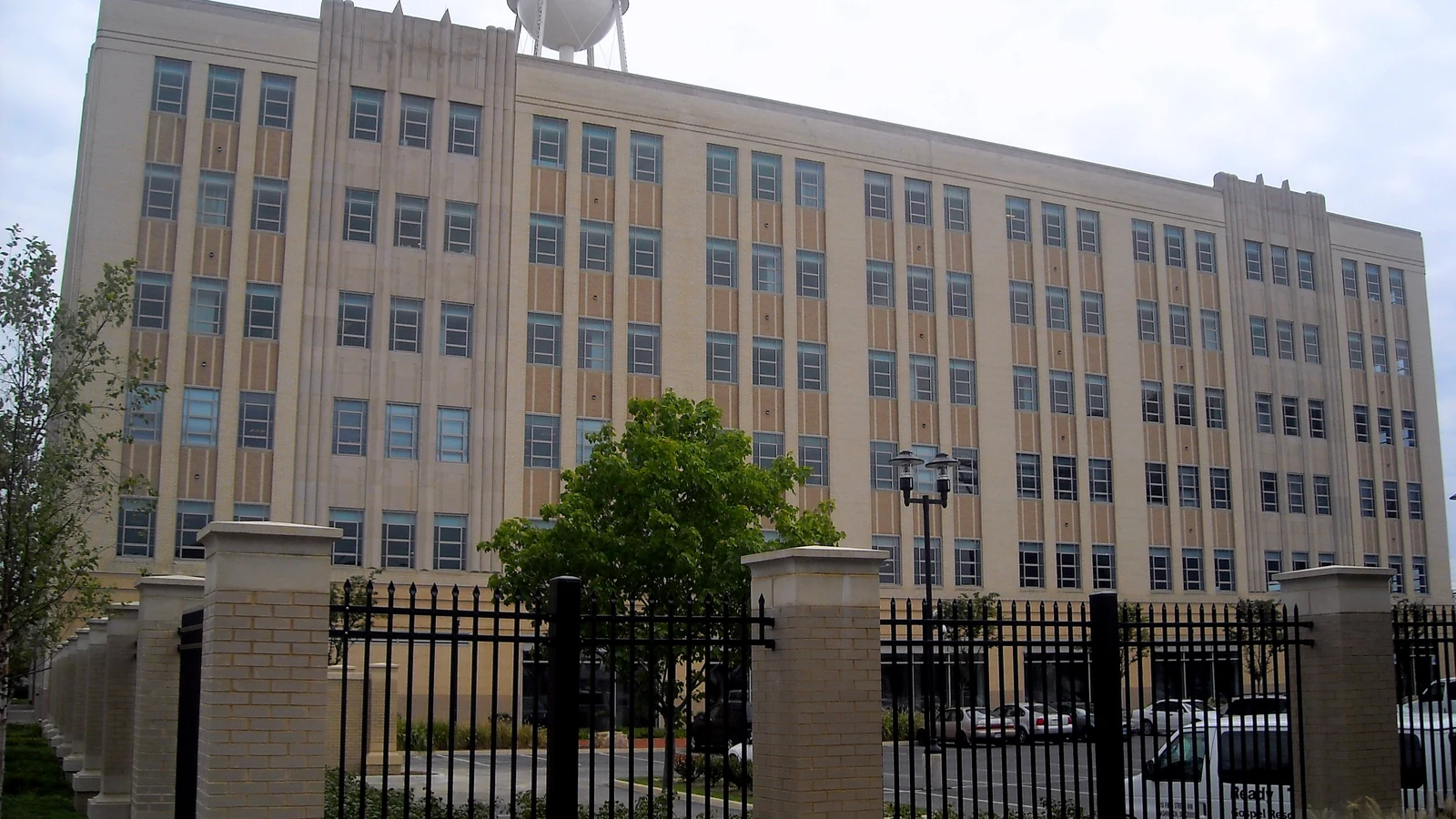
Hero photograph: the former Woodward & Lothrop service warehouse, now EEOC headquarters and the Washington Field Office, photographed by AgnosticPreachersKid. Wikimedia Commons, licensed under CC BY-SA 3.0 and GFDL. The image was cropped for presentation.
Continue reading
More from FederalHiringData

Data investigationsAugust 24, 2026
NSF's Proposal Workload Rose 8%. Its Federal Workforce Fell 36%.
NSF received 43,532 competitive proposals in fiscal 2025 as its covered federal workforce fell by 615 employees from December 2024 through June 2026.
Data investigationsAugust 24, 2026
Federal Student Aid Lost 46% of Its Workforce. Two Loan-Servicer Checks Stopped.
Federal Student Aid stopped two contractor-oversight checks as its covered workforce fell by nearly half while the loan portfolio reached $1.724 trillion.

Data investigationsAugust 22, 2026
IHS Launched Its Largest Hiring Push. Its Covered Workforce Fell 458 by June.
IHS launched against severe provider vacancies, but covered employment fell 458 from January through June and the campaign still lacks a public numeric target.
Federal Hiring Data Weekly
Get the biggest federal workforce changes in your inbox.
Subscribe to Federal Hiring Data Weekly for federal hiring trends, salary data, agency movements, and original investigations, with email confirmation before delivery.