August 24, 2026
Federal Student Aid Lost 46% of Its Workforce. Two Loan-Servicer Checks Stopped.
Federal Student Aid stopped two contractor-oversight checks as its covered workforce fell by nearly half while the loan portfolio reached $1.724 trillion.
By Evan Mercer
Published August 24, 2026Last edited August 24, 2026
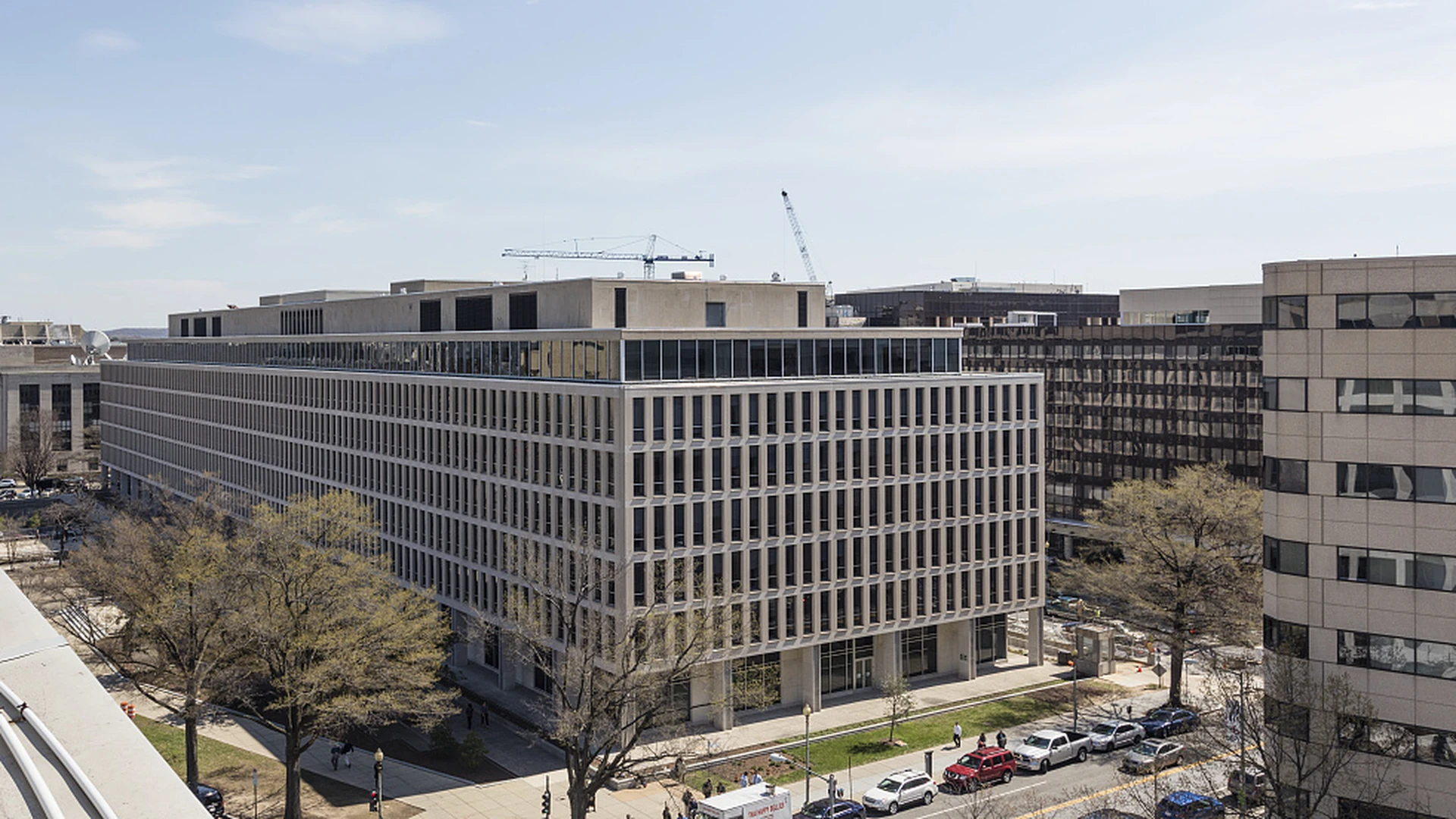
In February 2025, Federal Student Aid stopped checking two things that go to the center of student-loan servicing: whether contractors were maintaining borrower accounts accurately and whether their call-center representatives were handling conversations properly.
The reason was not that the tests had become unnecessary. A Government Accountability Office review released in March 2026 said FSA lacked the staff capacity to continue them. Four of the five federal loan servicers had missed the account-accuracy standard in at least one monitored quarter. Yet by Dec. 22, 2025, the agency still had no replacement method or timetable for resuming the two assessments.
The suspension came during an extraordinary workforce contraction. Public Office of Personnel Management records show FSA with 1,440 covered civilian employees in September 2024 and 771 in June 2026, a reduction of 669, or 46.5%. GAO used a different measure and endpoint, counting 1,433 full-time-equivalent positions on Jan. 20, 2025 and 777 on Dec. 1. The two series are not interchangeable, but they tell the same broad story: the office responsible for operating and overseeing federal student aid entered 2026 with roughly half the capacity it had recently carried.
The work did not shrink in the same proportion. The official Federal Student Aid portfolio summary reports $1.724 trillion in outstanding principal and interest for 42.6 million unduplicated recipients as of March 31, 2026. Repayment rules are changing for new borrowing beginning July 1. Five contractors continue to service federally managed loans. Applications, disbursements, defaults, complaints, cybersecurity, accounting, and contract changes still require federal decisions even when vendors perform much of the transaction work.
The evidence does not support a claim that every borrower error, missed call, or repayment problem was caused by the workforce reduction. It supports a more precise finding. FSA lost a large share of the program, business, legal, financial, and technical workforce that could test contractor performance, and GAO documented a specific assurance function that stopped because people were not available to do it.
Two controls disappeared from the servicing system
Federal student loans are serviced through the Unified Servicing and Data Solution, or USDS, contracts. The five servicers maintain accounts, process payments and repayment-plan requests, communicate with borrowers, and report information back to the government. FSA began using a six-part performance system for these contracts in April 2024.
The system included account-accuracy and call-quality assessments. Accuracy reviews compared samples of thousands of borrower accounts across contractor and government systems. Reviewers examined whether statuses, balances, payment histories, and other account information agreed. Call-quality reviews used recorded conversations to assess whether representatives provided accurate information and followed required procedures.
Those reviews were labor intensive because they did more than read an aggregate score. They required samples, documentation, cross-system comparisons, judgment about errors, and follow-up with contractors. They also carried financial consequences. GAO reported that FSA withheld about $850,000 in performance payments after finding accuracy problems.
| USDS control | What it tested | Status reported by GAO |
|---|---|---|
| Account accuracy | Whether sampled borrower information matched across servicer and federal systems | Stopped in February 2025 |
| Call quality | Whether sampled calls were handled accurately and according to requirements | Stopped in February 2025 |
| Call abandonment | Share of calls disconnected before reaching a representative | Continued |
| Task timeliness | Whether assigned servicing work was completed on time | Continued |
| Financial monitoring | Financial and operational indicators | Continued |
| Customer satisfaction | Borrower survey results | Continued, but without performance penalties in some quarters |
FSA told GAO that other controls still offered assurance, including financial audits, systems controls, complaint monitoring, and reporting requirements. GAO found that those mechanisms did not replace the suspended tests. A financial statement audit can assess balances and reporting without answering whether a sampled borrower's repayment status is correct. A complaint system can identify problems after borrowers notice them, but it is not a representative test of the entire servicing population.
The remaining controls also had weaknesses of their own. GAO cited material weaknesses and data-reliability concerns in financial reporting and a significant deficiency in an independent service-organization control review. Four servicers had failed the accuracy standard at least once during the brief period FSA measured it. GAO therefore recommended that Education establish a way to resume accuracy and call-quality assessments. The department disagreed with the recommendation.
The consequence is best described as lost assurance. The government does not know from these suspended samples what it once set out to measure. That is not proof that every account is wrong. It is proof that an important method for detecting whether accounts are wrong was no longer operating.
The workforce decline was both sudden and historically unusual
FederalHiringData analyzed public FedScope and Enterprise Human Resources Integration files for Federal Student Aid agency subelement EDEN. September snapshots provide a consistent annual series from 2000 through 2025; June 2026 is the latest monthly observation available.
FSA had 1,207 covered employees in September 2000. The count fell below 1,000 in 2009, then rose through much of the 2010s. It reached 1,460 in September 2020 and stood at 1,440 in September 2024. One year later, it was 868. By June 2026, it was 771, the lowest point in the 2000-to-2026 series.

Covered headcount is not the same as FTE. OPM's files count employees included in the public personnel data at a point in time. FTE measures labor over a period and can differ because of timing, work schedules, coverage, and accounting rules. That is why OPM shows 781 covered employees in December 2025 while GAO reports 777 FTE on Dec. 1. The four-position difference is not evidence of a conflict.
The monthly series shows how concentrated the reduction was. FSA had 1,430 employees in January 2025. It remained above 1,400 through April, fell to 1,256 in June, dropped to 904 in September, and reached 781 in December. The count fell again to 741 in January 2026 before climbing to 771 in June.

The timing does not establish that every stopped task followed directly from a specific separation. It does put GAO's explanation in context. FSA halted the two assessments in February, at the opening of a year in which its covered workforce would fall by nearly half.
The broader Department of Education contracted too. OPM records show covered department employment falling from 4,209 in September 2024 to 2,279 in June 2026, a 45.9% decline. FSA was therefore not drawing on an unchanged parent department while its own office became smaller.
OPM action files record 67 FSA accessions and 764 separations in calendar 2025. Through June 2026, they record 71 accessions and 33 separations. Action totals do not reconcile one-for-one with snapshot headcount because transfers, corrections, timing, appointment categories, and reporting rules differ. They do indicate that entry began to exceed exit again in early 2026, but from a much lower base.
The losses reached the jobs that supervise a contracted system
An agency that uses contractors does not eliminate federal work. It changes the work. Federal employees write requirements, approve changes, monitor security and financial controls, decide whether performance standards were met, impose remedies, interpret law, and remain accountable for the program.
FSA's occupation data show reductions across those functions between September 2024 and June 2026. Management and program analysis fell from 441 to 256. General business and industry went from 228 to 88. Miscellaneous administration and program work fell from 238 to 99. Information technology management declined from 153 to 122.
| Occupation series | September 2024 | June 2026 | Change |
|---|---|---|---|
| Management and program analysis, 0343 | 441 | 256 | -185 (-42.0%) |
| General business and industry, 1101 | 228 | 88 | -140 (-61.4%) |
| Miscellaneous administration and program, 0301 | 238 | 99 | -139 (-58.4%) |
| Information technology management, 2210 | 153 | 122 | -31 (-20.3%) |
| General attorney, 0905 | 62 | 38 | -24 (-38.7%) |
| Accounting, 0510 | 39 | 26 | -13 (-33.3%) |
| Financial analysis, 1160 | 22 | 11 | -11 (-50.0%) |
| Contracting, 1102 | 60 | 51 | -9 (-15.0%) |

The chart should not be read as an organizational chart for the suspended reviews. Public personnel records do not identify which employees sampled servicing accounts or listened to calls. Occupation series are broad, and employees in the same series can work on grants, FAFSA operations, finance, cybersecurity, loan policy, or other programs.
They still reveal the shape of the capacity loss. The largest reductions were in the program and business groups most likely to carry analysis, requirements, operations, and vendor-management work. Attorneys, accountants, financial analysts, contracting specialists, and IT staff also became fewer. This was not solely an administrative-office reduction around an otherwise intact technical core.
Experience may be difficult to replace quickly. In June 2026, 220 of FSA's 771 covered employees were age 55 or older, 28.5%. Age does not determine when someone will retire, and an older workforce is not a weakness. It does mean that rebuilding headcount alone may not preserve the institutional knowledge required to understand old servicing systems, contract history, borrower protections, and past policy transitions.
A $1.724 trillion portfolio remained in motion
The scale of the federal loan system is often reduced to a single rounded number. The official portfolio workbook provides a more useful decomposition. As of fiscal 2026's second quarter, which ended March 31, Direct Loans accounted for $1.563 trillion and 38.5 million recipients. Federal Family Education Loan balances were $158.3 billion, and Perkins balances were $2.7 billion. Because people can appear in more than one program, the official total of 42.6 million recipients is unduplicated rather than the sum of the program columns.

Federal Hiring Data Weekly
Get the biggest federal workforce changes in your inbox.
Subscribe to Federal Hiring Data Weekly for federal hiring trends, salary data, agency movements, and original investigations, with email confirmation before delivery.
The balance has more than tripled from $516 billion in 2007. That trend does not mean each dollar creates equal administrative work. One borrower with several loans is not several independent cases, and a stable account may demand less intervention than a smaller account moving among default, consolidation, deferment, or repayment plans. The $1.724 trillion figure is a measure of financial exposure and program scale, not a productivity denominator.
Other official measures show the operational variety. In its March 2026 Data Center release, FSA reported 7.7 million recipients in default with about $180 billion outstanding as of Dec. 31, 2025. Another 8.8 million recipients, with $504 billion, were in forbearance; more than 6.5 million of those were affected by litigation over the SAVE repayment plan. FSA also reported 12.9 million recipients enrolled in income-driven repayment plans.
Those categories can change because of court orders, legislation, regulation, borrower actions, and data corrections. Servicers have to implement the change, but FSA has to define it, test systems, approve contract modifications, monitor results, communicate with borrowers, and resolve disputes over how rules were applied.
The office also administers aid before repayment. The same March release reported 17.2 million processed FAFSA forms for the 2025-26 application cycle and $39 billion in Pell Grants for award year 2024-25. Loan servicing is therefore one major responsibility inside an organization that also runs application, eligibility, disbursement, grant, and institutional-oversight systems.
Contractor capacity is not federal oversight capacity
The USDS model places day-to-day servicing with companies, but the government remains the buyer, rule setter, data owner, and accountable program manager. The contract solicitation describes work ranging from complete servicing and consolidation to financial reporting, claims processing, compliance monitoring, and integrations with federal systems.
FederalHiringData ran a bounded USAspending query for Department of Education contract transactions with the keyword USDS. It found the following obligations from fiscal 2024 through Aug. 24, 2026:
| Federal fiscal year | Keyword-matched USDS contract obligations |
|---|---|
| 2024 | $590.8 million |
| 2025 | $263.7 million |
| 2026 through Aug. 24 | $680.3 million |
| Total | $1.535 billion |
This is not the total value of every student-loan contract, and keyword searches can omit relevant transactions or include modifications whose descriptions happen to contain the term. Obligations are legal commitments, not necessarily outlays in the same period. Most importantly, $1.535 billion cannot be converted into an estimate of contractor employees. Public award data do not identify how much went to labor, systems, facilities, profit, subcontractors, or work performed in another year.
The number establishes a different point: FSA supervises a large contracted operating system. Oversight is not a smaller version of the contractor's workforce. A federal contracting officer, program analyst, attorney, security specialist, or accountant must exercise authorities that the vendor cannot exercise on the government's behalf.
GAO's finding illustrates the distinction. The five servicers continued operating after February 2025. What stopped were federal assessments designed to test the outputs of those operations. Vendor capacity kept accounts moving; it did not automatically preserve the government's independent capacity to verify accuracy and call quality.
Contract management also requires coordination before a policy reaches borrowers. In a separate July 2026 report, GAO reviewed 68 servicing change requests from March 2020 through December 2024 and found that FSA lacked formal criteria for when to bring servicers into early planning. The report did not attribute that issue to the 2025 workforce reduction. It shows why vendor oversight includes design and coordination, not only scoring performance after implementation.
New repayment rules add another implementation test
Federal student-loan administration is entering another policy transition. The Department of Education's current repayment guidance says borrowers whose loans are disbursed on or after July 1, 2026 will have the Repayment Assistance Plan as their only income-driven option. Borrowers with older loans may remain eligible for legacy plans under different conditions, while ICR and PAYE are scheduled to end no later than July 1, 2028. Parent PLUS loans are excluded from RAP.
That creates cohorts with different rules. Systems must know when each loan was disbursed, which plans remain available, whether consolidation changes eligibility, how income and family size affect payments, and how notices explain those distinctions. A contractor can code and operate the process, but the government must make sure the implementation matches statute, regulation, contract requirements, and borrower records.
This article does not predict that the transition will fail. It identifies the capacity test created by the timing. FSA is asking a smaller federal workforce to oversee a large servicing network while introducing rules that will divide borrowers by loan date and plan eligibility. The suspended accuracy and call-quality reviews are especially relevant because those are two ways to learn whether complex rules are reaching accounts and conversations correctly.
Recruiting has restarted, but the rebound is not yet visible in headcount
Related research
Put this finding in context

Data investigationsAugust 21, 2026
DOE Has an $8 Billion Cleanup Mission. Its Federal Oversight Workforce Fell to 856.
DOE's nuclear-cleanup office lost one-third of its federal staff in two years while engineering, contracting and safety-related vacancies widened.

Data investigationsAugust 22, 2026
Two Army Depots Lost 785 Government Workers as Repair Work Became Harder to Plan
Anniston and Red River added 241 contractor personnel, but skills gaps, vehicle condition, parts, drawings and old machinery complicated billions in repair work.
The FederalHiringData USAJOBS archive contains 107 distinct FSA announcements opened in 2024 and only 17 in 2025. Through July 20, 2026, it contains 58. Information technology management accounted for 23 of the 2026 announcements, management and program analysis for 14, and miscellaneous administration and program work for seven.

The 2026 announcements include direct-hire and open-continuous postings for security architecture, security operations, platform reliability, systems, and program work. That emphasis is consistent with an agency responsible for large financial and data systems. It also makes announcement counts unusually easy to overread. A single open-continuous announcement can cover multiple locations, grades, specialties, or anticipated vacancies. It may stay open for months. It may produce several hires, one hire, or none.
The OPM action files offer a partial cross-check. They record 71 accessions through June 2026, more than the 33 separations recorded over the same period. Covered headcount rose from 741 in January to 771 in June. That is a gain of 30, or 4%, after the January low. It is evidence of stabilization, not restoration. The June count remained 669 below September 2024.
The question is therefore not whether FSA posted jobs. It did. The question is whether those announcements convert into staffed teams, retained expertise, and restored controls. Public headcount can answer the first part over time. GAO follow-up and agency reporting are needed for the second.
Restoration should be measured by work resumed, not promises made
An FSA capacity scorecard should begin with the two controls GAO identified. Has the agency resumed statistically meaningful account-accuracy testing? Has it resumed call-quality review? How many accounts and calls are sampled, how often, and across which servicers? What errors are found, what payments are withheld, and how quickly are corrections verified?
Headcount and hiring flows belong on the same scorecard, but they are supporting measures. FSA should report filled positions by major operational function, vacancy and attrition rates, time to hire, and whether contractor-oversight roles are being retained. OPM's public series can show broad movement, but it cannot tell the public which internal team owns a control or whether that team has enough trained reviewers.
The contract side needs measures too. FSA should disclose when performance standards change, when a metric is not scored, and what substitute control is being used. It should establish the early-coordination criteria GAO recommended for complex servicing changes. Financial audits, complaints, customer surveys, call abandonment, and timeliness each provide useful information, but none should be described as a substitute for a control that asks a different question.
Finally, rebuilding should account for expertise. Adding an employee does not instantly recreate knowledge of servicing history, federal financial controls, legacy repayment plans, procurement, data interfaces, and borrower protections. Training time and experienced supervision are part of capacity even though they do not appear in a headcount chart.
Federal Student Aid may be starting that rebuilding process. Its 2026 announcements and accession records point upward. The public test is whether independent verification returns before another policy transition puts more distance between the rules on paper and the records borrowers see.
Methodology and limitations
FederalHiringData analyzed public OPM FedScope and Enterprise Human Resources Integration records for Federal Student Aid agency subelement EDEN. The long-run series uses September snapshots from 2000 through 2025 and the June 2026 monthly file as the latest observation. The monthly detail begins in January 2024. Department-wide context uses department code ED. Counts cover employees represented in those public files and exclude workers outside OPM's covered population.
Headcount is not full-time-equivalent employment. GAO's 1,433 and 777 figures are FTE at specific 2025 dates; OPM's 1,430 and 781 figures are covered employees in monthly snapshots. They are presented separately. Percent changes in this article use OPM headcount unless explicitly attributed to GAO.
Occupation comparisons use September 2024 and June 2026 snapshots. Occupation series describe broad personnel classifications, not internal assignments. The analysis cannot identify which employees performed a particular USDS assessment. Age totals use the June 2026 file; they do not predict retirement.
Accessions and separations come from OPM action files. They do not reconcile one-for-one with point-in-time headcount because of reporting timing, transfers, appointments, corrections, and differences in covered actions. Calendar 2026 totals are through June.
Portfolio values come from FSA's official Portfolio Summary workbook, retrieved Aug. 24, 2026. Fiscal 2026 Q2 ended March 31, 2026. Dollar values include outstanding principal and interest. Recipients are students who benefit from the loan; in Parent PLUS, the parent is the borrower and the child is the recipient. The official total is unduplicated. Portfolio dollars and recipient counts are context for program scale, not measures of work per employee.
The servicing findings come from GAO-26-108534. GAO reviewed FSA documents, contract performance information, audit material, and agency explanations. The article uses GAO's causal wording only for the specific decision it documented: FSA stopped account-accuracy and call-quality assessments because it lacked staff capacity. It does not infer that staffing caused individual servicing errors, defaults, call outcomes, or policy decisions.
The USAJOBS series counts distinct control numbers attributed to Federal Student Aid by agency code EDEN or exact agency name. The archive begins in March 2017. The 2026 total is through July 20 and incomplete. Announcements are not vacancies, applications, selections, offers, accessions, or filled jobs. Open-continuous and direct-hire announcements can cover more than one anticipated position.
The USAspending calculation used the official spending-over-time API with Department of Education as awarding agency, contract award types, action dates from Oct. 1, 2023 through Aug. 24, 2026, and keyword USDS. It reports transaction obligations grouped by fiscal year. The result is bounded by those filters and does not represent all student-aid contracting. Obligations are not outlays, and no contractor headcount is inferred.
Sources were retrieved through Aug. 24, 2026. Later staffing files, portfolio updates, contract modifications, GAO follow-up, or repayment guidance may change the picture. Readers can browse current federal openings, examine broader federal hiring statistics, use the agency directory, or read more FederalHiringData investigations.
Continue reading
More from FederalHiringData

Data investigationsAugust 22, 2026
The Government Can Count $1.2 Trillion in Grants. It Still Cannot Count the Workforce Managing Them.
The identifiable GS-1109 workforce fell 28% after December 2024, but the government still cannot count everyone responsible for its grant portfolio.

Data investigationsAugust 21, 2026
VHA's Federal Workforce Fell by 28,342. Its Care Forecast Kept Rising.
VA's health workforce contracted after late 2024 even as patient, visit and community-care demands remained large. The losses reached clinical and coordinating roles.
Data investigationsAugust 18, 2026
FEMA's Public Workforce Count Fell 22% as GAO Warned of Readiness Risks
FEMA had 5,793 fewer covered civilian employees in June 2026 than in January 2025. GAO says the agency cut staff without the workforce planning needed to assess mission capacity.
Federal Hiring Data Weekly
Get the biggest federal workforce changes in your inbox.
Subscribe to Federal Hiring Data Weekly for federal hiring trends, salary data, agency movements, and original investigations, with email confirmation before delivery.