August 22, 2026
Army Depots Lost Workers as Contractors Took More Repair Work. Tanks Still Stalled.
Anniston and Red River depots lost 785 federal employees as contractor staffing grew, while difficult vehicle conditions, old equipment and parts shortages complicated repairs.
By Evan Mercer
Published August 22, 2026Last edited August 22, 2026
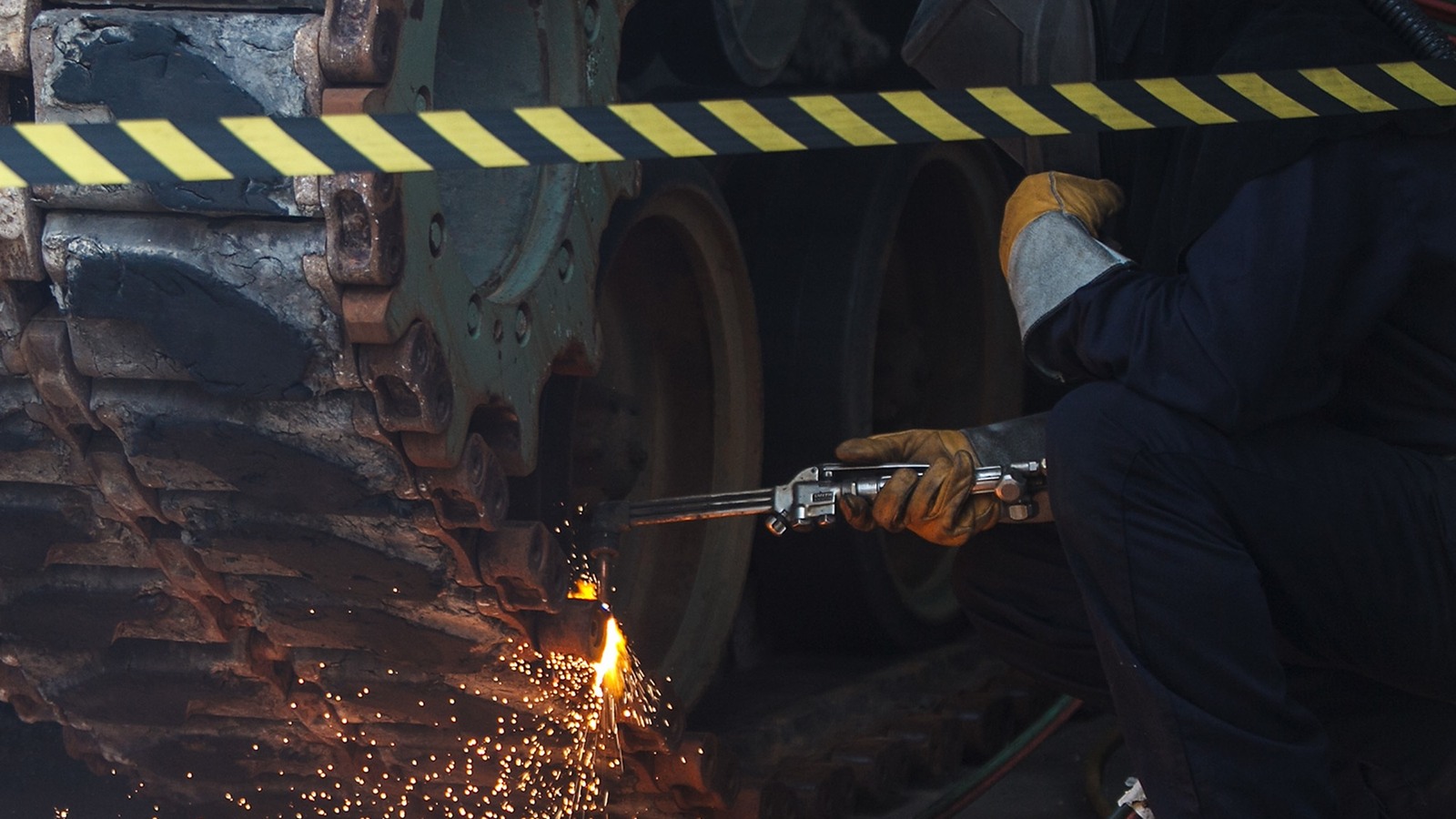
Seventy-nine Abrams tanks arrived at Anniston Army Depot for repair. The depot had expected them to be drivable. Only 10 could be started or moved.
That mismatch captures the planning problem inside two Army facilities responsible for rebuilding some of the service's heaviest equipment. A maintenance schedule can estimate labor for a tank that drives into a bay. It cannot absorb the same work, in the same time, when the vehicle arrives immobilized, missing parts or carrying damage that was not in the original scope.
Anniston in Alabama and Red River in Texas performed more than $7.1 billion in work from fiscal 2021 through 2025, according to a new Government Accountability Office review. Their federal workforces became smaller over that period. Contractor staffing grew, but officials said some contractor personnel arrived without the required skills, adding training and supervision work for the remaining federal staff.
The story is not that contractors failed or that every workforce reduction delayed a tank. GAO did not build that causal chain. The evidence shows a narrower and more useful pattern: workload remained large, the condition of incoming vehicles made it harder to predict, experienced federal capacity declined, and substitute labor did not always arrive ready to perform independently.
Two depots, more than $7.1 billion in work
Anniston and Red River specialize in different parts of the Army's ground fleet. Anniston primarily handles tracked vehicles, including Abrams tanks, armored personnel carriers, recovery vehicles and self-propelled artillery. Red River concentrates more heavily on wheeled vehicles, including Humvees and trucks, and also operates a rubber facility that repairs road wheels and tracks.
The Army spent more than $7.1 billion operating the two depots during the five-year period. More than $3 billion went to repairing parts that could be reused. At Anniston, work on Abrams tanks accounted for about $1.8 billion. At Red River, Humvee work accounted for about $634 million.

Those dollar figures are workload measures, not profit, employee compensation or the value of the vehicles. They include work for Army customers, foreign militaries and other Defense Department and federal entities. A repairable part can require substantial labor without appearing as a completed vehicle.
GAO found different trajectories. Anniston's annual total workload varied and declined slightly from fiscal 2021 to 2025. Red River's generally trended upward. At both facilities, repairing and refurbishing components for reuse was the largest share of work.
The contrast matters because "depot workload" is not a single national production line. A rise at Red River cannot automatically replace a decline at Anniston. The facilities have different equipment, tooling and occupational needs. Moving work requires more than changing a spreadsheet allocation.
The federal workforce lost 785 people
Across the two depots, total staffing fell by about 785 people, or 18%, between fiscal 2021 and fiscal 2025, according to GAO's public summary. Permanent and term-limited federal employment declined at both locations. Contractor personnel increased and tempered part of the loss.
The reductions reached the shop floor. More than 200 mechanic positions were lost. Officials described continuing difficulty recruiting and retaining experienced electricians and other skilled trades even before the 2025 deferred-resignation program and hiring freeze accelerated departures.
Contractors can provide capacity, specialized expertise and flexibility. Depot officials did not tell GAO that contractor labor was inherently unsuitable. They said some contractor hires lacked the skills required when they arrived. Supervisors then had to redirect people toward training and oversight.
That detail changes how replacement should be measured. Adding one contractor does not necessarily restore one experienced mechanic's productive capacity on day one. The relevant questions include qualification, task complexity, supervision, access to technical data and the time required to become independent. The public report does not provide enough data to calculate an adjustment factor, so any one-for-one estimate would be invented.
The historical USAJOBS archive offers a separate recruiting signal. A broad match for the two depots and their Army materiel organizations produced 1,563 announcements opened in 2024, 246 in 2025 and 166 through Aug. 14, 2026. That scope is intentionally broader than GAO's two-facility roster because historical organization naming varies. It should not be used as an exact count of depot vacancies.

Within that broad recruiting record, logistics management was the largest occupational series. Heavy mobile equipment mechanic, equipment services, inventory management, program analysis and general administration also appeared frequently. That mix illustrates why depot capacity depends on planning and supply functions as well as hands-on repair.
The vehicle arriving at the gate can rewrite the schedule
The 79 Abrams tanks were the clearest example of incoming-condition risk. Only 10 could start or drive, despite the depot's expectation that the vehicles would arrive operable. Red River officials described Humvees and Bradleys arriving without wheels, tracks, suspensions or gun barrels.
An unexpected condition changes several inputs at once. Mechanics must diagnose work that was not planned. Engineers may need to approve a repair. Parts may not have been ordered. A bay can remain occupied longer, delaying the next vehicle. Workload forecasts based on a standard condition become less useful precisely when the facility needs them most.
Federal Hiring Data Weekly
Get the biggest federal workforce changes in your inbox.
Subscribe to Federal Hiring Data Weekly for federal hiring trends, salary data, agency movements, and original investigations, with email confirmation before delivery.
This does not mean the sending units acted improperly in every case. Combat use, storage, transportation, incomplete records and deferred field maintenance can all affect condition. GAO's evidence establishes that condition differed from assumptions and complicated planning; it does not assign a universal cause.
Better inspection and information before induction could narrow the uncertainty. So could schedules that explicitly reserve capacity for discovered work. Both approaches have tradeoffs. More pre-induction inspection consumes personnel elsewhere, while larger buffers can make published throughput targets look less ambitious.
Parts, drawings and old machines formed a second constraint
Depot maintainers also described unavailable parts, obsolete technical information and aging industrial equipment. Some manufacturers had left the market. Some items had only one supplier. The newest maintenance equipment in parts of the depots was 20 to 30 years old; some of the oldest dated to the 1940s.
A workforce increase cannot solve a missing component or an unusable drawing by itself. Likewise, buying a new machine does not create an experienced welder, mechanic or engineer. The constraints interact. When an old machine fails, scarce maintainers wait or move work. When a replacement part is unavailable, planners resequence jobs. When technical data are incomplete, engineering review expands.
That interaction helps explain why headcount alone is a weak readiness measure. A depot can have most authorized positions filled and still miss schedules because the wrong specialties are vacant, the vehicle condition is worse than expected or the production system lacks parts and tooling. Conversely, a smaller team can complete a stable workload if inputs are predictable and equipment works.
GAO's report was descriptive and made no recommendations. It gives Congress and the Army a baseline rather than a corrective plan. The absence of recommendations should not be read as evidence that the challenges are minor; it reflects the information-focused scope Congress requested.
What a credible recovery measure would show
The next workforce scorecard should distinguish permanent federal staff, term employees and contractors by occupation and proficiency, not only total people. It should show how long new hires take to work independently, how much supervisory time is devoted to training, and where a lost specialty constrains an entire production line.
The workload side needs the same precision. Planned condition versus actual condition, discovered work, parts wait time, engineering hold time and equipment downtime should be visible separately. Without that separation, a late vehicle can be attributed to "staffing" when the binding constraint was a component, or to "parts" when insufficient planners failed to order it.
For job seekers, depot work spans more than tank mechanics. The archive includes logistics, inventory, engineering, IT, administration and industrial trades. Historical counts do not indicate what is open now. Readers can check current federal jobs, browse occupational series and use the location search for Alabama and Texas.
Related research
Put this finding in context
Data investigationsAugust 21, 2026
DOD Cut 78,375 Civilian Jobs. The Work Did Not Disappear.
The 2025 reduction reached IT, contracting, engineering, logistics and weapons testing. Public records do not show a clean transfer of the work or its full cost.
Data investigationsAugust 22, 2026
Space Force Filled 75% of Its Documented Need. Now It Says Personnel Must Double.
A GAO review found 13,509 assignments against 18,002 documented requirements as the service planned to double personnel without a complete workforce ledger.
The Army's depots are public industrial capacity. Their value appears when damaged, aging or unexpectedly incomplete vehicles still need to return to service. From 2021 to 2025, that capacity carried billions of dollars of work with fewer federal employees and more contractor support. The hard part is not choosing one workforce category over another. It is making sure the people who arrive can perform the work the vehicles actually require.
The federal-contractor mix needs a skills ledger
Public discussion often frames depot labor as a binary choice between government and contractors. The operating reality is a mixed workforce. Federal employees can provide continuity, institutional knowledge and inherently governmental oversight. Contractors can add specialized or flexible capacity. Either category can include experienced experts or people who need substantial training.
That makes total headcount an incomplete control. Depot leaders need occupation, qualification and experience data linked to the production processes each person can support. A roster should distinguish someone authorized to perform a task from someone still learning it, and it should account for the supervisors diverted to training. Otherwise, a rising contractor count can look like restored capacity while effective throughput remains lower.
The same ledger would clarify succession risk. Skilled industrial work often depends on tacit knowledge that is not captured in a procedure: how a recurring defect presents, which old machine drifts out of tolerance, or how to sequence a repair when a part is late. Training plans should identify where only a few people hold that knowledge and how long transfer takes.
Contract terms matter too. If the Army buys an output, it should measure the accepted output, rework and timeliness. If it buys labor hours, it should know the qualification mix and supervision assumptions. GAO's review did not provide those contract-level measures. Publishing bounded aggregate indicators would let Congress evaluate whether contractor growth is producing independent capacity rather than only filling roster lines.
The most useful outcome metric is not a preferred employment category. It is whether the depot can return safe, reliable equipment on a schedule the Army can plan around, without exhausting the experienced workforce that makes the schedule possible.
A tank cannot move through production on a staffing plan alone, and a modern machine cannot recover output when the shop lacks people qualified to operate, maintain and inspect it.
Methodology and limitations
Operational, workload and depot-workforce findings come from GAO-26-108681 and GAO's accompanying WatchBlog summary. GAO collected fiscal 2021-2025 workload, cost, roster and occupation data; interviewed officials; and visited both depots. The $7.1 billion is combined operating work over five fiscal years, not a current annual budget.
FederalHiringData's USAJOBS series uses a broad historical text match for Anniston Army Depot, Red River Army Depot and related Army materiel organizations. Naming varies across announcement years, and the series may include jobs outside the two facilities. It is presented only as contextual recruiting evidence. Coverage begins around March 2017; 2026 is partial through Aug. 14.
The analysis does not equate announcements with hires, contractor personnel with federal employees, dollars with labor hours, or positions with productive capacity. It does not estimate readiness losses, cost savings or a one-for-one substitution rate. OpenAI API calls used for research or writing: 0.
Primary records and related reading
Continue reading
More from FederalHiringData
Data investigationsAugust 18, 2026
The Korea Exercise Was Cut. The Civilian Workforce Behind the Alliance Was Not
The U.S. defense presence in South Korea includes 2,903 appropriated-fund civilians, while 12,428 archived job announcements reveal the year-round system behind the alliance.

Data investigationsAugust 20, 2026
634 Applications, Eight Completed Rotations: Why the Federal Cyber Exchange Stalled
Employees showed interest in the federal cyber rotation program. Home-agency approval, unreimbursed staffing costs and senior qualification demands narrowed the path.
Data investigationsAugust 21, 2026
Federal Prisons Lost 1,166 Officers. Overtime Became the Backstop.
BOP staffing has begun a small rebound, but the officer corps remains thinner and the last public operational measures show rising overtime and augmentation.
Federal Hiring Data Weekly
Get the biggest federal workforce changes in your inbox.
Subscribe to Federal Hiring Data Weekly for federal hiring trends, salary data, agency movements, and original investigations, with email confirmation before delivery.