August 22, 2026
Space Force Filled 75% of Its Documented Need. Now It Says Personnel Must Double.
A GAO review found 13,509 assignments against 18,002 documented requirements as the service planned to double personnel without a complete workforce ledger.
By Evan Mercer
Published August 22, 2026Last edited August 22, 2026
The U.S. Space Force says its personnel must double over the next decade. Before that expansion can be measured, the service has a more immediate problem: it cannot yet produce a stable, complete account of the workforce it already needs.
In fiscal 2025, Space Force records showed 18,002 documented military and civilian Guardian requirements. Only 15,645 were funded, and 13,509 had a person assigned. That left 4,493 documented requirements without an assignment, according to a July Government Accountability Office review.
The resulting 75% fill figure is not a conventional vacancy rate. Some requirements were inherited from older organizations. Others had not caught up with new missions. Formal manpower studies could take six months to two years, and the studies GAO reviewed changed individual units' estimated needs by amounts ranging from a 13% decrease to a 48% increase. The denominator itself was moving.
That distinction makes the workforce challenge harder, not smaller. Space Force has grown quickly since 2021, met its military recruiting goals, and is launching a major civilian hiring effort. It also depends on a contractor labor estimate larger than its internal Guardian roster and on thousands of Air Force personnel assigned to supporting roles. The service's public workforce measures describe several overlapping systems, not one clean total.
The central question is therefore not simply whether Space Force is short 25% of its people. It is whether the newest armed service can build the personnel, skills and training capacity required for a larger mission while establishing a credible ledger of the work, funding and people behind it.
Lean was a design choice, not a fixed headcount
Space Force began with an intentionally small headquarters and a plan to draw heavily on existing Air Force organizations. At the service's December 2019 establishment briefing, officials described about 16,000 active-duty Airmen and civilians assigned to the new service. Those people did not instantly become a comparable Guardian workforce; many remained in Air Force status while organizations and personnel transferred over time.
The first consistent Guardian series in GAO's review starts in fiscal 2021. It shows a service that expanded from 9,513 officers, enlisted Guardians and civilians to 15,392 in fiscal 2025, an increase of 61.8%.

| Fiscal year | Officers | Enlisted | Civilians | Total Guardian workforce |
|---|---|---|---|---|
| 2021 | 3,656 | 2,907 | 2,950 | 9,513 |
| 2022 | 4,220 | 3,841 | 3,791 | 11,852 |
| 2023 | 4,424 | 4,455 | 4,271 | 13,150 |
| 2024 | 4,564 | 4,895 | 4,877 | 14,336 |
| 2025 | 4,649 | 5,336 | 5,407 | 15,392 |
The composition changed as well as the total. Enlisted strength rose 83.6% and civilian strength 83.3% from 2021 to 2025, while officer strength grew 27.2%. Civilians were 35.1% of the fiscal 2025 roster, supporting the service's description of civilians as roughly one-third of its workforce at that point.
That is a verified historical share, not a reliable current one. GAO said its roster did not capture most civilian reductions late in fiscal 2025. Senior Space Force officials told auditors that 14% of civilian personnel had left and that the service expected to finish the year with 1,000 fewer civilians than planned. A complete, comparable fiscal 2026 Guardian roster was not publicly available for this analysis.
Meanwhile, the Objective Force 2040 Baseline says personnel must double during the next 10 years as the service expands its ability to contest the space domain and support joint operations. That document is a strategic design, not a funded end-strength decision. The fiscal 2026 budget separately requested a military end strength of 10,400, up 600 from the prior authorization. Neither figure is the same measure as the total Guardian roster above.
The direction is clear: growth. The funded path, occupational mix and baseline against which that growth will be judged remain less clear.
The 75% number is a funnel, not a vacancy rate
The fiscal 2025 requirements data shows two points where documented need narrowed. Of 18,002 Guardian requirements, 2,357 lacked funding. Of the 15,645 funded positions, another 2,136 lacked an assignment. The service therefore had people assigned to 86.3% of funded positions but only 75% of documented requirements.

| Workforce funnel | Documented requirements | Funded positions | Assignments | Assigned share of requirements |
|---|---|---|---|---|
| Guardians | 18,002 | 15,645 | 13,509 | 75.0% |
| Air Force support | 9,396 | 7,842 | 7,296 | 77.6% |
Those funnels must remain separate. The Guardian requirements cover military and civilian Space Force positions. The Air Force support line covers Air Force personnel performing functions for the service. Adding them would double count parts of a shared operating system and imply a precision the source data does not support.
The Guardian figures also do not reconcile directly to the 15,392-person roster. GAO's assignment measure excluded some personnel serving in joint or Air Force organizations and students in training. A roster describes who belongs to the service; a requirements table describes whether specified billets have assignees.
The shortfall was uneven across commands. Space Systems Command had 3,807 assignments against 4,719 requirements, or 81%. Combat Forces Command was at 5,540 of 6,984, or 79%. Space Training and Readiness Command had 1,154 of 1,775, or 65%; about 250 of its requirements were associated with a headquarters relocation. Newer service components supporting combatant commands had 659 assignments against 1,445 requirements, or 46%, partly reflecting organizations still scheduled to grow.
The distribution of skills could be more consequential than the aggregate percentages. GAO reported that the intelligence directorate had 60% of its authorized military and civilian workforce in April 2025. Service officials identified shortages in intelligence, cyber, acquisition and engineering, fields where a filled position does not automatically mean the assigned person has the required experience. Space Force was developing a process to compare personnel qualifications with position requirements, but auditors found that it was not yet comprehensive.
Training capacity complicates the same equation. The service can recruit toward a larger end strength only as quickly as schools can prepare new Guardians and units can absorb them. Space Force told GAO that contractors and temporary facilities could help expand training in the near term, while permanent growth would require more instructors, facilities and recurring support. A billet can therefore be documented, funded and eventually filled while its occupant is still months away from becoming deployable in the needed specialty.
The denominator problem reaches inside those totals. Some unit requirements remained based on predecessor organizations. Others did not account for workload growth or newer missions. Officials also used informal calculations when a formal study was too slow. For the studies GAO reviewed, validated requirements sometimes moved sharply in either direction.
That is why “25% understaffed” is too simple. Some positions were documented but unfunded, some funded but empty, and some requirements may have been stale. A trustworthy workforce plan needs to show all three conditions rather than compressing them into a single vacancy number.
Civilian capacity contracted after years of growth
Civilian personnel are not an administrative footnote to this service. GAO reported that 39% of Space Force civilian positions required a degree in science, technology, engineering or mathematics. Civilians also fill acquisition, intelligence, cyber, management, training, security and installation-support roles that allow uniformed Guardians to concentrate on military duties.
FederalHiringData examined five exact Space Force-coded subelements in OPM's monthly Federal Workforce Data. That covered civilian population fell from 4,619 employees in December 2024 to 3,874 in June 2026, a reduction of 745, or 16.1%.

This is an independent indicator, not a replacement for Space Force's internal civilian roster. OPM subelement codes do not reproduce every organizational boundary used by the service, and they exclude military personnel and contractors. The fiscal 2026 budget's direct-funded civilian end-strength figure, 2,923, is narrower again. Treating these three measures as interchangeable would create a false trend.
Within the June 2026 OPM-coded scope, the civilian workforce was broad:
Federal Hiring Data Weekly
Get the biggest federal workforce changes in your inbox.
Subscribe to Federal Hiring Data Weekly for federal hiring trends, salary data, agency movements, and original investigations, with email confirmation before delivery.
| Occupational category | Employees | Share of covered civilians |
|---|---|---|
| Program and management analysis | 569 | 14.7% |
| IT and telecommunications | 509 | 13.1% |
| Acquisition, contracting and business | 310 | 8.0% |
| Engineering and technical STEM | 293 | 7.6% |
| Intelligence and security administration | 195 | 5.0% |
| Education and training | 157 | 4.1% |
| Other occupations | 1,841 | 47.5% |
The largest individual series included general administration and program work, telecommunications, management and program analysis, information technology, contracting, fire protection, police, human resources, security administration, general engineering and intelligence. That mix matters. Space operations rely on engineers and cyber specialists, but also on people who award contracts, secure facilities, train the force, manage programs and maintain the organizations around technical missions.
The loss of civilian depth does not by itself prove a readiness failure. GAO did not quantify mission outcomes caused by any particular vacancy. Officials instead described heavier workload, burnout, slower response and risk from missing skills. The evidence supports a capacity warning, not a claim that a named mission failed.
Recruiting data shows a contraction and an attempted rebound
The public hiring record captures demand, not results. FederalHiringData's historical USAJOBS archive contains 17 announcements in 2020 whose stored agency name identified the United States Space Force, 204 in 2021, 751 in 2022, 860 in 2023 and 978 in 2024. The count fell to 383 in 2025, 60.8% below the prior year. The 2026 count reached 478 through Aug. 14 and is incomplete.

The rebound has a concrete component. Space Training and Readiness Command announced a 2026 hiring surge for more than 400 civilian positions, with work spanning training, testing, education and doctrine. That planned hiring is significant counterevidence to a story of unbroken decline. It is also an announcement of positions to fill, not proof that 400 people have entered on duty.
Across 861 Space Force announcements in 2025 and partial 2026, the occupations visible in the archive emphasized management, engineering, acquisition, cyber and intelligence-related work. Among annual-salary announcements in five major categories, the median advertised ranges were:
| Announcement category | Median minimum | Median maximum |
|---|---|---|
| Intelligence and security administration | $110,401 | $143,523 |
| Acquisition, contracting and business | $103,833 | $159,716 |
| Engineering and technical STEM | $104,651 | $142,073 |
| Program and management analysis | $91,922 | $142,022 |
| IT and telecommunications | $90,158 | $138,884 |
These are announcement-level medians, not offers, employee salaries or hires. They exclude records without annual salary values. Readers can explore the current market through FederalHiringData's job search, compare broader occupation data, and review agency hiring records, but historical postings should not be described as currently open.
The structured eligibility and clearance fields are incomplete, especially in older announcements. For 2025 and 2026, 349 of the 861 announcements had stored eligibility text, and 167 of those contained an explicit public-applicant signal. Clearance classification was available for 308: 217 required at least a Confidential, Secret, Top Secret or TS/SCI clearance, while 91 were classified as not required. The remaining 553 were unknown. It would be misleading to say that one-quarter of all Space Force jobs required a clearance; the defensible statement is that clearance was required in 217 of the 308 announcements where the archive could classify it.
Military recruiting is a different pipeline and has been stronger than the civilian picture alone suggests. Space Force met its military recruiting goals every year through fiscal 2025. The Air Force and Space Force also said they met their combined fiscal 2026 recruiting goals five months early. Recruiting enough new Guardians does not solve every skills or assignment gap, but it rules out the idea that the service has simply stopped attracting personnel.
The lean service depends on labor it cannot fully count
Space Force's contractor estimate grew even faster than its Guardian roster. Space Staff estimated 10,400 contractor full-time equivalents in fiscal 2021 and 17,100 in fiscal 2025, a 63% increase according to GAO. The 2025 estimate was larger than the 15,392-person Guardian roster.
That comparison reveals dependence, not a combined workforce total. Contractor FTEs were estimated from spending and assumed labor hours; they were not a count of individual people. The service could not consistently identify how many contractors it used, where they worked or what functions they performed. One person can account for less or more than one annualized FTE, and contract labor can shift as awards begin or end.
Related research
Put this finding in context
Data investigationsAugust 18, 2026
The Korea Exercise Was Cut. The Civilian Workforce Behind the Alliance Was Not
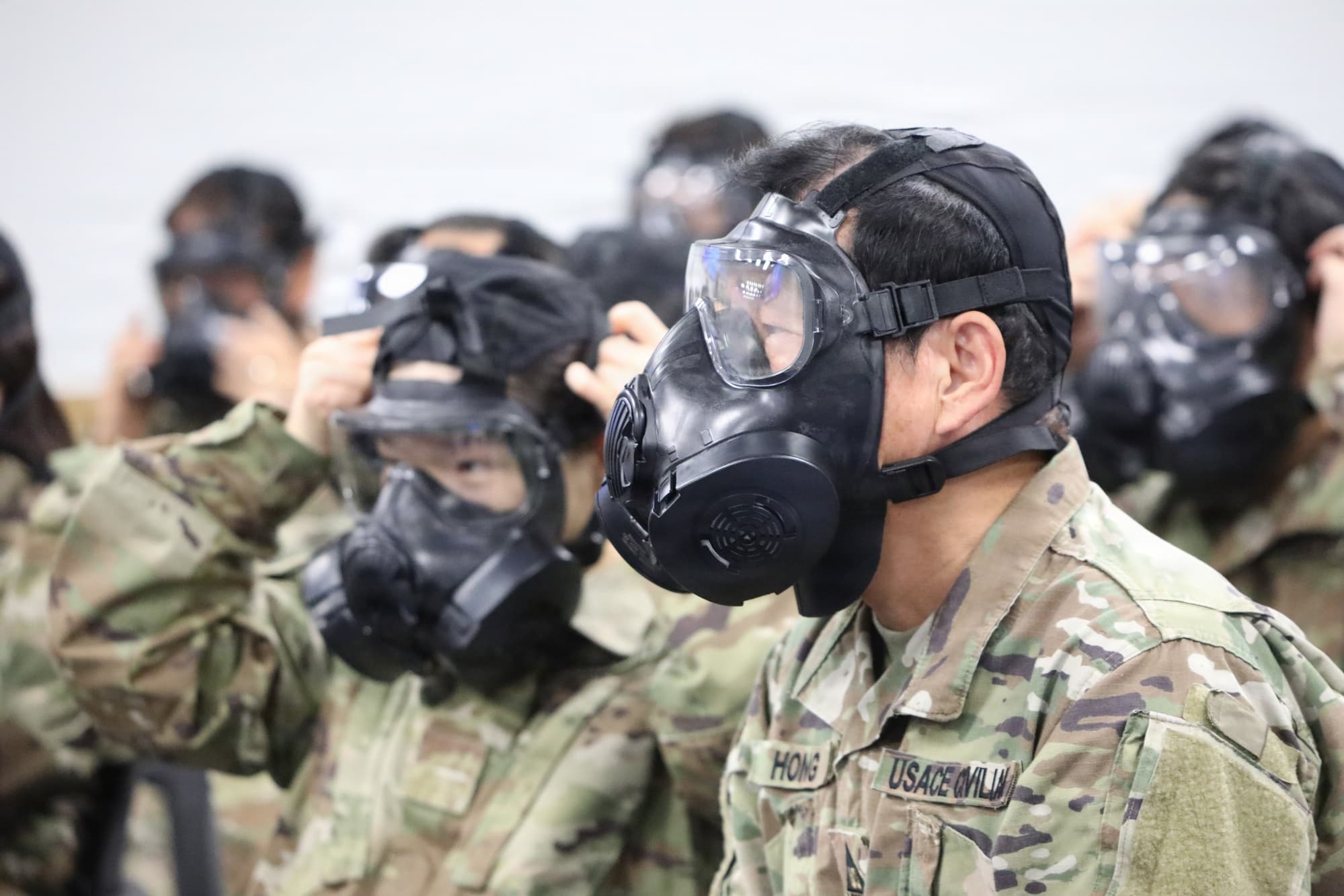
The U.S. defense presence in South Korea includes 2,903 appropriated-fund civilians, while 12,428 archived job announcements reveal the year-round system behind the alliance.
Data investigationsAugust 21, 2026
DOD Cut 78,375 Civilian Jobs. The Work Did Not Disappear.
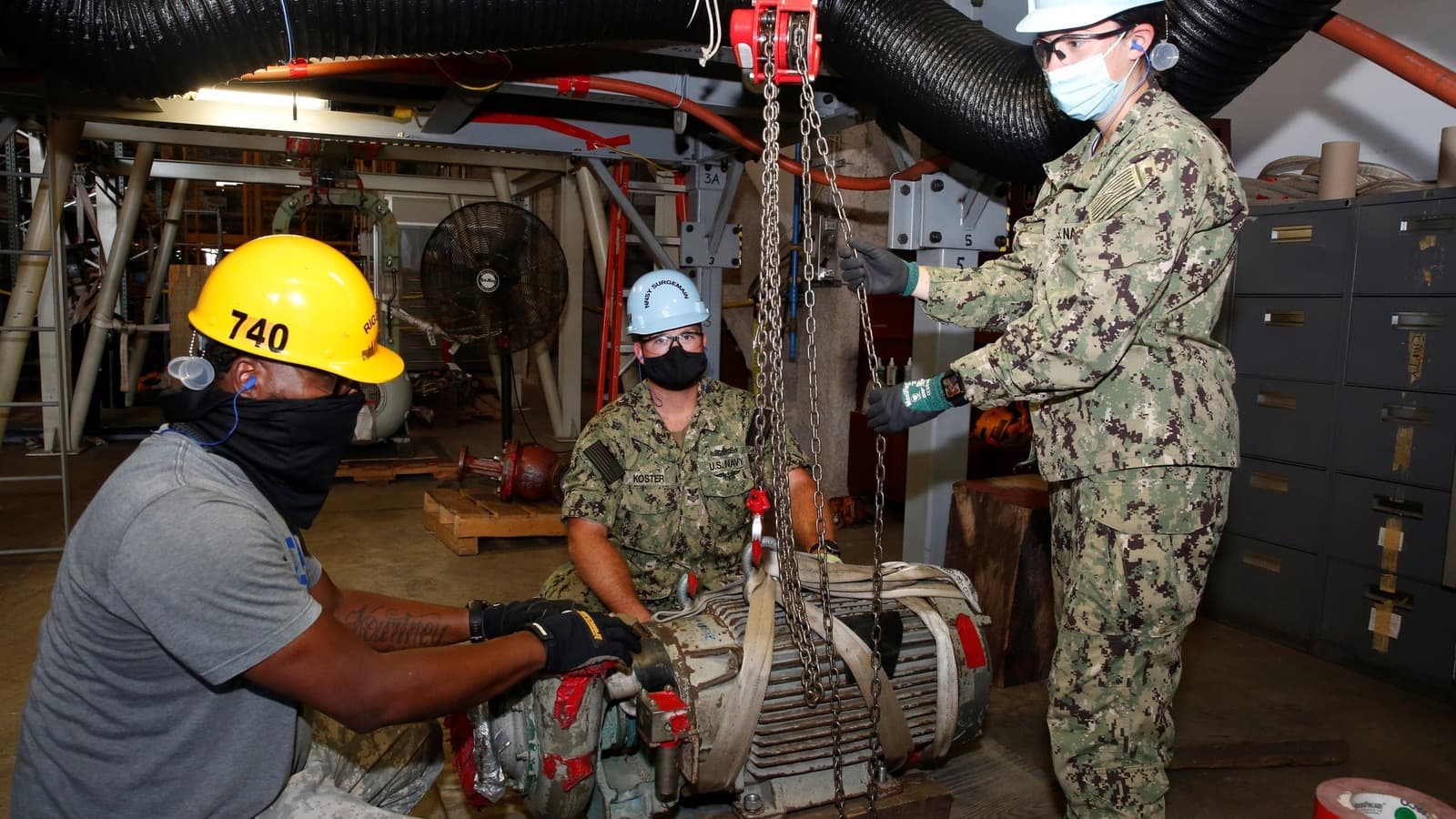
The 2025 reduction reached IT, contracting, engineering, logistics and weapons testing. Public records do not show a clean transfer of the work or its full cost.
The evidence therefore does not establish that contractors replaced civilians one for one. Contractors may supply scarce technical skills, surge capacity or support for a newly created mission. They may also make workforce planning more fragile when the service cannot map contractor work to validated requirements. Both possibilities can be true.
Air Force support adds another dependency. Space Force documented 9,396 requirements for Air Force support personnel, funded 7,842 and had 7,296 assigned. Those assignees included 4,068 enlisted personnel, 2,408 civilians and 820 officers. The 2,100-person requirement-to-assignment difference was separate from the Guardian gap.
These supporting personnel perform work the service still needs even though they are not Guardians. A force-design claim about doubling “personnel” is incomplete unless it explains whether future capacity will come from Guardians, Air Force support, contractors or a different allocation among all three.
Doubling personnel requires a workforce ledger first
The Space Force has several credible reasons to grow. Its 2040 design anticipates a more contested environment, larger joint-service demands and expanding mission areas. Training capacity has to keep pace with operational units. Cybersecurity, intelligence, acquisition and engineering skills are difficult to recruit and retain across government and industry. Service components that did not exist at launch now require permanent staffs.
But a strategic direction is not yet an executable workforce plan. The 2040 baseline explicitly is not a formal resource request. GAO found that the service lacked timely manpower studies, complete contractor data and a comprehensive process for determining whether skills matched assignments. The report also said the intelligence directorate was at 60% of authorized military and civilian strength in April 2025, an example of how a service-wide average can conceal a more concentrated skills problem.
Training is another constraint. Contractors and temporary facilities can expand throughput in the short term, but permanent capacity requires instructors, curriculum, facilities and recurring funds. GAO described plans to grow enlisted Guardians from 5,336 in fiscal 2025 to 6,006 by fiscal 2028, with several hundred additional enlisted personnel needed for the service's force-generation model. Recruiting those people is only the beginning; they must be trained and assigned to validated work.
A durable public scorecard would answer five questions each year:
1. How many military and civilian requirements have been validated by a current manpower study? 2. How many validated requirements are funded, and how many have a qualified assignee? 3. Which critical occupations and commands carry the largest gaps? 4. What work is performed by Air Force support personnel and contractor FTEs? 5. How do accessions, civilian hiring, training completions, losses and reassignment change those gaps?
Without that ledger, “double the force” risks becoming another top-line target that cannot be reconciled across requirements, budgets, rosters and contracts. With it, Congress and the public could distinguish an unfunded need from a recruiting shortfall, a training bottleneck from an outdated requirement, and real workforce growth from a transfer between accounting categories.
Space Force is not a service in simple decline. Its Guardian workforce grew nearly 62% in four years, military recruiting remained strong, and a large civilian hiring campaign is underway. It is also not fully staffed against the needs it has documented, and some of those needs have not been validated quickly enough to serve as a stable plan.
The service's ambition is no longer lean. Its workforce measurement system still is.
Methodology and limitations
The primary workforce source is GAO-26-107868, published July 14, 2026. GAO analyzed fiscal 2025 personnel data, fiscal 2021-2025 contractor estimates, Air Force support, policy documents and interviews across headquarters, field commands and five bases. The Guardian history, personnel funnels and command fill rates in this article come from that review.
Requirements, funded positions, assignments, authorized end strength, onboard headcount and FTE are different measures. FederalHiringData did not add those measures or convert the requirements-to-assignment difference into a conventional vacancy rate. The 2019 population described at establishment is excluded from the comparable fiscal 2021-2025 Guardian chart.
The OPM analysis covers monthly civilian headcount for five exact Space Force-coded subelements from December 2024 through June 2026. It does not include uniformed personnel or contractors and does not reproduce the service's internal roster. USAJOBS counts use distinct announcements whose stored agency name identifies the United States Space Force. Announcements can cover more than one opening and do not measure applications, selections, hires or retention. The 2026 announcement total is partial through Aug. 14.
Contractor figures are estimated labor FTEs derived from spending and work hours, not individual headcount. FederalHiringData did not infer contractor functions or add contractor FTEs to personnel rosters. No causal claim connects a specific staffing gap to a mission failure.
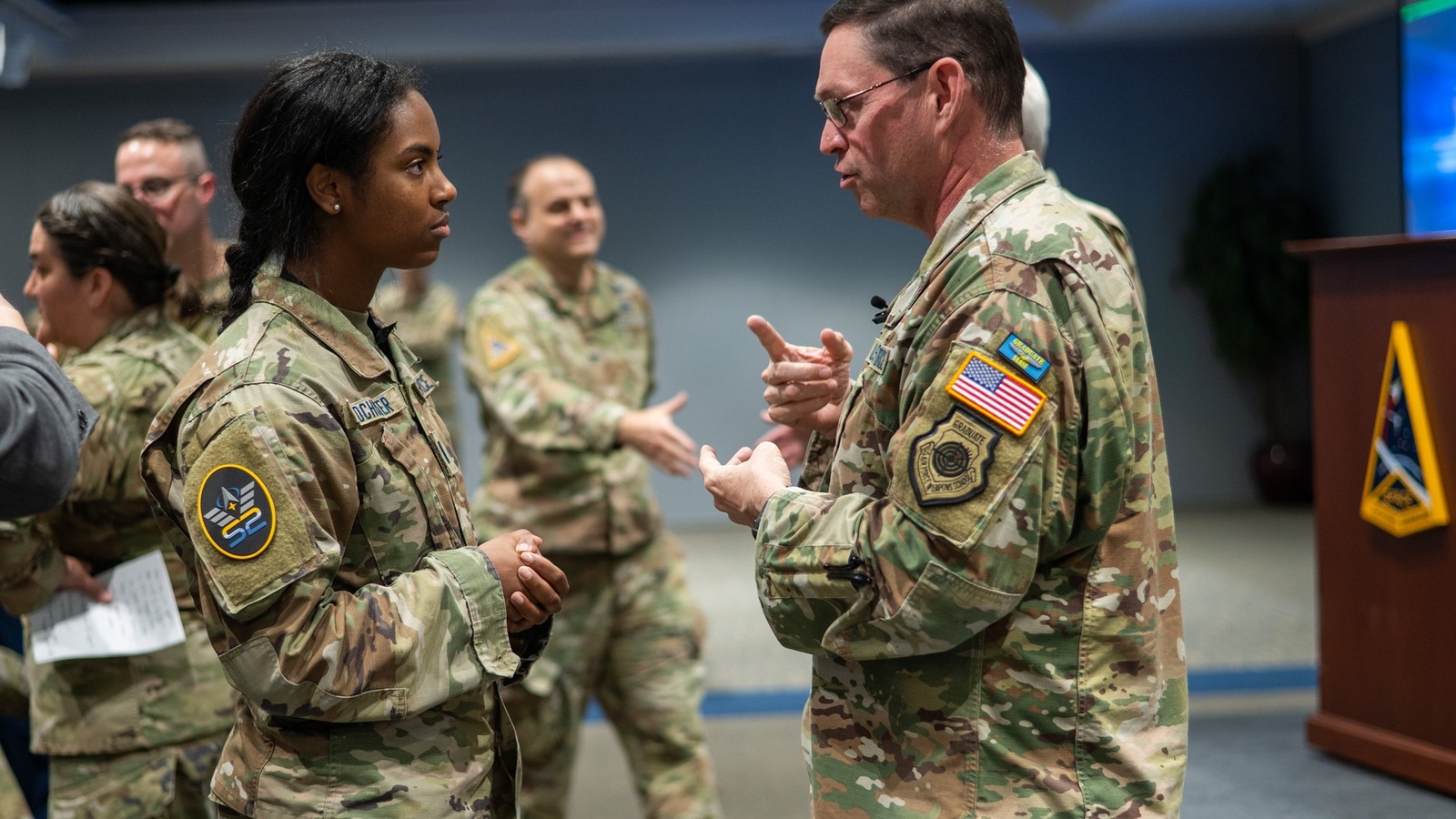
The hero photograph shows Gen. Chance Saltzman visiting Space Systems Command's acquisition workforce at Los Angeles Air Force Base. It is a public-domain U.S. Space Force image distributed by DVIDS. Research, analysis, writing and charts used no OpenAI API calls.
For more context, see FederalHiringData's workforce statistics and other data investigations.
Continue reading
More from FederalHiringData

Data investigationsAugust 22, 2026
Army Depots Lost Workers as Contractors Took More Repair Work. Tanks Still Stalled.
Anniston and Red River depots lost 785 federal employees as contractor staffing grew, while difficult vehicle conditions, old equipment and parts shortages complicated repairs.
Data investigationsAugust 22, 2026
Air Force Depots Rewrote Delayed Maintenance Targets. Local Pay Gaps Remained.
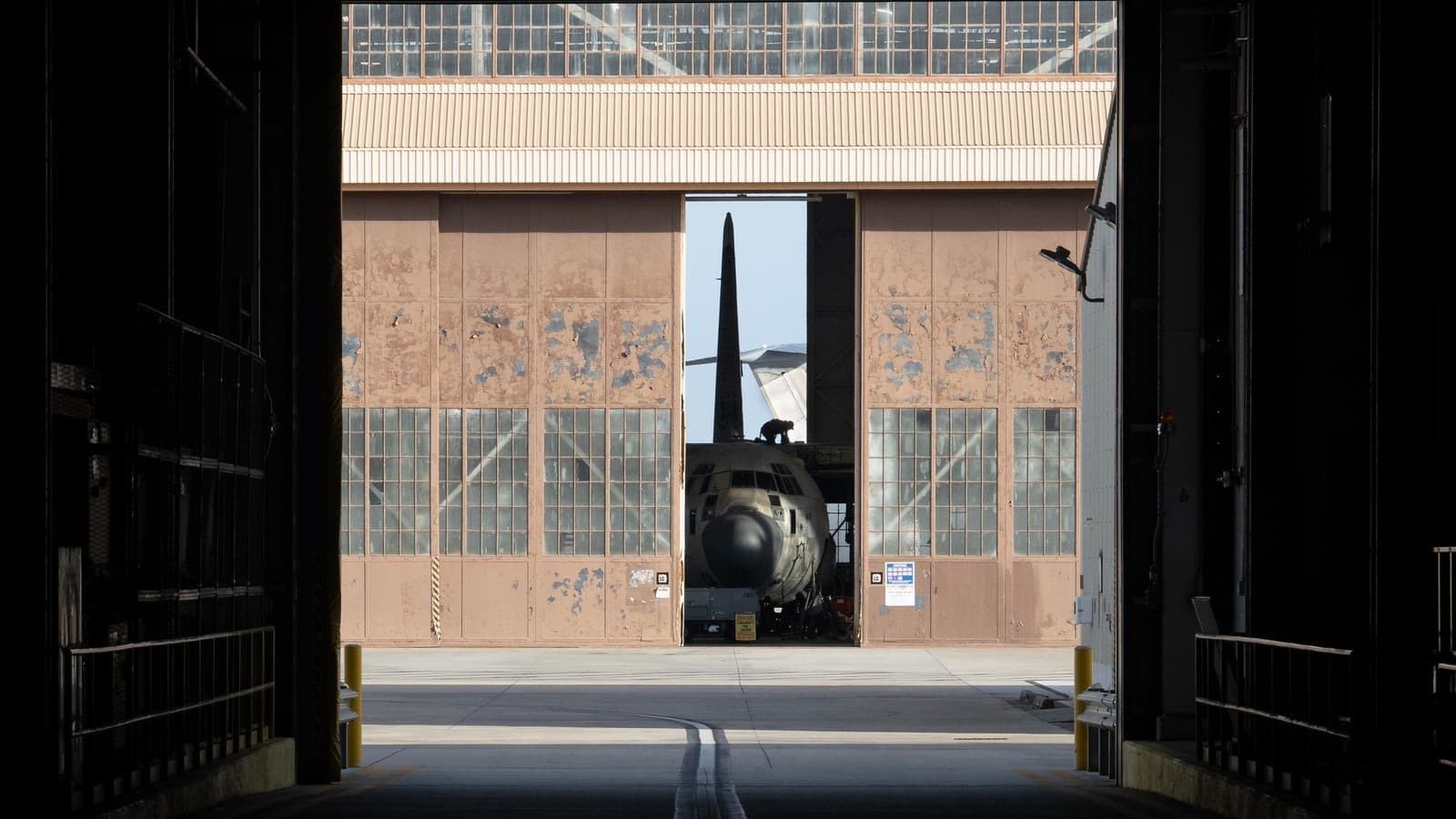
GAO found 73% of aircraft finished after their original fiscal 2024 depot targets, even as the Air Force's revised measure reported 34% delayed.
Data investigationsAugust 22, 2026
DOD Identified 19,379 Security-Cooperation Positions. It Still Lacks an Integrated Personnel System.
DOD coded 19,379 positions across nine functions, but its qualifications, assignments and tenure system remains unfinished as reform teams work around vacancies.
Federal Hiring Data Weekly
Get the biggest federal workforce changes in your inbox.
Subscribe to Federal Hiring Data Weekly for federal hiring trends, salary data, agency movements, and original investigations, with email confirmation before delivery.