August 22, 2026
DOD Identified 19,379 Security-Cooperation Positions. It Still Lacks an Integrated Personnel System.
DOD coded 19,379 positions across nine functions, but its qualifications, assignments and tenure system remains unfinished as reform teams work around vacancies.
By Evan Mercer
Published August 22, 2026Last edited August 22, 2026
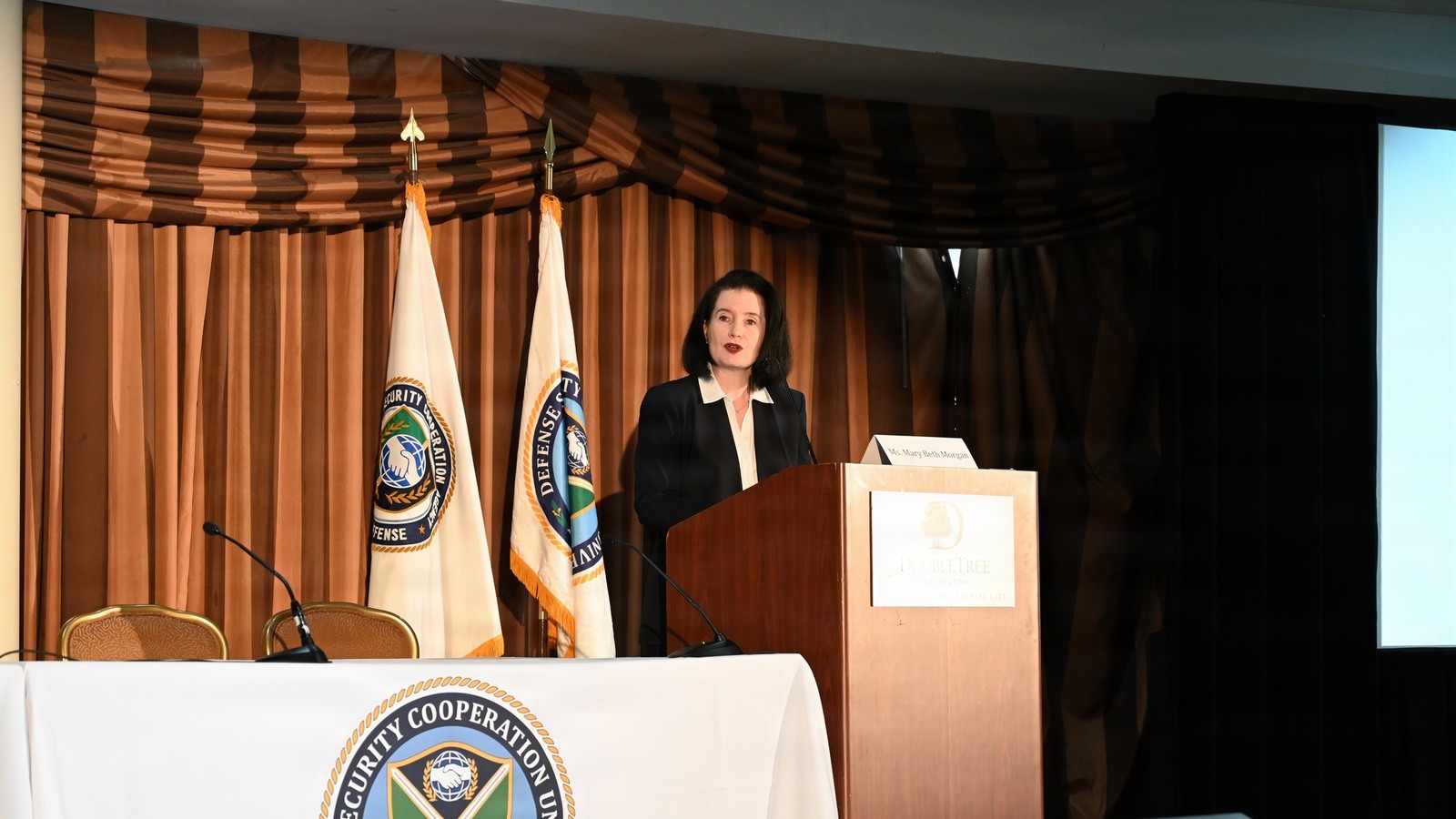
The Defense Department has put a number on the workforce behind its security-cooperation mission: 19,379 positions spread across 30 components. That is the clearest map DOD has produced of the people who manage arms sales, train partner forces, advise foreign ministries, administer financing, build information systems and keep the enterprise running.
The map is not yet a roster. DOD still lacks the completed management system that is supposed to connect those positions to qualifications, assignments and tenure. It cannot use the 19,379 figure as a verified count of people onboard, and it cannot publicly show how many coded jobs are filled by people with the required preparation.
That distinction matters because the mission is large and volatile. DOD reported $104.4 billion in implemented arms transfers and security-cooperation programs in fiscal 2025. The total was below the $117.9 billion peak in fiscal 2024, but it was nearly double the fiscal 2018 value. Those dollars are not an agency budget and cannot be divided by headcount to calculate workload. They show the financial scale of activity dependent on a workforce that DOD is still learning to manage as one enterprise.
An August 2026 Government Accountability Office review found real progress: 46 of 66 congressionally required workforce provisions were complete as of May. But 15 were still in progress and five had not started. The unfinished work is concentrated in the human-capital systems that would let leaders move from counting positions to knowing whether the right people occupy them.
DOD finally counted 19,379 positions
The security-cooperation workforce is much broader than the Defense Security Cooperation Agency. GAO defined it as military and civilian DOD personnel in the United States and overseas who plan, monitor or conduct security cooperation. It reaches into the military departments, combatant commands, embassy security-cooperation organizations, acquisition offices, training organizations and headquarters staffs.
DSCA used a department-wide data call to identify positions in that enterprise. By October 2025, 30 DOD components had reported 19,379 positions across nine functional areas.

| Functional area | Coded positions | Share |
|---|---|---|
| Foreign Military Sales and Financing | 7,117 | 36.7% |
| Support Enablers | 5,550 | 28.6% |
| Acquisition | 2,769 | 14.3% |
| Advise, Train, and Educate | 1,245 | 6.4% |
| Policy and Resourcing | 1,148 | 5.9% |
| Security Cooperation Organization | 736 | 3.8% |
| Building Partner Capacity / Train and Equip | 500 | 2.6% |
| Assessment, Monitoring, and Evaluation | 274 | 1.4% |
| State Partnership Program | 40 | 0.2% |
Nearly four in five coded positions fell into the top three categories: foreign military sales and financing, support enablers, and acquisition. The support category is especially revealing. It includes financial management, human resources, information technology and legal work. Security cooperation may be publicly associated with weapons or training, but much of its workforce is administrative and technical infrastructure.
The position inventory also carries an important warning. It does not say 19,379 people were onboard. A position may be vacant, occupied, temporary, military or civilian. The count does not include a comparable history showing whether the enterprise grew as its mission changed. DOD has defined the universe it needs to manage; it has not yet published a complete personnel picture inside that universe.
Mission value rose, but dollars are not workload
Official annual reporting shows why Congress wanted a more professional workforce system. Security-cooperation value moved from $55.7 billion in fiscal 2018 to $104.4 billion in fiscal 2025, an increase of 87.6 percent. The path was not steady: it fell to $34.8 billion in fiscal 2021, accelerated to $80.9 billion in 2023, reached $117.9 billion in 2024 and then eased in 2025.

The series combines implemented arms transfers and security-cooperation programs. Case value can swing because a small number of expensive systems move through the process. A $10 billion sale is not necessarily ten times the staff work of a $1 billion sale, and the annual total is not DSCA's payroll, operating budget or contract spending.
That prevents a simple conclusion that mission value grew faster than personnel. DOD has not published a comparable historical headcount for the full enterprise. The defensible finding is narrower: a mission handling more than $100 billion in annual activity needs reliable information about who holds its 19,379 coded positions, what those jobs require and where gaps persist.
Forty-six reforms are complete; the hardest personnel work is not
Congress began formal professionalization requirements in the fiscal 2017 defense authorization law and added specific workforce reforms in fiscal 2024. GAO sorted 66 provisions among five implementation teams. It counted a provision as complete only when the evidence showed the required action had been addressed with no significant identified work remaining.

| Implementation team | Complete | In progress | Not started | Total |
|---|---|---|---|---|
| Human Capital Initiative | 23 | 11 | 2 | 36 |
| Office of the DSCU President | 11 | 2 | 0 | 13 |
| Young Institute | 6 | 0 | 3 | 9 |
| Defense Security Cooperation Service | 2 | 2 | 0 | 4 |
| FMS Center of Excellence | 4 | 0 | 0 | 4 |
| Total | 46 | 15 | 5 | 66 |
The Human Capital Initiative owned more than half of the provisions and most of the unfinished work. Its in-progress portfolio included the management information system for qualifications, assignments and tenure, performance measures and an assessment that will inform the mix of career and temporary personnel. The two items that had not started concerned career paths and a mechanism for assigning appropriately certified people to key positions.
The five not-started provisions should not erase the 46 completions. DOD has established position coding, a competency framework, training requirements, new organizations and a recurring data process. But the status count measures implementation, not effect. A completed policy does not by itself show that every component follows it, and a launched course does not show whether qualified personnel remain in the jobs where they are needed.
Certification now has an enterprise to reach
The Defense Security Cooperation University's Certification 2.0 program gives DOD a common professional language. It is built around 10 competencies, nine functional areas and four proficiency levels. DSCU says all members in coded positions must be certified. Foundational members generally have one year to complete certification; practitioner and expert members generally have two.
The new position count makes the scale of that obligation visible. Certification must reach a workforce distributed across 30 components, not simply employees on DSCA's rolls. The system must also account for different kinds of work. A financial manager supporting foreign military sales, an acquisition specialist, an embassy officer and an instructor do not need identical experience even when all belong to the same enterprise.
Federal Hiring Data Weekly
Get the biggest federal workforce changes in your inbox.
Subscribe to Federal Hiring Data Weekly for federal hiring trends, salary data, agency movements, and original investigations, with email confirmation before delivery.
DOD planned a human-capital assessment across all 30 components, including a survey of nearly 10,000 military and civilian personnel. That is a potentially valuable measure of skills and experience, but it is not a substitute for a durable personnel system. Surveys describe a moment. Leaders also need routine data on vacancies, certification status, assignments, tenure and turnover.
GAO said quarterly data calls begun in March 2025 helped components find vacancies and correct position errors. By April 2026, every component was supplying data. An interim dashboard made the information more usable. Yet the underlying process remained labor-intensive because components tracked positions and personnel in different systems. The integrated management system is scheduled for May 2028.
The reform team is covering its own vacancies
The people building the workforce system are also managing staffing gaps. Four of the five implementation teams had new or vacant positions, according to GAO.
The Human Capital Initiative was initially authorized 10 positions. Two were defunded. Two were occupied by people temporarily supporting other DSCU requirements. Six were unfilled. The team reassigned tasks to existing staff, borrowed expertise elsewhere in DSCA and used contractor support. DOD's Strategic Hiring Committee authorized six positions in April 2026, but they had not yet been filled when GAO completed its work.
The FMS Center of Excellence had five of 15 positions unfilled. Officials said the vacancies slowed curriculum development, course delivery and research. At the Young Institute, a supervisory lecturer worked on Certification 2.0 curriculum while the institute's director also served as acting DSCU vice president.
The Defense Security Cooperation Service faced a different expansion. Established on October 1, 2024, it was expected to exercise administrative control over approximately 1,320 security-cooperation-organization personnel. Civilian transfers occurred in October 2024 and January 2026, while military transfers were still in progress. A hiring freeze interrupted staffing at headquarters, regional commands and embassy offices, although a Title 22 exemption and internal transfers provided some relief.
The 1,320 personnel figure does not conflict with the 736 positions coded to the Security Cooperation Organization functional area. GAO explained that some SCO personnel are coded to other functions and the administrative-control count includes locally employed staff. It is another example of why definitions matter before numbers can be compared.
The narrow DSCA workforce grew, then public recruiting fell
FederalHiringData's OPM records offer a narrower view of the civilian agency leading much of this work. Exact agency-subelement code DD06 rose from 622 covered federal civilian employees in January 2015 to 1,117 in June 2026. Headcount was already 1,106 in December 2024, so the latest period was relatively flat.

This OPM series is not the enterprise count. It excludes military personnel, contractors, locally employed staff and federal employees in other DOD organizations. It does show the occupational mix inside the DSCA-coded civilian organization. In June 2026, the largest groups included miscellaneous administration and program, education and training, management and program analysis, information technology management, financial administration, budget analysis, program management, human resources and attorneys.
Public recruiting moved sharply after 2024. Exact-name DSCA and Defense Security Cooperation Service announcements in FederalHiringData's historical USAJOBS archive rose to 316 in 2024, then fell to 120 in 2025. The archive contained 86 for partial calendar 2026 through August 11.
Related research
Put this finding in context
Data investigationsAugust 22, 2026
Space Force Filled 75% of Its Documented Need. Now It Says Personnel Must Double.
A GAO review found 13,509 assignments against 18,002 documented requirements as the service planned to double personnel without a complete workforce ledger.
Data investigationsAugust 21, 2026
DOD Cut 78,375 Civilian Jobs. The Work Did Not Disappear.
The 2025 reduction reached IT, contracting, engineering, logistics and weapons testing. Public records do not show a clean transfer of the work or its full cost.

Those records measure announcements, not hires. One announcement can seek multiple employees, and internal placements, military assignments and contractor support do not appear in the same way. The decline nevertheless documents a smaller public recruiting signal during a period when GAO reported unfilled implementation jobs and hiring constraints.
For applicants, the archive shows that security cooperation is not a single career track. Program administration, management analysis, IT, financial administration, education and training, human resources and budget analysis all recur. Readers should use current federal job listings, the occupation directory and agency pages to find openings; the historical counts here do not mean those jobs remain available.
A 2028 finish line needs coverage measures
DOD plans to complete all 66 statutory provisions by the end of fiscal 2028. Congress did not set one overall deadline, and GAO made no recommendations. The department's plan therefore deserves to be judged not only by whether the remaining boxes close, but by whether the workforce becomes measurably easier to manage.
Useful public indicators would include the share of coded positions matched to personnel records, the share occupied by people with the required certification, persistent vacancy rates, time in assignment, validation failures and the amount of manual reconciliation still required. Those measures could reveal progress without exposing sensitive case or personnel information.
They would also distinguish infrastructure from outcome. A management system can be delivered on schedule while coverage remains incomplete. A certification can be recorded while a component continues assigning people outside their field. A workforce assessment can identify gaps without showing how quickly they are closed.
The strongest conclusion available today is not that the reform failed. DOD has completed 46 provisions, defined 19,379 positions and created common standards. The unresolved problem is whether it can connect those pieces while the teams doing the connecting are themselves redistributing work around vacancies. For a mission valued at $104.4 billion in fiscal 2025, that is a management question with consequences far beyond one agency's staffing table.
Methodology and limitations
The enterprise position inventory, reform scorecard, staffing details and implementation dates come from GAO-26-107976, published August 20, 2026. GAO reviewed DSCA documents, applied stated definitions for complete, in progress and not started, and interviewed responsible officials. Status was current as of May 2026; the position count was current as of October 2025.
Annual security-cooperation values come from DSCA historical sales books and official annual reporting. They include implemented arms transfers and security-cooperation programs. They are not DSCA's budget, payroll, contract spending or a direct workload measure.
FederalHiringData queried its local research warehouse in read-only mode. OPM covered civilian headcount uses exact agency-subelement code DD06. September 2025 is shown as a gap because its 603-person value is an isolated source anomaly between 1,097 in August and 1,051 in October. No claim of a September workforce collapse is made.
Historical USAJOBS counts use distinct control numbers with exact stored Defense Security Cooperation Agency and Defense Security Cooperation Service names, grouped by opening year. Coverage begins April 12, 2017 and runs through August 11, 2026 for this analysis. The first and last years are partial. Announcements are not applications, selections, hires or vacancies filled.
The 19,379 figure is a count of coded positions, not verified people onboard. No comparable historical headcount exists for the full enterprise, so the analysis does not claim mission value grew faster than enterprise personnel. OpenAI API calls used for research or writing: 0.
Primary records and related reading
Continue reading
More from FederalHiringData

Data investigationsAugust 18, 2026
The USS Abraham Lincoln Is Still at Sea. A $192.6 Million Maintenance Plan Is Waiting
The carrier's deployment has outlasted its published maintenance calendar. More than 25,000 archived Navy job announcements show the shore-side labor system around its homeport.
Data investigationsAugust 18, 2026
The Korea Exercise Was Cut. The Civilian Workforce Behind the Alliance Was Not
The U.S. defense presence in South Korea includes 2,903 appropriated-fund civilians, while 12,428 archived job announcements reveal the year-round system behind the alliance.

Data investigationsAugust 22, 2026
Army Depots Lost Workers as Contractors Took More Repair Work. Tanks Still Stalled.
Anniston and Red River depots lost 785 federal employees as contractor staffing grew, while difficult vehicle conditions, old equipment and parts shortages complicated repairs.
Federal Hiring Data Weekly
Get the biggest federal workforce changes in your inbox.
Subscribe to Federal Hiring Data Weekly for federal hiring trends, salary data, agency movements, and original investigations, with email confirmation before delivery.