August 22, 2026
Air Force Depots Rewrote Delayed Maintenance Targets. Local Pay Gaps Remained.
GAO found 73% of aircraft finished after their original fiscal 2024 depot targets, even as the Air Force's revised measure reported 34% delayed.
By Evan Mercer
Published August 22, 2026Last edited August 22, 2026
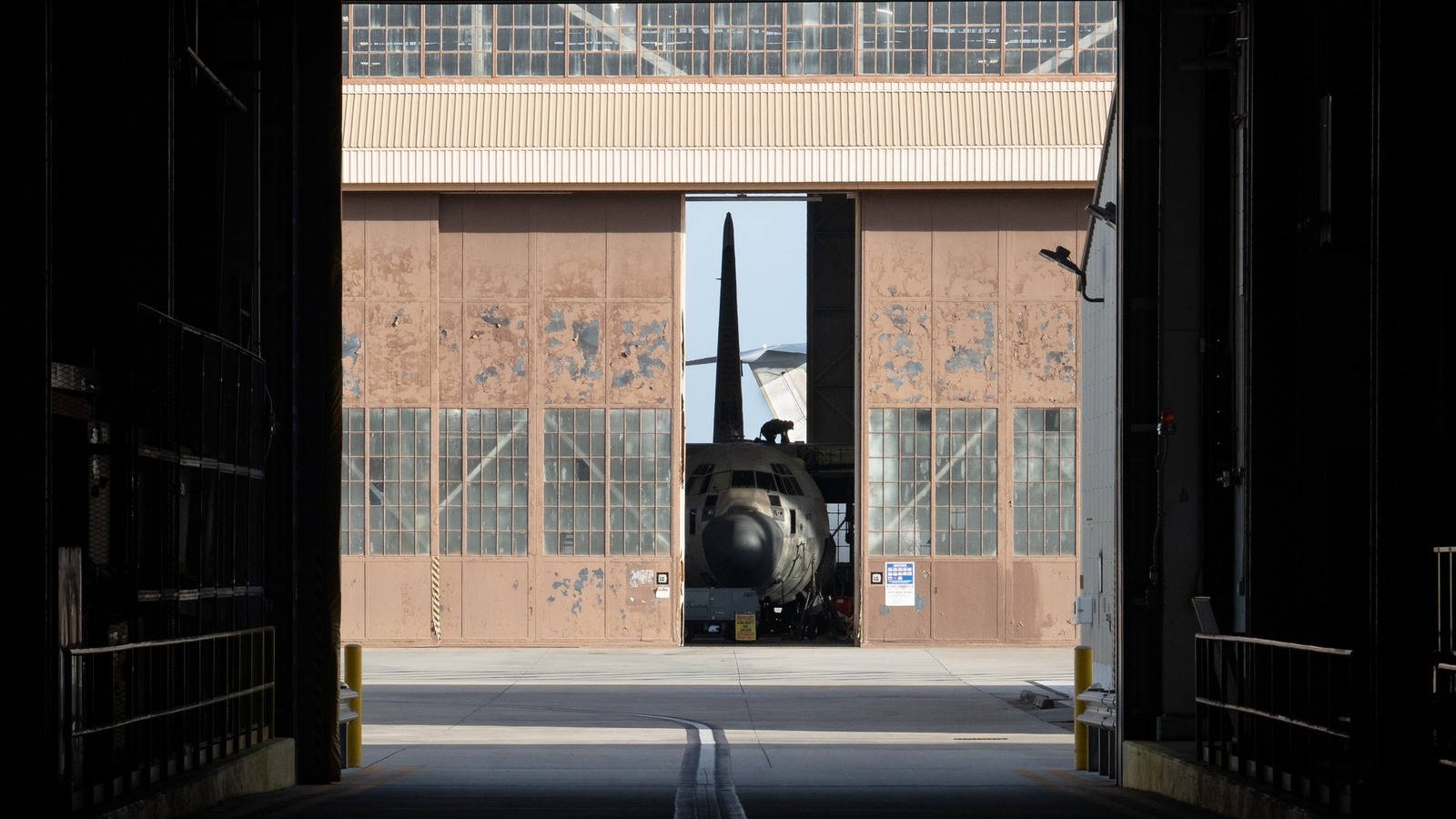
In fiscal 2024, 73% of Air Force aircraft undergoing depot maintenance finished after the target date established before the aircraft arrived. The service's preferred revised schedule made the same year look much better: 34% delayed.
Both numbers came from the same maintenance events. The difference was the target. Air Force depots could revise a completion date after technicians discovered corrosion, cracks or other unplanned work, and in some cases changed the target after maintenance was finished to match the time it had actually taken.
A May Government Accountability Office investigation concluded that the revised measure masked the full extent of growing delays and was applied inconsistently. The original-date measure rose from 31% delayed in fiscal 2019 to 73% in fiscal 2024. The revised-date measure moved from 19% to 34%.
The workforce story looked paradoxical. Ogden, Oklahoma City and Warner Robins Air Logistics Complexes had filled at least 90% of authorized positions since 2020. Yet each reported shortages in particular occupations, especially mechanics and engineers, and identified private-sector pay competition as its leading recruiting and retention challenge. A high overall fill rate did not guarantee that the production line had the skill it needed at the point where it needed it.
A schedule can move while the aircraft does not
Depot maintenance begins with an original target completion date set before induction. The date reflects the work expected at that point. Once an aircraft is opened and inspected, maintainers may find additional damage. A revised target can acknowledge legitimate work that was impossible to scope earlier.
That flexibility serves an operational purpose. Treating every discovered crack as a planning failure would punish depots for repairing real defects. The problem GAO identified was how revised targets were used for performance reporting. When the measure replaces the original rather than supplementing it, readers cannot see how much calendar time was added after arrival.
The gap widened markedly. Based on the original target, the delayed share moved from 31% in fiscal 2019 to 53% in 2020, 55% in 2021, 59% in 2022, 58% in 2023 and 73% in 2024. Based on revised targets, the sequence was 19%, 33%, 30%, 33%, 41% and 34%.
Both series contain useful information. The original date shows the customer's planning experience and total slippage from the initial promise. The revised date shows how often depots missed a later schedule after incorporating some unplanned work. Reporting only the second series answers a narrower question and hides the size of the replan.
GAO found inconsistent implementation across depots and program offices. It also found that depots frequently revised targets after work was complete. DOD agreed with most of GAO's 10 recommendations, including using the original target as a primary timeliness measure and making the revision process more consistent.
Ninety percent filled did not mean every skill was available
The three depots reported filling 90% or more of authorized positions from fiscal 2020 through 2025. That aggregate can be true while an individual production line remains short.

An authorization is an approved position, not a measure of proficiency, experience or availability on a specific shift. Ten empty jobs spread across general administration have a different production effect than ten missing aircraft mechanics with a scarce certification. A newly hired apprentice and a mechanic able to diagnose an unfamiliar structural problem each count as one filled position.
Depot officials identified shortages in engineers, aircraft mechanics, electricians, sheet-metal mechanics and nondestructive testers. Warner Robins officials said half their workforce was retirement-eligible within five years. Oklahoma City described difficulty hiring workers with Airframe and Powerplant certifications. Ogden used retention incentives for engineering series and nondestructive testers.
The depots did not rely on a single remedy. They formed partnerships with high schools, technical colleges and universities; offered internships and apprentice pipelines; used on-site interviews, physicals, drug tests and fingerprinting to shorten hiring; issued letters of intent; targeted former military personnel; and selectively offered higher starting grades or retention incentives.
Those actions show that management recognized occupational gaps. GAO's concern was that DOD had not performed a comprehensive assessment of pay differences for occupations affected by private-sector competition. Without that analysis, incentive choices could remain local and reactive.
The pay comparison did not point in one direction
GAO compared selected depot occupations with Bureau of Labor Statistics estimates for similar private-sector work. The results varied by job and geography.
At Ogden, the median federal pay GAO reviewed for general engineers was 26% above the comparable local private-sector estimate, while mechanical engineers were 9% below. At Warner Robins, federal mechanical engineers were 10% below the local comparison. Warner Robins aircraft mechanics were 15% above a local estimate but 20% below the Georgia estimate.
Oklahoma City's aircraft engine mechanics and aircraft mechanics were 18% above the local private estimate and 17% below the statewide estimate. Its electronics integrated systems mechanics were more than 30% above the comparable local and state estimates. Nondestructive testers were roughly even.
These are illustrative medians, not an individual worker's total compensation. The job matches are imperfect, federal benefits are not included in a simple salary comparison, and local versus statewide labor markets can tell different stories. They nevertheless show why "the private sector pays more" is too broad. Competition appears concentrated in certain occupation-location combinations.
A comprehensive assessment could tell leaders where a retention incentive is likely to matter and where the problem is instead hiring speed, career progression, location or training capacity. It could also prevent blanket pay claims from obscuring federal occupations that already compare favorably.
The broader civilian base contracted after the period GAO reviewed
Federal Hiring Data Weekly
Get the biggest federal workforce changes in your inbox.
Subscribe to Federal Hiring Data Weekly for federal hiring trends, salary data, agency movements, and original investigations, with email confirmation before delivery.
FederalHiringData's OPM series for Air Force Materiel Command is broader than the three Air Logistics Complexes. It includes covered civilians across the command and should not be described as a depot roster. Within that scope, headcount rose from 59,054 in January 2015 to 72,217 in December 2024, then fell to 64,805 by June 2026. The recent decline was 7,412 employees, or 10.3%.

That movement happened after most of GAO's fiscal 2019-2024 delay series and overlaps only the end of its staffing period. It cannot explain the earlier rise in delay rates. It matters prospectively: the larger command entered the next maintenance period with a smaller covered civilian workforce.
The broad historical recruiting signal also contracted. Announcements matched to Air Force Materiel Command, the sustainment center and logistics-complex language numbered 4,127 in 2024, 1,008 in 2025 and 585 through Aug. 14, 2026. Program administration, management analysis, IT, business, logistics and support work were prominent in that broad scope.

The query is not an exact depot vacancy count, and annual announcements do not equal hires. It is evidence that the public recruiting channel narrowed during a later workforce contraction, not proof that a particular aircraft missed its date because a job went unadvertised.
Timeliness needs two clocks and a cause code
The Air Force can improve transparency without abandoning revised schedules. Publish the original target, the current revised target and the actual completion date together. Then separate discovered work, parts delays, engineering approvals, staffing, equipment downtime and customer-driven changes.
GAO found that the service did not fully evaluate root causes with the data already collected. DOD partially concurred with two recommendations related to root-cause analysis, while the Air Force agreed to capture additional information and determine where to store it. GAO maintained that the existing system could hold the data.
A stronger workforce view would connect the cause codes to occupation-level staffing. If aircraft wait primarily on parts, hiring more mechanics may not change throughput. If a small group of engineers or nondestructive testers controls release work, a 90% total fill rate may conceal the bottleneck. If revised dates are repeatedly set after completion, no staffing intervention can make the performance metric informative.
For job seekers, federal depot work combines engineering, skilled trades, logistics, IT and program management. Historical figures here do not identify current openings. Readers can search active federal jobs, explore occupational series and review agency hiring data.
The Air Force's three depots maintain aircraft required for military operations. Their schedules need room for defects that cannot be seen before induction. They also need a performance record that preserves the original promise. A revised date can be a useful management tool; it should not erase the delay it was created to explain.
Related research
Put this finding in context

Data investigationsAugust 22, 2026
Space Force Filled 75% of Its Documented Need. Now It Says Personnel Must Double.
A GAO review found 13,509 assignments against 18,002 documented requirements as the service planned to double personnel without a complete workforce ledger.

Data investigationsAugust 22, 2026
Army Depots Lost Workers as Contractors Took More Repair Work. Tanks Still Stalled.
Anniston and Red River depots lost 785 federal employees as contractor staffing grew, while difficult vehicle conditions, old equipment and parts shortages complicated repairs.
A better scorecard would connect time, work and skill
Three dates should form the spine of the public measure: the original target, every approved revision and the actual completion date. Each revision should carry a reason, the date it was approved and the amount of time added. A revision entered after completion should be visible as such rather than blended with a forecast made while work was underway.
The reason codes then need operational detail. "Unplanned work" can include corrosion, cracks, wiring damage or a configuration discovered only after disassembly. "Parts" can mean no supplier, a late shipment, an unusable item or a component waiting for engineering approval. "Staffing" should identify the specialty and production step, not merely a total vacancy rate.
Linking those records would let leaders test rather than assume the value of an intervention. If a retention incentive stabilizes nondestructive testers, did inspection wait time fall? If a college partnership adds aircraft mechanics, how long until the group reaches independent qualification and does throughput change? If a parts initiative succeeds, do original-target delays decline even when staffing is unchanged?
The scorecard should include the age and condition of aircraft entering each depot, because older fleets generate more discovered work. It should also preserve differences among the three complexes. A national average can hide a severe bottleneck at one facility or a successful process at another.
Finally, the Air Force should publish both rate and volume. Seventy-three percent delayed is consequential, but readers also need the number of aircraft completed and the distribution of delay days. Ten aircraft one day late and ten aircraft a year late produce the same rate. GAO reported median delay days in its full analysis, underscoring why a percentage alone cannot describe readiness exposure.
These measures would not eliminate uncertainty. Depot maintenance will always discover work. They would make the uncertainty visible and keep a legitimate replan from becoming a substitute for the original commitment.
Public reporting can make that standard concrete. Each complex should show planned and actual staffing by bottleneck occupation, local vacancy duration, training time, separations, overtime and contractor support alongside aircraft output. Those fields would let leaders distinguish a parts shortage from a machinist shortage, or a planning error from a retention problem, before a missed date becomes the only visible signal.
That transparency would also let employees and local communities distinguish a temporary workload surge from a structural labor-market problem.
Methodology and limitations
Delay, staffing and pay findings come from GAO-26-107890. GAO analyzed Air Force maintenance and staffing records, interviewed officials and visited Ogden, Oklahoma City and Warner Robins Air Logistics Complexes. Delay percentages compare aircraft completed after original and revised target dates. They do not measure aircraft availability across the entire fleet.
FederalHiringData calculated the Air Force Materiel Command series from OPM monthly covered-employment records. That command is broader than the three depots. The local USAJOBS match is also broad and includes command, sustainment-center and logistics-complex organization signals. Neither dataset is an exact depot roster.
The OPM comparison does not establish that post-2024 workforce reductions caused fiscal 2019-2024 delays. Salary comparisons do not include every element of compensation and depend on occupational and geographic matching. The analysis does not estimate readiness loss, contractor substitution or the output of individual workers. OpenAI API calls used for research or writing: 0.
Primary records and related reading
Continue reading
More from FederalHiringData

Data investigationsAugust 18, 2026
The USS Abraham Lincoln Is Still at Sea. A $192.6 Million Maintenance Plan Is Waiting
The carrier's deployment has outlasted its published maintenance calendar. More than 25,000 archived Navy job announcements show the shore-side labor system around its homeport.

Data investigationsAugust 19, 2026
The Federal Workforce Shrunk by 286,000. DOGE's Savings Are Harder to Prove
FederalHiringData finds a 12.4% workforce contraction and an estimated $22.8 billion decline in annualized basic-pay cost, while the public savings ledger remains incomplete.

Data investigationsAugust 18, 2026
The Korea Exercise Was Cut. The Civilian Workforce Behind the Alliance Was Not
The U.S. defense presence in South Korea includes 2,903 appropriated-fund civilians, while 12,428 archived job announcements reveal the year-round system behind the alliance.
Federal Hiring Data Weekly
Get the biggest federal workforce changes in your inbox.
Subscribe to Federal Hiring Data Weekly for federal hiring trends, salary data, agency movements, and original investigations, with email confirmation before delivery.