August 25, 2026
MSHA Recorded One Mine Inspector Accession and 140 Separations in 2025. Training Takes Two Years.
MSHA's newer inspector bench thinned sharply while the agency maintained a large mandatory-inspection program whose completion data remain difficult to verify.
By Evan Mercer
Published August 25, 2026Last edited August 25, 2026
The Mine Safety and Health Administration recorded one accession into its mine-inspector occupation in calendar 2025. It recorded 140 separations.
That imbalance matters because a mine inspector is not immediately interchangeable with a new hire. An MSHA internal review, written after the Upper Big Branch disaster, said a trainee needed approximately two years of classroom and on-the-job training to become a journeyman inspector. The estimate is historical rather than a newly measured 2026 average, but it captures a durable constraint: replacing inspection experience takes time.
Office of Personnel Management records show the result on the payroll. MSHA had 1,041 covered employees in occupational series 1822, Mine Safety and Health Inspection, in December 2024. By June 2026, it had 872, a decline of 169 inspectors, or 16.2%. The tenure group containing many career-conditional, probationary and trial-period employees fell 69.3%, while the established career group grew slightly.
The agency was still carrying out a large national inspection program. MSHA's open data contain 20,050 regular-safety-and-health inspection events in fiscal 2025, and its current mine file lists 6,622 mines as active. The Mine Act generally requires four complete inspections a year at underground mines and two at surface mines.
But raw inspection records cannot establish that every required cycle was completed. The Labor Department's Office of Inspector General found that unreliable mine-status data, inconsistent event coding and missing certifications prevented it from supporting MSHA's reported 100% completion rates for fiscal 2018 through fiscal 2021. OIG estimated that 1,589 mandatory inspections were not completed and found 176 mines that went at least two, and sometimes four, consecutive years without a full inspection.
The evidence therefore does not show that federal mine inspection stopped. It shows a more difficult capacity problem: MSHA entered 2026 with a sharply thinner inspector pipeline, a long training horizon and unresolved weaknesses in the data used to prove that a geographically broad statutory workload was completed.
Inspector ranks fell 16% in 18 months
FederalHiringData combined legacy FedScope files with current OPM Federal Workforce Data to reconstruct MSHA's covered workforce. Total covered employment peaked at 2,434 in December 2012. It stood at 1,367 in June 2026, down 1,067 employees, or 43.8%.
The long inspector series reached 1,463 in December 2009. The exact MSHA series-1822 count was 872 in June 2026, 591 lower, a decline of 40.4%.

| Workforce measure | Earlier comparison | June 2026 | Change |
|---|---|---|---|
| All covered MSHA employees | 2,434 in Dec. 2012 | 1,367 | -1,067 (-43.8%) |
| Series 1822 inspectors | 1,463 in Dec. 2009 | 872 | -591 (-40.4%) |
| All MSHA employees since Dec. 2024 | 1,684 | 1,367 | -317 (-18.8%) |
| Inspectors since Dec. 2024 | 1,041 | 872 | -169 (-16.2%) |
The legacy series-1822 data are government-wide through 2014, not an exact historical MSHA subelement extract. That definition bridge is unusually narrow in practice: current benchmark checks put 99.7% to 99.9% of government-wide series-1822 employees inside MSHA. The post-2014 calculations use MSHA's exact agency subelement code, DLMS.
Headcount is also different from budget full-time equivalents. Headcount measures covered federal employees on the payroll at a point in time. FTE measures labor funded or used over a period. Contractors and state mine-safety employees are outside the OPM count.
Those distinctions matter because MSHA's fiscal 2026 and fiscal 2027 budget justifications each show 1,590 FTE. That planning figure should not be subtracted from the June headcount to create a vacancy estimate. The two measures answer different questions.
The common direction is still clear. The agency entered the second half of 2026 with fewer covered employees and inspectors than it had at the end of 2024, and far fewer than at the earlier peaks.
One accession against 140 separations
OPM personnel-action records show how the recent decline developed. In calendar 2025, MSHA recorded one accession and 140 separations in series 1822. In the first six months of 2026, it recorded no inspector accessions and 22 separations.

Voluntary retirement was the largest category in the 2025 inspector separation data, followed by quits.
| Calendar 2025 inspector separation category | Actions |
|---|---|
| Voluntary retirement | 82 |
| Quit | 34 |
| Other separation | 10 |
| Early-out retirement | 7 |
| Expired appointment or other termination | 5 |
| Other retirement | 2 |
| Total | 140 |
Personnel actions are not the same as vacancies and do not reconcile mechanically to the difference between two headcount snapshots. An employee can arrive and depart between snapshots, reporting and effective dates can differ, and corrections can enter later. The records nevertheless establish an extraordinary flow imbalance: the occupation had 140 recorded departures for its one recorded accession in 2025.
Across all MSHA occupations, the agency recorded five accessions and 288 separations that year. Inspectors drove more than half of the net covered workforce decline between December 2024 and June 2026.

| Covered occupation | Dec. 2024 | June 2026 | Change |
|---|---|---|---|
| Mine Safety and Health Inspection, 1822 | 1,041 | 872 | -169 |
| Compliance Inspection and Support, 1802 | 118 | 85 | -33 |
| Miscellaneous Administration and Program, 0301 | 52 | 34 | -18 |
| Miscellaneous Clerk and Assistant, 0303 | 39 | 25 | -14 |
| Secretary, 0318 | 27 | 20 | -7 |
| Electrical Engineering, 0850 | 21 | 15 | -6 |
| Management and Program Analysis, 0343 | 63 | 57 | -6 |
| Physical Science Technician, 1311 | 26 | 21 | -5 |
The labels are federal occupational series, not a complete map of organizational assignments. They do show that the contraction reached both inspectors and the technical, compliance and administrative occupations around them.
A two-year training constraint
MSHA's historical Upper Big Branch internal review described mine-inspector development as a combination of classroom instruction and on-the-job training. It said a newly hired trainee required approximately two years to become a journeyman inspector.
That statement came from an internal review completed more than a decade ago. It is not evidence that every current trainee follows an identical schedule, and the public OPM data do not identify which of the 872 inspectors in June 2026 were trainees, journeymen or authorized representatives.
It does explain why a one-year hiring pause can have effects beyond one payroll year. An agency can post jobs and record accessions without immediately replacing the independent judgment, mine familiarity and statutory authority carried by experienced inspectors.
The composition of MSHA's remaining inspector workforce shows that pressure. OPM Tenure Group 2, which includes career-conditional employees and other appointments requiring a probationary or trial period, fell from 277 inspectors in December 2024 to 85 in June 2026. That was a loss of 192, or 69.3%.
Tenure Group 1, which includes career employees and appointments carrying no restriction or condition, rose from 763 to 787.

| OPM tenure group | Dec. 2024 | June 2026 | Change |
|---|---|---|---|
| Group 1: career or no restriction/condition | 763 | 787 | +24 |
| Group 2: career-conditional, probationary or trial | 277 | 85 | -192 |
| Outside Groups 1-3, including temporary/SES categories | 1 | 0 | -1 |
Tenure Group 2 is not a count of every employee affected by one personnel policy. It combines multiple appointment circumstances. It is best read as a workforce-composition measure. On that measure, MSHA preserved a substantial established career core while the group containing much of the newer bench became markedly smaller.
Age data tell a similar, but not identical, story. Inspectors under 40 fell from 133 to 85, a 36.1% decline. Every selected age group except 55 to 59 was smaller or flat in June 2026 than in December 2024.

The data cannot say how expertise was distributed or whether particular field offices lost specialized capacity. They can say that the workforce retained more of its established career group than its newer-tenure group. For an occupation with a long development path, that difference is a warning about replenishment, not proof of an immediate operational failure.
Public recruiting stopped for more than a year
FederalHiringData's historical USAJOBS archive provides a separate view of the visible recruiting pipeline.
It contains 19 distinct MSHA series-1822 announcements closing in 2025. All closed in January. Seven carried the title Mine Safety and Health Inspector. The archive contains no MSHA series-1822 announcement closing from Feb. 1, 2025, through March 29, 2026.
Eight announcements then closed between March 30 and April 6, 2026. Seven began at an entry grade of GS-9 or below; one reached a senior grade.

| Closing year | Series-1822 announcements | Entry grade, low <= 9 | Senior grade, high >= 12 |
|---|---|---|---|
| 2022 | 406 | 129 | 282 |
| 2023 | 177 | 28 | 145 |
| 2024 | 314 | 98 | 215 |
| 2025 | 19 | 7 | 12 |
| 2026 through April 6 | 8 | 7 | 1 |
Announcements are not openings, hires or accessions. One announcement can advertise multiple positions and locations, while another can produce no hire. Internal movement and special hiring paths may not appear like ordinary public postings. The archive begins around March 2017 and cannot describe recruiting at the 2009 inspector peak.
Federal Hiring Data Weekly
Get the biggest federal workforce changes in your inbox.
Subscribe to Federal Hiring Data Weekly for federal hiring trends, salary data, agency movements, and original investigations, with email confirmation before delivery.
The sequence still helps explain the lag between posting and payroll. The March-April 2026 entry-level announcements were a visible attempt to reopen a pipeline. The available OPM action data end June 30, too soon to judge how many selections ultimately entered the workforce. Even a successful accession would begin, rather than finish, the development path described in MSHA's historical review.
Readers looking for current opportunities can search active federal jobs, explore the federal occupation archive, or compare agency hiring data. The postings counted here are historical and should not be read as jobs that remain open.
The statutory workload spans 6,622 active mines
The Federal Mine Safety and Health Act generally requires MSHA to inspect every underground mine in its entirety at least four times a year and every surface mine at least twice. The mandate is expressed as a recurring cycle, not a discretionary annual target.
MSHA's open-data mine file, refreshed Aug. 21, 2026, lists 6,622 records with a current status of Active. That snapshot includes 324 underground mines, 5,806 surface mines and 491 facilities. One active record lacks a mine-type value.
| Current active-mine snapshot | Coal | Metal/nonmetal | Total |
|---|---|---|---|
| Underground | 129 | 195 | 324 |
| Surface | 273 | 5,533 | 5,806 |
| Facility | 181 | 310 | 491 |
| Mine type missing | 0 | 1 | 1 |
| Total | 583 | 6,039 | 6,622 |
Applying four inspections to the current underground count and two to the current surface and facility count produces an illustrative floor of 13,890 inspections a year.
That number is not an official MSHA requirement denominator or a completion rate. Mine status and type can change during a year. Some sites may enter or leave active status. OIG found errors in the status data used to establish which inspections were due. Facilities may also involve different administrative treatment. The calculation is useful only for showing the scale implied by today's file.
Geography adds another layer. Texas has 620 active-mine records in the current file and 26 series-1822 employees whose June 2026 duty station was in the state. West Virginia has 217 active mines and 152 inspectors by duty station.
| State | Active mines | Underground mines | June 2026 inspectors by duty station | Active mines per inspector, context only |
|---|---|---|---|---|
| Texas | 620 | 4 | 26 | 23.8 |
| Pennsylvania | 405 | 40 | 83 | 4.9 |
| California | 300 | 5 | 26 | 11.5 |
| Tennessee | 259 | 12 | 16 | 16.2 |
| Missouri | 223 | 17 | 15 | 14.9 |
| West Virginia | 217 | 59 | 152 | 1.4 |
| Kentucky | 208 | 41 | 113 | 1.8 |
Those ratios are workload context, not caseloads, assignment maps or productivity measures. Mines vary radically in size, hazard, complexity and travel burden. Duty station does not identify an inspector's complete territory. Field offices can serve multiple states, and federal MSHA duties are distinct from state mine-safety programs. The contrast shows why a national headcount alone cannot describe local capacity.
OIG could not support the 100% completion claim
The most consequential measurement warning comes from DOL OIG's 2024 audit of mandatory inspections.
OIG reviewed 78,598 inspections that MSHA identified as required in fiscal 2018 through fiscal 2021. MSHA reported a 100% completion rate in three of those years and 99.3% in fiscal 2020. The auditors concluded that they could not verify the rates because the data used to calculate required and completed inspections were not reliable.
| OIG mandatory-inspection finding, FY2018-FY2021 | Result |
|---|---|
| Average inspections expected annually | 12,867 |
| Mandatory inspections reviewed | 78,598 |
| Estimated inspections not completed | 1,589 |
| Mines with at least two, and sometimes four, consecutive years without a full inspection | 176 |
| Audit recommendations closed by Aug. 2026 | 2 of 11 |
The estimate of 1,589 incomplete inspections covers the four-year audit period. It is not an annual number and should not be assigned to the current 2026 workforce. OIG said it could not determine the full extent of missed inspections because mine status, event codes and completion certifications were unreliable.
The 176-site finding applied to intermittently active mines. OIG found those mines could move among active, inactive and abandoned statuses while gaps escaped the controls used to monitor required cycles. The auditors also identified events coded as complete even though required forms or certifications were missing.
MSHA agreed with most recommendations and disputed parts of OIG's methodology and interpretation. The disagreement matters. It means the audit should not be converted into a claim that every record OIG questioned represented an uninspected operating mine. It also does not erase the central governance finding: the available data did not support the agency's precise completion claims.
DOL OIG's public recommendation dashboard showed two of the audit's 11 recommendations closed in August 2026. The open recommendations make data reliability a current management issue even though the audited inspections occurred during fiscal 2018 through fiscal 2021.
Inspection records show activity, not verified completion
MSHA's open Inspections file provides a useful counterweight. It contains 20,050 distinct E01 regular-safety-and-health events in fiscal 2025: 2,431 in coal and 17,619 in metal/nonmetal. The incomplete fiscal 2026 file contains 17,936 through the Aug. 21 data refresh.

Related research
Put this finding in context

Data investigationsAugust 25, 2026
NRC Recorded 215 Engineering Separations in 2025. It Recorded 17 Accessions.
NRC's two largest engineering series recorded 215 separations and 17 accessions in 2025 as advanced-reactor applications and engagements expanded.

Data investigationsAugust 24, 2026
FAA Received 23 Electric-Propulsion Projects. Its Certification Skill-Gap Review Is on Hold.
FAA says current electric-aircraft projects remain supported, but two certification branches reported an eight-position specialty gap as a selected technical workforce fell 7.3%.
The annual event total has remained near 20,000 since fiscal 2018. That is evidence of continuing inspection activity. It is not a verified statutory completion rate.
One E01 event is an administrative inspection record. A mine can have multiple events, and an event number does not by itself establish that every required area was inspected, every form was certified or the correct annual denominator was used. OIG's audit specifically identified those coding and certification problems.
The same caution applies to fiscal 2026. Its 17,936 events are partial through the source refresh, not a completed fiscal-year result. Comparing the partial total with a full prior year would overstate the pace unless the different coverage periods are disclosed.
The defensible reading is that a smaller inspector workforce continued to generate substantial field activity while the agency still lacked a publicly auditable basis for a precise mandatory-inspection completion percentage.
Safety results provide important counterevidence
Staffing and compliance data should not be turned into unsupported claims about injuries or fatalities.
MSHA reported that the mining all-injury rate fell from 1.82 injuries per 200,000 hours in 2024 to a record-low 1.74 in 2025. That is an important outcome and evidence against a simple claim that fewer inspectors immediately produced worse industry-wide safety.
The agency also continued impact inspections, a targeted program used at mines that merit heightened attention. Regular and targeted inspections, enforcement actions, operator compliance, technology, mine conditions, worker reporting, union activity and state programs can all affect safety outcomes. The public data do not isolate the causal contribution of inspector headcount.
OIG's April 2026 review of mine-emergency response found another mixed record. Stakeholders generally praised MSHA emergency staff, equipment, training and working relationships. The audit also identified preparedness, data and staffing weaknesses. Strong response capability and weaknesses in staffing systems can exist at the same time.
The experienced workforce is itself counterevidence. Tenure Group 1 gained 24 inspectors between December 2024 and June 2026. MSHA did not lose its career core. It lost a substantial share of the newer-tenure bench around that core.
What would demonstrate recovery
The next year of public records can answer questions that the current snapshot cannot.
First is hiring conversion. The March-April 2026 announcements may produce accessions after the June OPM cutoff. A sustained recovery would show more than postings: series-1822 accessions would rise, onboard headcount would stabilize, and the newer-tenure group would begin rebuilding.
Second is training progress. MSHA could publish the number of trainees entering, completing major academy stages and receiving authorization to conduct work independently. That would make the historical two-year constraint measurable in the current system without disclosing individual personnel information.
Third is inspection verification. Closing the remaining OIG recommendations, correcting mine-status fields and publishing a reproducible denominator would allow the public to distinguish a high event count from a completed statutory cycle.
Fourth is geographic coverage. Office-level staffing, territory and travel measures would show where headcount changes create the most operational strain. State duty-station ratios cannot answer that question on their own.
Finally, outcomes should remain part of the record. Injury rates, serious accidents, citations, abatement, complaint response and impact inspections reveal different dimensions of mine safety. None should be treated as a one-number substitute for inspection coverage or workforce capacity.
MSHA's present position is not adequately described by either reassurance or alarm. It had 872 covered mine inspectors in June 2026, one recorded inspector accession against 140 separations in 2025, and a newer-tenure bench reduced by more than two-thirds. It also maintained roughly 20,000 regular-inspection records a year and reported a lower injury rate.
The unresolved question is whether that experienced core can maintain a recurring statutory workload while a slow training pipeline rebuilds, and whether the agency can produce reliable enough data to prove the required inspections occurred. The public record can measure both. It cannot yet answer either with confidence.
Methodology and limitations
FederalHiringData calculated MSHA covered headcount, series-1822 inspector counts, occupation changes, tenure composition, age composition and personnel actions from OPM Federal Workforce Data and legacy FedScope files. Current calculations use agency subelement DLMS and occupation 1822. Legacy series-1822 figures through 2014 are government-wide, although current benchmark checks show nearly all covered employees in that series are at MSHA. June 2026 is the latest loaded workforce month.
Mine counts and E01 inspection events come from MSHA Open Government Data, with source files refreshed Aug. 21, 2026. Active mines use the current-status field. The illustrative inspection floor applies the Mine Act's four/two frequency to the current mine-type snapshot; it is not an official annual denominator. E01 records are administrative events, not audited completion rates.
Mandatory-inspection findings come from DOL OIG report 19-24-001-06-001 and the recommendation dashboard. Emergency-response context comes from OIG report 05-26-001-06-001. The inspector-development estimate comes from MSHA's Upper Big Branch internal review and a related Labor Department release.
Budget FTE comes from MSHA's fiscal 2026 and fiscal 2027 justifications. The injury-rate statement comes from MSHA's April 2026 release; impact-inspection context comes from the agency's January 2025 release.
USAJOBS figures are distinct archived announcements by closing year. FederalHiringData's relevant archive begins in March 2017 and runs through April 6, 2026 for this occupation and agency. Announcements do not equal vacancies, applications, offers, selections, accessions, hires or net employment.
OPM headcount excludes contractors and is not budget FTE. Personnel actions do not mechanically reconcile to snapshot changes. Duty station is not assignment territory. State ratios are workload context, not caseload or productivity. The analysis does not assign causality between staffing and injuries, fatalities or individual missed inspections. Federal MSHA inspections and state mine-safety functions are distinct.
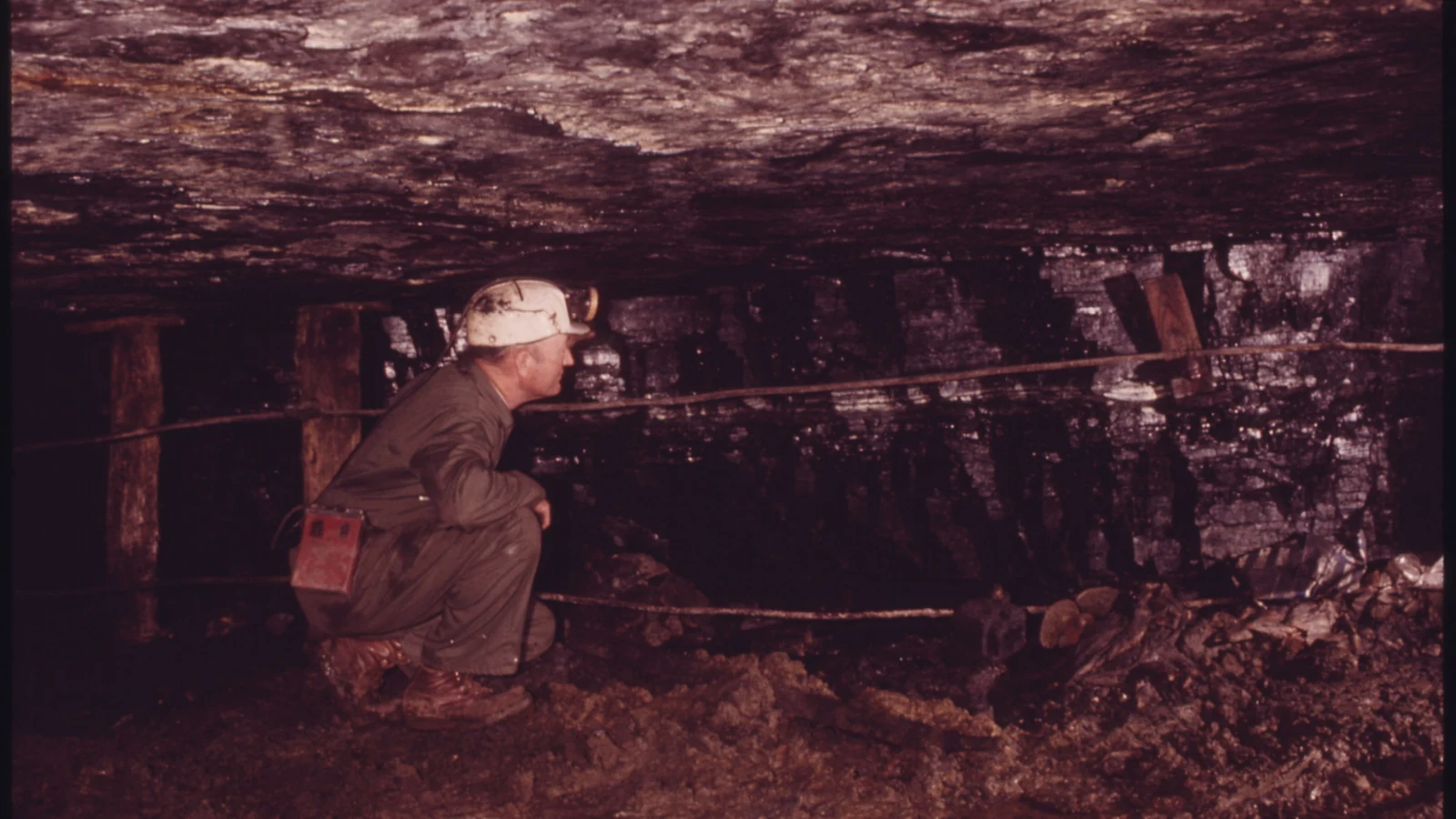
Hero photograph: George Wilson in his drift mine near Wilder and Cookeville, Tennessee, photographed by Jack Corn for the Environmental Protection Agency in April 1974. The National Archives record notes that federal mine inspectors had closed the mine over equipment. Wikimedia Commons, public domain as a U.S. federal government work. The image was cropped for presentation.
Continue reading
More from FederalHiringData

Data investigationsAugust 23, 2026
The Secret Service Added 451 Employees. GAO Still Wants Proof Its Agents Can Train Enough.
Secret Service headcount grew 5.6% after June 2024, but the current protective-training rate and revised staffing requirement remain undisclosed.

Data investigationsAugust 23, 2026
ICE Got 150,000 Applications. Its Workforce Grew by About 9,600 at the Peak.
OPM recorded 10,030 new-hire actions during ICE's surge, but tentative offers were not final hires and covered employment had receded by June.

Data investigationsAugust 20, 2026
634 Applications, Eight Completed Rotations: Why the Federal Cyber Exchange Stalled
Employees showed interest in the federal cyber rotation program. Home-agency approval, unreimbursed staffing costs and senior qualification demands narrowed the path.
Federal Hiring Data Weekly
Get the biggest federal workforce changes in your inbox.
Subscribe to Federal Hiring Data Weekly for federal hiring trends, salary data, agency movements, and original investigations, with email confirmation before delivery.