August 25, 2026
NRC Recorded 215 Engineering Separations in 2025. It Recorded 17 Accessions.
NRC's two largest engineering series recorded 215 separations and 17 accessions in 2025 as advanced-reactor applications and engagements expanded.
By Evan Mercer
Published August 25, 2026Last edited August 25, 2026
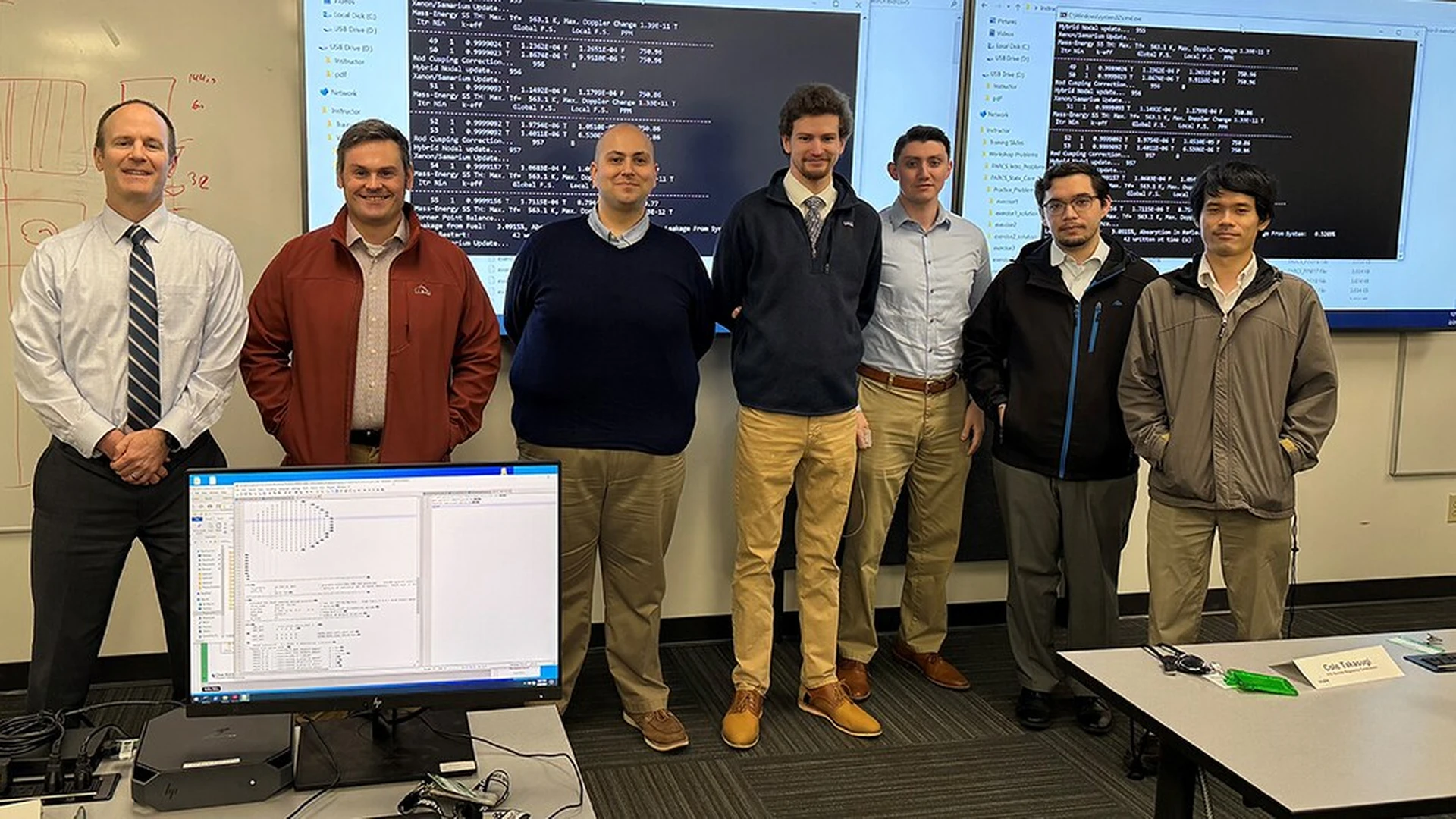
The Nuclear Regulatory Commission recorded 157 separations in General Engineering during 2025. It recorded 15 accessions. In Nuclear Engineering, it recorded 58 separations and two accessions.
Together, those two occupation series produced 215 separations and 17 accessions in one calendar year. The figures are personnel actions, not necessarily 232 different people, and they do not isolate the staff assigned to advanced reactors. They do show a sharp imbalance inside the two largest engineering classifications at the federal agency responsible for deciding whether new reactor designs can be licensed safely.
The timing matters. An August 2026 Government Accountability Office report on the nuclear-fuel supply chain recorded a concern from NRC officials: the staffing pool for positions related to advanced-reactor licensing and regulation is limited. At the same time, NRC's public inventory listed five reactor-related application projects under review and 39 active pre-application engagements across technologies ranging from small light-water reactors to molten-salt and liquid-metal designs.
Those are not 44 license applications. Pre-application engagement can involve a vendor, a proposed design, a university or a potential project that never files. The five application projects also mix construction permits, an early site permit, limited work authorization and a research reactor. But each stage can require engineers and scientists who understand unfamiliar coolants, fuels, risk models, human factors, security, environmental review and construction oversight.
NRC is not entering that work unprepared. It completed several major advanced-reactor reviews early or under budget in 2025, created a dedicated Office of Advanced Reactors in 2026 and has accumulated experience through years of pre-application work. The agency reported that 90% of more than 700 operating-reactor licensing actions in 2025 were finished ahead of schedule.
The evidence therefore does not show that workforce contraction has already caused broad licensing failure. It shows a narrower tension: NRC is being asked to make advanced-reactor reviews faster and more predictable while the agency's largest engineering ranks have been getting smaller.
The 215-to-17 engineering imbalance
OPM Federal Workforce Data record personnel actions by agency and occupation. FederalHiringData summed calendar 2025 accessions and separations for eight NRC occupation series connected to licensing, regulation or agency operations.

| Occupation series | 2025 accessions | 2025 separations | Action balance |
|---|---|---|---|
| General Engineering (0801) | 15 | 157 | -142 |
| Nuclear Engineering (0840) | 2 | 58 | -56 |
| Information Technology Management (2210) | 1 | 26 | -25 |
| General Physical Science (1301) | 2 | 25 | -23 |
| Health Physics (1306) | 6 | 22 | -16 |
| General Attorney (0905) | 7 | 16 | -9 |
| Security Administration (0080) | 3 | 15 | -12 |
| Program Management (0340) | 8 | 12 | -4 |
The table is not a hiring-funnel conversion. An accession is a recorded entry into the covered workforce or personnel system; it is not necessarily a new graduate hired from outside government. A separation is a personnel action, not automatically a retirement, and one person can generate more than one record in a broader action system. The action balance is useful because the definitions are the same within each series and year. It should not be read as a count of open positions.
The two engineering series nevertheless stand out. General and Nuclear Engineering accounted for 44.6% of all 482 NRC separations recorded in 2025, but just 24.3% of the agency's 70 accessions. That imbalance was followed by a visible reduction in onboard employment.
Between December 2024 and June 2026, General Engineering fell from 914 covered employees to 707, a loss of 207, or 22.6%. Nuclear Engineering fell from 285 to 250, a loss of 35, or 12.3%. The combined total declined from 1,199 to 957, down 242 employees, or 20.2%.

Physical Science fell by 30, Health Physics by 27 and Information Technology Management by 20. Program Management declined by 11 and General Attorney by eight. These are agencywide classifications. A nuclear engineer might work on an operating reactor, a new design, research, materials or another mission. FederalHiringData does not assign any employee to an advanced-reactor office from an occupation code alone.
That limitation makes the result less dramatic but more reliable. It is not possible to say NRC lost 242 advanced-reactor engineers. It is possible to say the agency had 242 fewer employees in its two biggest engineering series while advanced-reactor work was moving from preparation into application review.
NRC is smaller than it was during the last licensing expansion
The contraction did not begin in 2025. NRC's covered workforce rose from 2,908 employees in September 2000 to 4,211 in September 2010, the highest point in the comparable FedScope series used here. That period included reviews associated with a prospective wave of new light-water reactor construction and an expanded operating-reactor oversight mission.
Employment then declined for more than a decade. NRC had 3,808 covered employees in September 2015, 3,081 in September 2018 and 2,778 in September 2022. It recovered modestly to 2,947 by September 2024 before falling again.

The June 2026 endpoint was 2,477. That was 1,734 below the September 2010 peak, a 41.2% difference. Because the final observation is June rather than September, the chart marks it separately and does not present it as a full annual point. A closer same-source comparison shows the recent break more directly: NRC fell from 2,955 covered employees in December 2024 to 2,477 in June 2026, down 478, or 16.2%.
This is not a claim that NRC needs to return to its 2010 size. Licensing methods, reactor designs, digital tools, risk-informed review practices and the number of applications have changed. Some earlier projects were suspended or withdrawn, and staff learned from repeated reviews. A regulator can become more efficient without maintaining the headcount of a previous era.
The earlier peak is still relevant capacity context. NRC's 2026 workforce is being asked to oversee the existing fleet, license renewals, reactor restarts, fuel-cycle and materials work, rulemaking and emergency readiness while also developing and applying new advanced-reactor frameworks. The work is not simply a replay of 2010 with fewer people.
Experience is concentrated in the older and longer-serving workforce
In June 2026, NRC had 819 covered employees age 55 or older. That was 33.1% of the agency total. Some 482 employees, or 19.5%, were 60 or older.
Age is not a retirement clock. Federal retirement eligibility depends on age, service, retirement system and individual choices. Employees can work well beyond an eligibility date, and younger employees can leave for other reasons. The distribution matters because it shows where experience sits, not because it predicts a departure date.
The federal-service profile points in the same direction. NRC had 831 employees with 20 to 29 years of service and 369 with at least 30 years. Together, 1,200 employees, or 48.4%, had at least two decades of federal service. At the other end, 271 had less than five years.

Long service is valuable in a technical regulator. Reviewing a new reactor is not only an exercise in applying equations. Staff must know how safety findings are documented, how applicant assumptions are tested, how multidisciplinary questions are resolved, how public hearings and environmental reviews fit into a schedule and where earlier reviews exposed weak evidence.
The agency can train new staff. NRC publishes advanced-reactor courses covering high-temperature gas reactors, fast reactors and molten-salt technologies. Its Nuclear Safety Professional Development Program describes an 18-month development path for early-career hires. Qualification requirements for inspectors and reviewers add job-specific work beyond initial hiring.
That does not mean every new advanced-reactor regulator needs exactly 18 months, or that every current employee over 55 will leave. It means replacement capacity cannot always be created between the date an application arrives and the date a licensing milestone is due. Recruiting, security onboarding, technical training, qualification and supervised review all take time.
Five current projects are already beyond pre-application
NRC's Advanced Reactor Application Projects page listed six projects when FederalHiringData reviewed it on Aug. 25, 2026. Five were reactor-related. The sixth, Eden Radioisotopes, concerned an isotope-production complex and is not counted in the reactor table.
| Reactor-related project | Application before NRC | What the label does and does not mean |
|---|---|---|
| Long Mott Xe-100 | Construction permit | Four-module commercial project; a construction permit is not an operating license |
| TVA Clinch River | Construction permit | Commercial small modular reactor project under review |
| Duke Energy, Belews Creek | Early site permit | Site approval work; it is not approval to construct or operate a selected reactor |
| Pioneer Units 1 and 2 | Limited work authorization and phased construction-permit work | A bounded early-work request, not a completed plant license |
| University of Illinois KRONOS MMR | Construction permit | Research and test reactor, not a commercial generating station |
Three of the five involve construction-permit review. Duke's application concerns an early site permit. Pioneer uses phased work that includes limited authorization, and the University of Illinois project is a research reactor. Calling all five “new nuclear plants awaiting approval” would erase those differences.
The projects nevertheless create concrete work. Construction-permit reviews examine safety analysis, site characteristics and design information. An early site permit requires safety, environmental and emergency-planning review even before a final reactor choice. A research reactor can raise distinct questions about fuel, university operations and experiment use.
NRC's current list also leaves out recently completed work. The agency approved NuScale's US460 standard design in 2025 and issued TerraPower's Kemmerer Unit 1 construction permit in March 2026. Completed reviews can free some staff, but they also lead toward construction oversight, inspections, later license stages and review of related designs.
Thirty-nine engagements show the range of possible future work
Federal Hiring Data Weekly
Get the biggest federal workforce changes in your inbox.
Subscribe to Federal Hiring Data Weekly for federal hiring trends, salary data, agency movements, and original investigations, with email confirmation before delivery.
The earlier stage is broader. NRC defines an active pre-application engagement as a project with a regulatory engagement plan or a substantial history of interaction within the previous year. Its Aug. 13, 2026 list contained 39 active entries.

High-temperature gas and the “other or not specified” category each had 10. Light-water designs had eight, liquid-metal-cooled designs six, and molten-salt or molten-chloride-fast designs five.
The count includes projects, vendors and designs. It is not a forecast of 39 applications, 39 plants or 39 licensing decisions. Some organizations can appear in more than one context, and a pre-applicant can change plans or stop. FederalHiringData does not add the 39 engagements to the five current application projects because the stages can overlap.
What the list establishes is technical breadth. Light-water experience does not automatically answer materials and chemistry questions for molten salt. Sodium-cooled designs introduce different coolant behavior. Microreactors can change assumptions about staffing, security, siting and transport. High-temperature gas reactors rely on different fuel forms and accident analysis. Review teams draw on engineering, physical science, health physics, risk analysis, human factors, cybersecurity, law and project management.
That breadth helps explain why GAO's staffing-pool observation is more specific than a generic hiring problem. A vacancy can be filled only by someone who meets the occupation and grade requirements. A difficult technical question may require experience that is rarer than the job title suggests.
A new office and a faster-review mandate
Congress enacted the ADVANCE Act in July 2024. NRC's implementation summary describes recruitment and retention support, budget flexibility, a lower hourly fee for advanced-reactor applicants and pre-applicants, an expedited procedure for qualifying applications and work on predictable licensing frameworks.
Those provisions change both sides of the capacity equation. Recruitment tools can help NRC compete for specialists. Lower fees and faster procedures can encourage earlier engagement and reduce unnecessary review work. But a successful policy can also bring more projects to the regulator and compress the time available for analysis.
NRC created an Office of Advanced Reactors in 2026. Its public structure includes divisions for licensing, programs, engineering and science. The listed responsibilities reach beyond permit management into construction oversight, environmental review, reliability and risk, external hazards, human factors, security and technical specifications.
Concentrating those functions can reduce handoffs and make accountability clearer. The public organization page does not provide an onboard staffing table by division or occupation, so it cannot answer how many engineers or scientists the new office has. One leadership slot for the Division of Advanced Reactor Licensing was still shown as “TBD” when the page was reviewed, but a vacant label on an organization chart is not a count of unfilled staff positions.
Training and accumulated review history also matter. NRC staff have worked with advanced-reactor developers for years, completed Kairos construction-permit reviews, approved NuScale's design and reviewed TerraPower's application. Expertise can be reused across similar submissions and review templates. A smaller team with better methods may complete work faster than a larger team starting from scratch.
Recruiting records fell just as the workforce contracted
FederalHiringData's historical USAJOBS archive contains 2,319 distinct NRC announcements from approximately March 2017 through Aug. 25, 2026. Annual volume rose from 116 in 2018 to 420 in 2024, then fell to 57 in 2025. The archive contains 91 opened during 2026 through Aug. 25.

The 2025 total was 86.4% below 2024. That does not mean NRC had only 57 vacancies or hired 57 people. One announcement may cover multiple openings, one opening or no selection. Employees can enter through pathways or authorities not captured by a simple public-announcement count. The 2026 bar is a partial year and cannot be compared as a completed annual total.
Occupation tags show the recruiting base was technical. Across the archive, 687 NRC announcements included General Engineering, 472 General Physical Science, 251 Nuclear Engineering, 143 Information Technology Management and 89 Health Physics. Again, those are tagged announcements, not unique vacancies; one announcement can carry more than one series.
Only eight archived NRC titles contained the word “advanced.” That is a warning about keyword searches, not evidence of eight advanced-reactor jobs. Titles such as Nuclear Engineer, Reactor Engineer, Reliability and Risk Analyst, Materials Engineer or Health Physicist can support new-reactor work without naming the mission. An occupation or title cannot disclose the final assignment.
The recruiting record is strongest when used with the OPM data. Public announcement volume dropped in the same year that engineering separations surged, and the largest technical series were smaller by June 2026. The archive cannot show how many offers were accepted, how quickly new hires became qualified or how many employees transferred internally to the new office.
Related research
Put this finding in context

Data investigationsAugust 23, 2026
ICE Got 150,000 Applications. Its Workforce Grew by About 9,600 at the Peak.
OPM recorded 10,030 new-hire actions during ICE's surge, but tentative offers were not final hires and covered employment had receded by June.

Data investigationsAugust 24, 2026
FAA Received 23 Electric-Propulsion Projects. Its Certification Skill-Gap Review Is on Hold.
FAA says current electric-aircraft projects remain supported, but two certification branches reported an eight-position specialty gap as a selected technical workforce fell 7.3%.
Budgeted FTE are also set to decline under the request
NRC's fiscal 2027 budget request seeks $892.3 million and 2,606 full-time equivalents. The agency compares that with 2,802 FTE in the fiscal 2026 enacted budget, a reduction of 196 FTE, or 7.0%.

Budget FTE and OPM headcount are different measures. FTE represent the amount of full-time-equivalent work financed over a budget period. OPM covered employment counts people at a point in time. Contractors can support work without appearing in OPM headcount, and part-time or partial-year service affects FTE differently. FederalHiringData does not splice the 2,606 request into the headcount chart.
The status matters too. Fiscal 2027 is a request, not enacted staffing. Congress can change it, and NRC can allocate positions differently inside the total. The comparison does show the agency planning framework: requested FTE are below the current enacted level even as the Office of Advanced Reactors begins operating.
The fiscal 2026 request had explicitly cited advanced-reactor pre-application and application activity as a reason for increased net budget authority. The move from that rationale to a lower FY2027 FTE request reflects a broader push to streamline the agency, not a public finding that advanced-reactor work needs fewer specialists.
The record also shows that NRC has delivered
Workforce risk should not erase recent performance. NRC reported completing more than 700 licensing actions for 94 operating reactors in 2025, with 90% ahead of schedule. It renewed 13 reactor licenses for another 20 years. It completed the TerraPower Kemmerer construction-permit review in 18 months, nine months ahead of schedule and under budget, according to the agency.
NRC also completed the NuScale US460 standard-design review in 22 months, two months ahead of schedule, and issued a construction permit for Kairos Hermes 2 after using experience from the related Hermes review. By August 2026, work on Long Mott and Clinch River had reached defined review milestones.
Those are agency-reported performance results, not an independent staffing sufficiency test. They are still important. They show that a smaller workforce can complete complex work and that regulatory learning can reduce time and staff hours. They argue against treating every headcount decline as an equal decline in output.
The counterevidence has limits. A regulator can meet today's milestones while carrying less capacity for a larger wave tomorrow. Early or efficient reviews do not establish how many simultaneous applications the agency can absorb, whether specialists are concentrated in a few teams or how much operating-reactor and materials work competes for the same occupations.
The public data needed to answer that question are incomplete. NRC does not publish an advanced-reactor workforce table by occupation, experience and assignment. Applications do not share a single staff-hour denominator. Private project announcements do not reveal which developers will submit complete applications. No responsible analysis can convert the 39 engagements into a future staffing requirement.
What can be established is the direction of the pressure. In 2025, engineering exits greatly outnumbered entries. By June 2026, General and Nuclear Engineering were 20.2% smaller than in December 2024. One-third of the agency was at least 55, and nearly half had at least 20 years of federal service. The FY2027 request would reduce budgeted FTE from the FY2026 enacted level.
At the same time, five reactor-related projects were in application review and 39 active engagements covered technologies that demand different kinds of technical judgment. NRC has built a new organization and demonstrated that it can finish difficult reviews. The unresolved issue is whether it can preserve enough depth across engineering and science to repeat that performance if more of the pre-application list becomes real work.
Methodology and limitations
FederalHiringData used OPM FedScope agency observations for NRC code NU00 to build September headcount from 2000 through 2024. A September 2025 Federal Workforce Data observation continues the annual line, and June 2026 is shown as a separate partial-year endpoint. The 2010-to-2026 comparison therefore uses different months and is long-run scale context; December 2024 to June 2026 is the more precise recent contraction measure.
Occupation analysis uses NRC agency code NU and compares December 2024 with June 2026. The selected series span all NRC missions and do not identify office or assignment. Calendar 2025 accessions and separations are personnel-action counts and may not represent unique individuals. They are not vacancies, applications, selections or productivity.
Age and length of federal service use the June 2026 covered-employment snapshot. Age 55+ does not establish retirement eligibility or intent. Service length is federal service, not necessarily years at NRC or years working on reactors.
The USAJOBS analysis counts distinct NRC announcement control numbers. FederalHiringData historical archive coverage begins approximately in March 2017; 2017 and 2026 are partial periods. Announcements can list multiple occupation series or openings and do not prove a selection or hire.
FederalHiringData reviewed NRC's official application and pre-application pages on Aug. 25, 2026. The five current reactor-related projects exclude the separate isotope-production project. The 39 active pre-application entries were counted by technology from NRC's Aug. 13 list. The stages are not added because they can overlap, and neither count is a forecast of completed plants.
Budget FTE are kept separate from OPM headcount. Fiscal 2027 is a request; fiscal 2026 is enacted. Analysis was completed Aug. 25, 2026. Article research and writing used no OpenAI API calls.
Official records and further reading
- GAO-26-107385: Nuclear Fuel
- NRC advanced-reactor application projects
- NRC active pre-application activities
- NRC Office of Advanced Reactors
- NRC ADVANCE Act implementation
- NRC fiscal 2027 Congressional Budget Justification
- NRC 2025 accomplishments
- NRC advanced-reactor workshops and training
- OPM Federal Workforce Data downloads
- Nuclear Regulatory Commission image credit, CC BY 2.0
- Browse current federal jobs
- Explore FederalHiringData statistics
- Read more FederalHiringData investigations
Continue reading
More from FederalHiringData

Data investigationsAugust 23, 2026
The Secret Service Added 451 Employees. GAO Still Wants Proof Its Agents Can Train Enough.
Secret Service headcount grew 5.6% after June 2024, but the current protective-training rate and revised staffing requirement remain undisclosed.

Data investigationsAugust 20, 2026
634 Applications, Eight Completed Rotations: Why the Federal Cyber Exchange Stalled
Employees showed interest in the federal cyber rotation program. Home-agency approval, unreimbursed staffing costs and senior qualification demands narrowed the path.

Data investigationsAugust 24, 2026
VA Left 584 HUD-VASH Case-Manager Jobs Unfilled. Most Nonreferrals Had No Recorded Reason.
VA expanded HUD-VASH staffing and vouchers, but 584 case-manager positions were vacant and most nonreferrals had no documented explanation.
Federal Hiring Data Weekly
Get the biggest federal workforce changes in your inbox.
Subscribe to Federal Hiring Data Weekly for federal hiring trends, salary data, agency movements, and original investigations, with email confirmation before delivery.