August 26, 2026
USDA Plans to Move 2,600 Washington Positions. Its 2019 Relocation Lost More Than Half the Staff.
USDA's 2019 research-agency move lost more than half the staff. New data show the larger 2026 relocation reaches a deeply experienced Washington workforce.
By Evan Mercer
Published August 26, 2026Last edited August 26, 2026
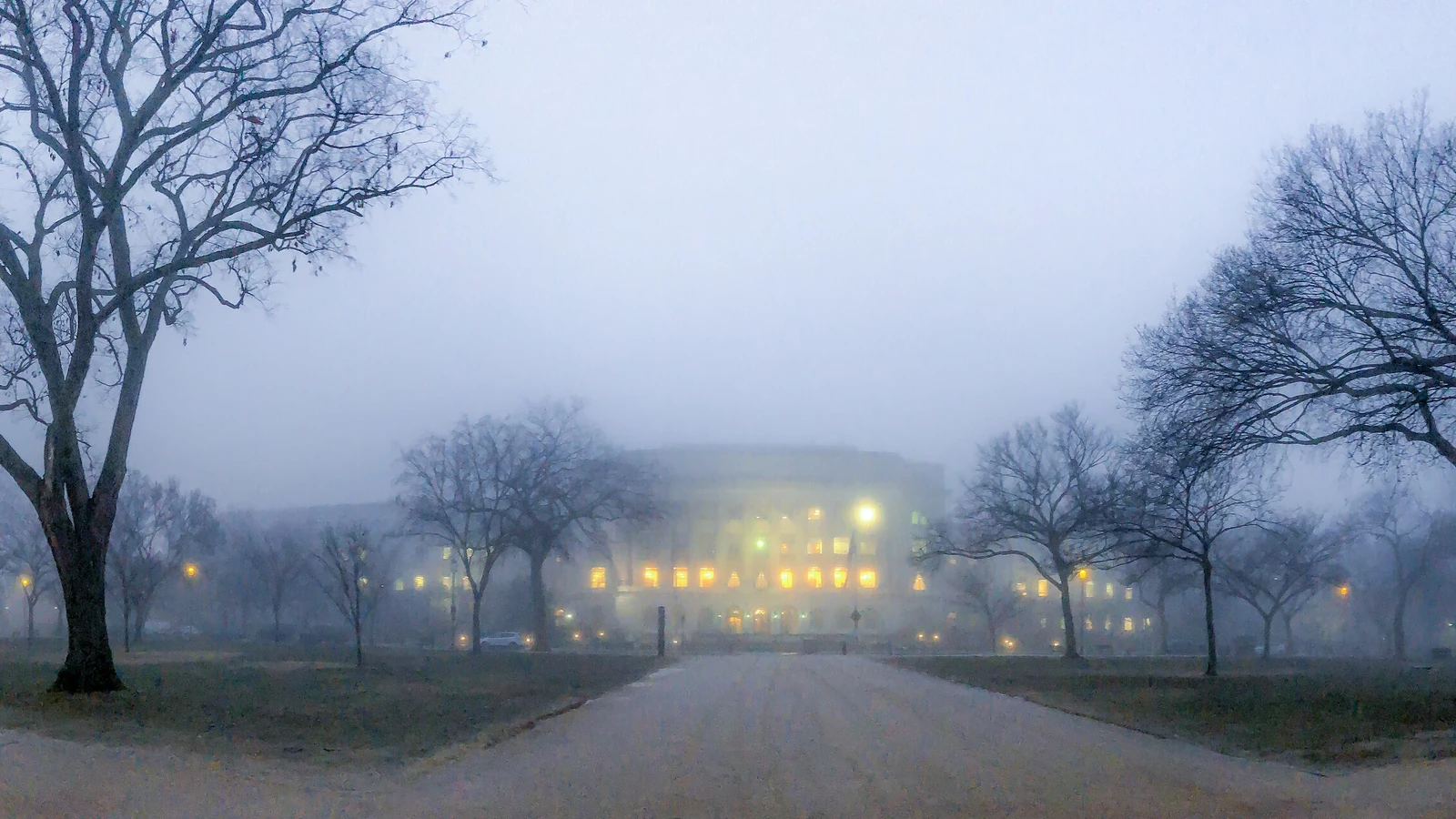
The Agriculture Department is attempting a workforce relocation on a scale it has never publicly shown it can execute without losing substantial institutional knowledge.
USDA's current plan calls for moving approximately 2,600 positions out of the National Capital Region. That is almost five times the 547 positions the department planned to relocate when it sent most of the Economic Research Service and the National Institute of Food and Agriculture to Kansas City in 2019.
The earlier move produced a record that is unusually complete for a federal reorganization. USDA initially said 145 employees accepted reassignment. The Government Accountability Office later found that more than half the employees at each agency left their positions instead of moving. Permanent full-time staffing largely recovered within two years, but the rebuilt agencies were dominated by recent hires. Research reports fell, grant processing slowed, and changes in workforce experience and composition persisted after the total headcount began to recover.
The 2019 result does not prove the larger relocation will repeat it. The current program is phased, dispersed among several agencies and hubs, and still subject to collective bargaining and litigation. But new FederalHiringData analysis shows why the precedent matters: 3,347 of the 4,578 covered USDA employees in a bounded Washington-area workforce proxy had at least 10 years of federal service in June 2026. About 41% had 20 years or more.
Those workers are not interchangeable units in an office-space calculation. They include economists, statisticians, scientists, trade specialists, grant and program managers, attorneys, budget analysts and information-technology staff. Whether they follow their positions, find other federal jobs, retire or leave government will determine how much of USDA's operational memory arrives at the new hubs with the work.
The current plan is larger, but not yet a completed move
USDA announced the broad reorganization in July 2025. Its official release said approximately 4,600 employees worked in the National Capital Region and no more than 2,000 were expected to remain after implementation. A follow-up public-comment announcement described approximately 2,600 Washington-based positions moving to Raleigh, Kansas City, Indianapolis, Fort Collins and Salt Lake City.
The department gave four reasons: align workforce size with available resources, bring services closer to customers, eliminate management layers, and consolidate support functions. It also pointed to lower locality-pay rates at the hubs and underused Washington buildings with expensive deferred maintenance.
That announcement was a plan, not a roster of completed relocations. Implementation now differs by mission area. The Food and Nutrition Administration says many details remain under negotiation. Its current reorganization page says the Northern Virginia headquarters will be vacated by Aug. 31, 2026, while new hubs and retailer-compliance offices are expected by summer 2027. Leadership, policy, congressional, regulatory and selected research functions will remain in Washington.
Rural Development's June 2026 plan sends selected National Capital Region positions to St. Louis and Dallas-Fort Worth, destinations that were not among the original five. It says more than 3,000 field and state employees will remain in place. The Agricultural Marketing Service says it will reduce its Washington-area footprint gradually, with most future hiring in hubs or field offices and no reduction in force in that agency's announced changes.
Research, Education and Economics agencies have begun their own restructuring and position-relocation processes. Food and nutrition officials say all current employees have roles in the new organization. The department's 2025 memorandum, meanwhile, allowed directed and voluntary reassignments and said limited reductions in force could be used if approved.
That is why the 2,600 figure should not be read as 2,600 people already ordered to move, 2,600 completed transfers, or 2,600 separations. Public material does not yet provide a single final table showing every affected position, incumbent decision, destination and effective date. Union surveys reported by Reuters measure stated intentions, not actual moves. A lawsuit challenging the reorganization is pending, and a hearing on a requested injunction has been reported for Sept. 1.
The safe claim is narrower: the department has announced a 2,600-position relocation program, individual agencies have begun implementation, and the final workforce effect remains unsettled.
USDA has already contracted before most moves are complete
The relocation is unfolding inside a much broader workforce reduction.
Legacy Office of Personnel Management records show 106,713 covered USDA civilian employees in September 2000. The count reached 114,566 in 2002, declined over the next decade, and returned to 98,473 in September 2024. It was 91,341 in September 2025 and 78,075 in June 2026, the latest observation available.

The June 2026 count is a snapshot, not a full-year total. It is also not a relocation tally. USDA said 15,364 people department-wide had elected deferred resignation by July 2025, and retirements, transfers, hiring controls and other restructuring decisions overlap with the relocation. A person who leaves a Washington job may not have received a geographic reassignment, while an employee who accepted reassignment may still appear at the original duty station until the move becomes effective.
FederalHiringData built a bounded National Capital Region proxy from OPM duty-station records: the District of Columbia; Montgomery and Prince George's counties in Maryland; Arlington, Fairfax, Loudoun and Prince William counties and named independent cities in Virginia. It contained 6,420 covered USDA employees in December 2024 and 4,578 in June 2026, a net decline of 1,842.
That 28.7% change is consequential, but it cannot be assigned entirely to relocation. USDA's own July 2025 NCR count was approximately 4,600, materially below the OPM proxy at roughly the same stage. The difference may reflect organizational scope, timing, position definitions or duty-station treatment. The proxy is useful for examining composition consistently over time; it is not a substitute for USDA's employee-level implementation roster.
The full department chart also supplies counterevidence to the idea that relocation alone produced the current low. Covered USDA employment had been changing for decades, and the sharpest recent department-wide contraction began amid broader workforce policies. The relocation is one part of that change. Its distinctive risk is where the remaining work and expertise land.
In 2019, the denominator changed the story
USDA's Kansas City move is often summarized as a low relocation-acceptance rate, but three denominators circulated at the time.
GAO reported that USDA planned to move 294 of NIFA's 315 positions and 253 of ERS's 329 positions: 547 planned relocations. Those were positions, not 547 occupied jobs with eligible incumbents. In July 2019, USDA said 72 ERS employees and 73 NIFA employees initially accepted reassignment. It said the 145 acceptances represented about 36% of employees eligible to decide.
| Agency | Positions at announcement | Positions planned to move | Employees initially accepting | Declined or no response |
|---|---|---|---|---|
| Economic Research Service | 329 | 253 | 72 | 99 |
| National Institute of Food and Agriculture | 315 | 294 | 73 | 151 |
| Combined | 644 | 547 | 145 | 250 |
Dividing 145 by 547 produces 26.5%, but that is not the acceptance rate USDA reported because the numerator is employees and the denominator is planned positions. Dividing by the employees who received a decision and responded or did not respond produces a different figure. Vacancies and positions designated to stay in Washington further separate the totals.
The initial response also was not the final moving roster. Employees could change decisions, and USDA extended report dates for some mission-critical workers. A congressional response shows that by the pay period ending Jan. 4, 2020, ERS had 55 employees recorded in Kansas City and NIFA had 84. Those 139 employees could include both incumbents who moved and people hired into vacancies; the table did not identify them individually.
GAO's later conclusion is more durable than a single deadline count: more than half of each agency's employees chose to leave their positions instead of relocating. In fiscal 2019, GAO estimated 121 permanent full-time departures from ERS and 157 from NIFA. The agencies also lost economists and managers, limiting the management capacity available to rebuild.
The staffing line shows the hole and the recovery. ERS fell from 273 permanent full-time employees at the end of fiscal 2018 to 210 in 2019 and 193 in 2020. NIFA fell from 288 to 197 and then 183. Both reached 246 by fiscal 2021.

By June 2022, USDA reported 285 permanent full-time employees at ERS and 323 at NIFA, comparable to or above their fiscal 2018 levels. On the simplest measure, the agencies rebuilt.
Headcount recovered before institutional experience did
The people inside the recovered total were different.
At the end of fiscal 2018, 84% of ERS employees and 82% of NIFA employees had worked at their agency for more than two years. By fiscal 2021, 66% of ERS and 79% of NIFA had two years or less at the agency. The combined recent-hire share rose from 17% to 73%.

This is not an argument that a new employee is less capable. It is evidence that the agencies had to replace a large amount of organization-specific experience at once. An economist may arrive with advanced technical training but still need to learn an ERS data program, agricultural model, publication review system and network of policy customers. A grants specialist may understand federal assistance while needing time to master NIFA's program portfolio, land-grant relationships and annual award calendar.
Workforce composition changed in ways that total headcount concealed. GAO found the number of Black employees fell from 60 to 21 at ERS and from 134 to 47 at NIFA between fiscal 2018 and 2021. Black employees' share fell from 22% to 9% at ERS and from 47% to 19% at NIFA. The agencies became younger, and the proportion of veterans increased. GAO did not say those demographic changes caused the measured output changes, but it found they persisted after staffing recovered.
USDA did develop tools that helped recruiting. In 2021 it allowed some positions to use negotiable or remote duty stations. GAO reported NIFA hired 71 people into permanent remote positions between August 2021 and May 2022, and officials said location flexibility expanded the candidate pool. That is important counterevidence: a relocation can be followed by successful hiring, and the rebuilding strategy can change.
But geographic flexibility also means the final workforce cannot be judged solely by counting desks in Kansas City. A rebuilt agency may be distributed differently, contain far more new employees and require new management systems even when its total returns.
Federal Hiring Data Weekly
Get the biggest federal workforce changes in your inbox.
Subscribe to Federal Hiring Data Weekly for federal hiring trends, salary data, agency movements, and original investigations, with email confirmation before delivery.
The disruption reached the work, not only the roster
GAO measured two parts of agency output that moved with the staffing decline.
ERS issued 44 research reports in fiscal 2018, 36 in 2019 and 19 in 2020. The count returned to 42 in 2021. Journal articles authored or coauthored by ERS employees fell from 159 in 2018 to 121 in 2019 and 74 in 2020, then rose to 117. Outlook reports, many of which are statutorily required, remained comparatively stable.
NIFA's median time to process and fund competitive-grant proposals rose from 205 days for fiscal 2018 proposals to 235 days for fiscal 2019 proposals. It fell to 181 days for fiscal 2020 proposals, which were processed mostly in fiscal 2021. Capacity grants were delayed by about two months in fiscal 2020 after NIFA lost seven of eight budget staff; other USDA staff, contractors and reemployed annuitants helped sustain work.

These measures do not prove every research product or grant delay was caused only by relocation. Grant rules, appropriations and program calendars also affect processing. The pandemic overlapped with the rebuild. GAO nevertheless attributed ERS's decreased productivity to workforce losses and found that staffing and measured output largely recovered together by 2021.
That sequence is the useful precedent for 2026. Service continuity can coexist with measurable disruption. USDA can keep statutory products moving, use temporary support, prioritize urgent work and recruit replacements. None of those actions makes experience loss costless.
GAO also found the department's 2019 analysis did not include critical attrition and disruption costs and implicitly assumed no relocation attrition. USDA had projected more than $300 million in savings over 15 years. GAO did not say relocation could never save money; it said the evidence supporting the selection was incomplete and lacked transparent sensitivity analysis.
The current plan cites lower costs again. Its own locality table shows why, but locality is not a salary estimate.
| Location in USDA's 2025 plan | Federal locality rate cited by USDA |
|---|---|
| Washington, DC / National Capital Region | 33.94% |
| Fort Collins | 30.52% |
| Raleigh | 22.24% |
| Kansas City | 18.97% |
| Indianapolis | 18.15% |
| Salt Lake City | 17.06% |
Locality percentages are applied within federal pay rules. Grade, step, pay plan, special rates, retention provisions and an employee's eventual duty station all matter. The differences do not show the department's total savings, an employee's final pay, moving expenses, recruitment costs or the price of delayed work.
The current workforce contains the same kinds of hard-to-transfer knowledge
The Washington-area OPM proxy shows that the present relocation reaches far beyond generic headquarters administration.
The largest covered mission-area groups in June 2026 included 617 Agricultural Research Service employees, 571 at the Animal and Plant Health Inspection Service, 373 at the Foreign Agricultural Service, 371 at the Food and Nutrition Service, 324 at the Forest Service, 273 at the Food Safety and Inspection Service, 232 in Rural Development and 230 at the Agricultural Marketing Service.
All were smaller than in December 2024. Those changes again cannot be labeled completed relocation losses. They establish the scale and breadth of the workforce that was already changing as relocation notices and agency plans emerged.
The occupational mix shows what is at stake. The proxy contained 668 employees in the broad Miscellaneous Administration and Program series and 568 in Management and Program Analysis. It also included 388 information-technology specialists, 328 in the broad Natural Resources Management and Biological Sciences series, 146 program managers, 132 economists, 118 human-resources specialists, 103 budget analysts, 88 statisticians, 88 attorneys, 87 agricultural-marketing specialists, 74 trade specialists and 44 grants managers.

Occupation codes do not identify which employee received a relocation notice or which function will move to which hub. A 0301 program specialist might work in nutrition, trade, research support or departmental administration. The chart therefore measures exposure, not the final relocated workforce.
The service distribution is less ambiguous. Of 4,578 employees in the June proxy, 1,868 had at least 20 years of federal service and 1,479 had 10 to 19 years. Another 946 had three to nine years, while 285 had fewer than three.

Related research
Put this finding in context
Data investigationsAugust 23, 2026
Commerce Has 49 CHIPS Projects to Monitor. Its Program Office Lost More Than Half Its Staff.
Commerce's semiconductor awards have become a years-long monitoring operation, but the program office entered that phase after losing more than half its employees.

Data investigationsAugust 25, 2026
Indian Affairs Lost 846 Staff. Its 2027 Request Would Fund 918 Fewer FTE.
Indian Affairs cut 846 payroll employees in six months, while education, realty and support occupations contracted and the FY2027 request points lower.
Length of federal service is not the same as years at USDA or in one program. A 20-year employee may have joined USDA recently; a five-year employee may hold unique knowledge. Even with that limitation, the distribution shows the relocation intersects with a mature federal workforce. If experienced employees decline reassignments, replacements must acquire both technical and institutional knowledge. If they accept, the department must complete moves without interrupting work. If positions are redesigned instead, the new structure must show which capability remains accountable.
Recruiting moved in 2019; the 2026 signal is still incomplete
The FederalHiringData historical USAJOBS archive provides another view of how the 2019 move changed the labor market USDA used.
For 2017 and 2018, almost every archived ERS and NIFA announcement opened in Washington. In 2019, 85 of 149 combined announcements were classified to Kansas City, while 60 remained in Washington. Kansas City dominated in 2020 and 2021. After USDA expanded location flexibility, most announcements in 2022 through 2024 were outside either city or used broader and negotiable geography.

The classification assigns each announcement once, giving priority to remote, Kansas City, Washington and then other or negotiable geography. That avoids counting a multi-location announcement in several columns. It does not convert announcements into vacancies or hires. One notice may advertise multiple openings, close without a selection, or be reposted. Internal reassignments and some hiring authorities never appear as ordinary public announcements.
The chart nevertheless records a clear recruiting pivot after the 2019 decision. The geographic market changed before the workforce rebuilt. It also shows why a simple Washington-versus-hub count is no longer sufficient: by 2022, the agencies were recruiting through broader locations that did not reproduce the original headquarters model.
The 2026 archive is not yet a stable test of the new plan. Relocation implementation is ongoing, some agencies say future hiring will occur at eventual duty stations, and hiring controls have suppressed public recruiting. A meaningful evaluation will require several observations: announcements by occupation and hub, selections, onboard accessions, retention, and mission output after moves become effective.
The lesson is a measurement standard, not a forecast
USDA's strongest case is that the 2026 effort differs from 2019. It is phased rather than compressed into four months. The department is using established USDA locations, keeping selected functions in Washington and bargaining over implementation. It can offer relocation support, redesign work, use location flexibility and recruit nationally. Agency pages promise continuity, and the earlier agencies eventually restored their measured headcount and productivity.
The strongest warning is that USDA has not published an equivalent measurement plan.
In 2019, GAO found no performance measures tied to the relocation's stated goals and no formal process for long-term workforce planning that accounted for attrition. That omission made savings, service continuity and workforce effects harder to judge while the move was underway. The current program is larger, more distributed and overlapping with a department-wide contraction. It needs more transparency, not less.
A credible public scorecard would separate positions announced from employees notified; acceptances from completed moves; resignations from retirements and internal transfers; vacancies from filled jobs; and public announcements from hires. It would track experience and occupational composition, not just total headcount. It would pair workforce measures with mission indicators: research products, grant and loan processing, inspection timeliness, trade analysis, nutrition-program support and other agency-specific outputs.
The 2019 move establishes that a department can rebuild a number while still replacing most of the people inside it. The 2026 relocation reaches a workforce in which nearly three-quarters of the bounded Washington-area proxy has at least a decade of federal service. That is the risk USDA should measure in public: not whether offices eventually contain employees, but whether the work arrives with enough accumulated knowledge to continue.
Methodology and limitations
FederalHiringData combined legacy OPM FedScope September employment snapshots for USDA agency subelements from 2000 through 2014 with modern monthly OPM Federal Workforce Data for the Department of Agriculture from 2015 through June 2026. The long-run chart uses September observations through 2025 and labels June 2026 as the latest, non-September point. OPM counts covered civilian employees, not contractors or every person contributing to USDA programs.
The National Capital Region proxy includes the District of Columbia; Montgomery and Prince George's counties in Maryland; Arlington, Fairfax, Loudoun and Prince William counties and named independent cities in Virginia. It follows GAO's published 2019 geographic description as closely as OPM duty-station fields permit. It is not USDA's implementation roster, and its total should not be treated as identical to the department's approximately 4,600-employee announcement figure.
Length of service uses OPM's federal service measure, weighted by employee count. It is not agency-specific tenure. Occupation and mission-area counts describe covered duty-station records and cannot identify who received notices, accepted a move or left because of relocation.
The 2019 position, staffing, experience, demographic and output measures come from GAO-23-104709. GAO's permanent full-time series is narrower than FederalHiringData's all-covered OPM series and is not spliced into it. Initial acceptance figures were reported by USDA in July 2019 and could change before the effective date. Positions, eligible employees, acceptances, occupied jobs, separations and hires are kept as separate denominators.
The USAJOBS analysis counts distinct control numbers for exact Economic Research Service and National Institute of Food and Agriculture agency names. Historical coverage begins in March 2017, making 2017 partial. Announcements are classified once by stored location and are not applicants, vacancies, offers, moves or hires.
The analysis was completed Aug. 26, 2026. The current reorganization is not complete. Pending litigation, collective bargaining and agency implementation decisions can change its scope or schedule. No OpenAI API calls were used for research, analysis, writing, charts or imagery.
Sources and related reading
Primary sources include OPM Federal Workforce Data, USDA's July 2025 reorganization announcement, the Food and Nutrition Administration implementation page, Rural Development's reorganization page, AMS's June 2026 announcement, GAO's workforce-impact review, and GAO's evidence review of the Kansas City selection. Current employee-intention evidence is attributed to Reuters.
Explore current federal jobs, review federal hiring statistics, browse agency profiles, or read more FederalHiringData investigations.
Continue reading
More from FederalHiringData
Data investigationsAugust 25, 2026
DCSA Completed 38% of Required Contractor Reviews. Its 436-Position Plan Was Not Adopted.
DCSA recovered to more than 4,600 contractor security reviews and expanded mission staffing, but its last published requirement denominator still showed 37.6% coverage.

Data investigationsAugust 23, 2026
NNSA Has 46 Nuclear-Science Facility Investments. Its Workforce Plan Is Not Finished.
NNSA mapped 46 science-facility investments through 2045, but the workforce analysis needed to operate old facilities while building new ones is still unfinished.

Data investigationsAugust 24, 2026
Federal Student Aid Lost 46% of Its Workforce. Two Loan-Servicer Checks Stopped.
Federal Student Aid stopped two contractor-oversight checks as its covered workforce fell by nearly half while the loan portfolio reached $1.724 trillion.
Federal Hiring Data Weekly
Get the biggest federal workforce changes in your inbox.
Subscribe to Federal Hiring Data Weekly for federal hiring trends, salary data, agency movements, and original investigations, with email confirmation before delivery.