August 23, 2026
NNSA Has 46 Nuclear-Science Facility Investments. Its Workforce Plan Is Not Finished.
NNSA mapped 46 science-facility investments through 2045, but the workforce analysis needed to operate old facilities while building new ones is still unfinished.
By Evan Mercer
Published August 23, 2026Last edited August 23, 2026
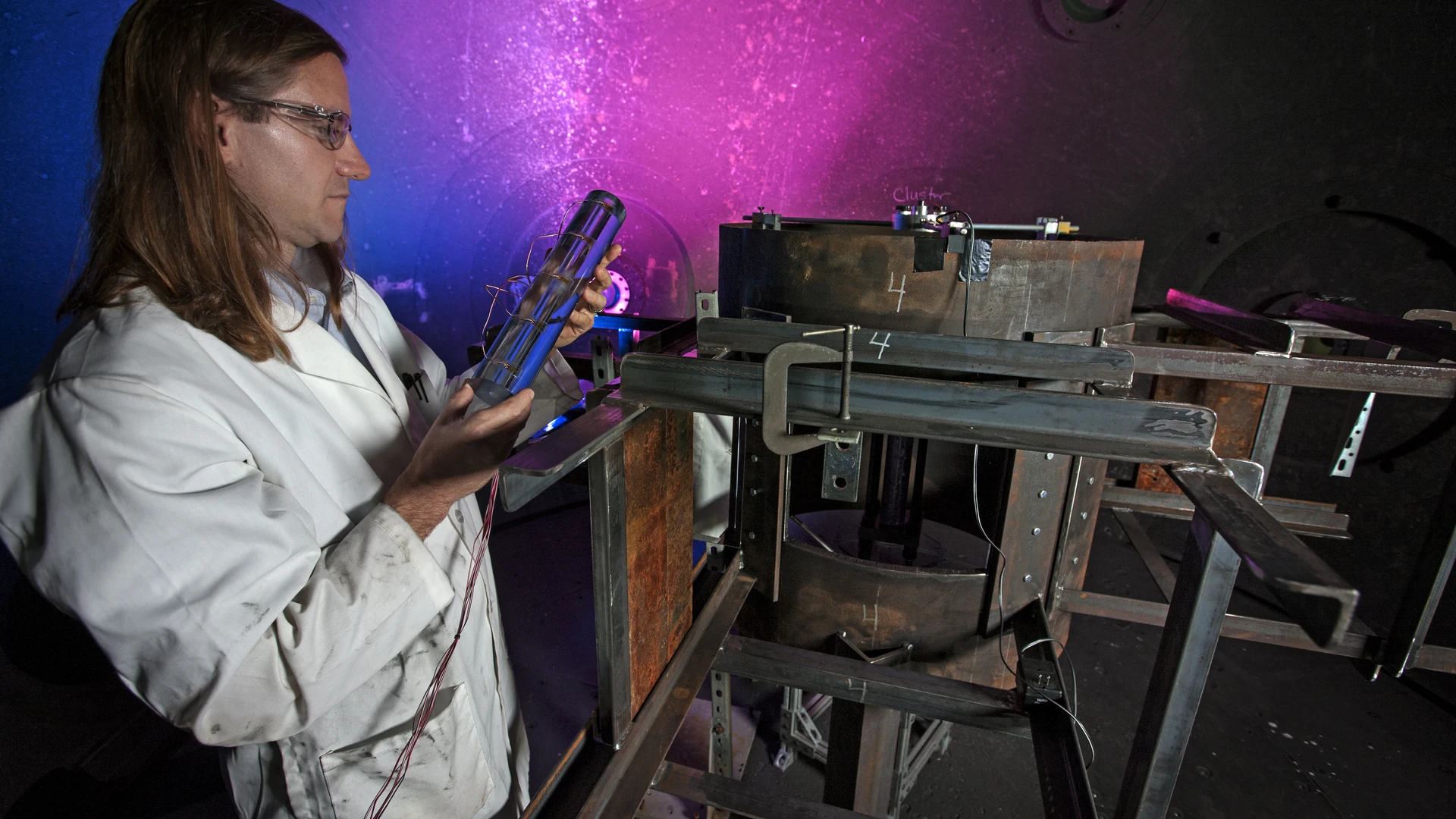
The National Nuclear Security Administration has a list for the next generation of nuclear-science infrastructure. It includes a replacement for a nearly 50-year-old research reactor, modernization of a neutron-science accelerator more than 50 years old, expanded high-explosives laboratories, a new microelectronics facility and future computing, radiography and materials capabilities.
The list is unusually specific. NNSA's July 2024 Integrated Science, Technology and Engineering Plan identified 46 facility investments stretching from 2025 through 2045. Thirty-three were rated highly important to the mission. Thirty-five called for new construction rather than sustaining or enhancing an existing facility.
The corresponding workforce plan is not yet complete.
In a July 2026 review, the Government Accountability Office found that NNSA had asked its sites for initial estimates of the people and program investments the portfolio would require. The submissions were inconsistent, used different assumptions and produced figures NNSA did not consider reliable. The agency told GAO it planned to complete a comprehensive workforce and programmatic analysis by December 2027.
That leaves a basic question unanswered at a consequential point in the modernization cycle: whether the enterprise has identified the mix of scientists, engineers, technicians, project managers, contracting officers and federal overseers needed to keep today's facilities operating while it builds the next ones.
The public record does not show that NNSA is unable to staff the work. Its laboratories and plants employ tens of thousands of people, recruiting remains active and major sites have expanded. But those facts are not a substitute for a plan that connects specific capabilities to specific people over time. NNSA has mapped much of the physical future of its science enterprise. It has not yet published the human-capital map that would make the construction plan credible.
A portfolio of 46 investments
The Integrated ST&E Plan is not a conventional construction schedule. Some entries are funded projects already moving through design or construction. Others are early concepts whose technology, site, cost or timing can still change. GAO treated it as a 20-year portfolio of mission needs rather than 46 equally mature commitments.
The balance nevertheless reveals the scale of the intended transition.
| Portfolio measure | Investments | Share of 46 |
|---|---|---|
| New construction | 35 | 76% |
| Enhance an existing facility | 8 | 17% |
| Sustain an existing facility | 3 | 7% |
| High mission importance | 33 | 72% |
| Near-term need | 10 | 22% |
| Mid-term need | 18 | 39% |
| Long-term need | 18 | 39% |

Only 19 of the 46 investments appeared in NNSA's public 2024 Enterprise Blueprint. Seventeen of those were both high-priority and near- or mid-term, according to GAO. The rest of the integrated plan remains less visible because public detail can be limited by project maturity, security considerations or both.
The investments are concentrated at the three weapons laboratories. GAO's appendix assigns 11 to Los Alamos, 11 to Sandia and nine to Livermore. Four more are at the Nevada National Security Site. The remaining work is distributed among production sites, other national laboratories, the Kansas City National Security Campus and proposals whose final location has not been determined. Several investments span sites, so the chart keeps multi-site and undetermined work separate rather than forcing it into one laboratory.

The concentration matters for workforce planning. A new capability does not arrive as an empty building that can be staffed at the end. Scientists and engineers help define requirements. Acquisition and project personnel shape contracts and control costs. Safety, security and technical staff review designs. Operators and maintenance workers must be trained before commissioning. At the same time, many of those people are needed to keep the facilities being replaced available for current work.
Cost information is much less mature than the count of investments. GAO found detailed cost information for only seven projects that were both high-priority and near-term. The other 39 had limited or no public cost detail. Workforce estimates will remain provisional while designs and schedules change, but delaying the analysis also makes it harder to identify long-lead skills before projects compete for the same people.
The old system has to keep running
The near-term portfolio begins with facilities whose age creates its own labor demand.
Sandia's Annular Core Research Reactor is nearly 50 years old and depends on supporting infrastructure more than 70 years old. NNSA plans sustainment work intended to extend its operating life by 10 to 15 years while pursuing the Combined Radiation Environments for Survivability Testing facility as a replacement. Keeping the reactor reliable and designing its successor are overlapping assignments, not consecutive ones.
The Los Alamos Neutron Science Center's linear accelerator is more than 50 years old. GAO reported that age and obsolete components create a risk of failure. The proposed modernization would replace accelerator components and improve beam performance while the complex continues to support stockpile-stewardship experiments.
At Sandia, the current Microsystems Engineering, Science and Applications silicon-fabrication facility dates to the 1980s. One near-term project would add clean-room space; a separate mid-term proposal would eventually replace and modernize the facility. Other concepts would replace Los Alamos buildings from the 1950s, 70-year-old radiography and assembly facilities, and Manhattan Project-era research buildings at Y-12.
The newer flagships are aging too. Lawrence Livermore's National Ignition Facility and Sandia's Z Pulsed Power Facility are approaching roughly 20 and 30 years of operation. NNSA identified 26 sustainment activities at NIF and 40 at Z, GAO reported. New construction therefore does not eliminate the maintenance burden on the facilities that produce data now.
This is why the personnel question cannot be reduced to a future hiring target. The enterprise must retain knowledge of old components, execute life-extension work, develop replacement technologies and transfer operations without creating a gap in capability. That calls for occupation-level and site-level sequencing, neither of which is available in the public integrated plan.
Three workforces carry one mission
NNSA's workforce is often described with one large number. In practice, at least three populations perform distinct work and should not be combined.
| Workforce population | Public measure | Primary role | What the measure does not show |
|---|---|---|---|
| NNSA federal staff | 1,822 FSE-supported FTE in FY2026 | Federal program, contract, safety, security and project oversight | Onboard headcount or occupation-level allocation |
| Management and operating contractors | About 59,000 employees at eight sites | Operate laboratories, plants and sites; perform scientific, engineering, production and support work | A current site-by-site skills inventory for the 46 investments |
| Other support-service contractors | 2,052 contractor FTE reported for FY2025 | Support headquarters and program offices | M&O staff and several excluded service categories |
The federal figure is budget-supported full-time-equivalent employment under the Federal Salaries and Expenses account, not a verified count of people onboard on a particular day. The M&O estimate comes from GAO's review of NNSA's operating model. The support-service figure and $525.75 million in FY2025 obligations are reported separately in NNSA's FY2027 Federal Salaries and Expenses budget. That category excludes M&O work and cannot be added to it as if both used the same scope.
The operating model places most site personnel outside the civil service. M&O contractors run the laboratories and production sites under federal contracts. NNSA employees set requirements, manage portfolios and contracts, and provide federal safety, security and project oversight. Other contractors can supply advisory, administrative or technical services, but they cannot replace the government's accountability for decisions.
Official site snapshots show the scale of the institutions where much of the 46-investment portfolio will land. Los Alamos reported more than 14,000 laboratory employees in fiscal 2022. Sandia reported 16,320 employee FTE in fiscal 2025, excluding staff-augmentation contractors. Livermore reported 9,340 employees of Lawrence Livermore National Security and 417 non-LLNS contractors in fiscal 2025. Current pages for Pantex and Y-12 describe more than 4,600 full-time personnel and about 5,000 people, respectively.
Those values cannot be summed into a clean enterprise total. They come from different years and use different definitions. They also do not answer how many people have the precise clearances, experience or scientific and engineering specialties needed for each project.
They do provide important counterweight to the idea that NNSA is attempting modernization with a small or static contractor base. These are large institutions. GAO's 2024 contractor-workforce review found that M&O contractors generally met their planned staffing levels from fiscal 2018 through 2022 and that attrition was broadly comparable with government rates.
The same review found limits in NNSA's ability to oversee recruitment and retention across the enterprise. Large totals can coexist with bottlenecks in a narrow specialty, a particular site or the federal staff responsible for reviewing contractor work. The comprehensive analysis is supposed to identify those differences.
The federal oversight line remains below its study
Federal Hiring Data Weekly
Get the biggest federal workforce changes in your inbox.
Subscribe to Federal Hiring Data Weekly for federal hiring trends, salary data, agency movements, and original investigations, with email confirmation before delivery.
NNSA's federal staffing history is difficult to present as one continuous series because the public measures change. The agency's fiscal 2005 budget reported 1,829 actual FSE-funded FTE in fiscal 2003. GAO later published actual end-of-year FSE-funded FTE for fiscal 2010 through 2018. Those values fell from 1,897 in 2010 to a low of 1,541 in 2015 before recovering to 1,608 in 2018.
NNSA then pursued a larger federal workforce. A 2018 staffing study recommended 1,928 FTE. A 2020 update raised the identified need to 2,369. Budget documents show requested or planned levels rising from 1,715 FSE-funded FTE in fiscal 2018 to 2,166 in the fiscal 2026 plan published with the fiscal 2025 budget.
The latest budget does not show that planned level becoming enacted support. NNSA's fiscal 2027 justification reports 1,946 FSE-funded FTE for fiscal 2025 and 1,822 for fiscal 2026. It lists another 21 and 24 FTE, respectively, under the Working Capital Fund. For a comparison with the 2,369 FSE staffing study, the relevant fiscal 2026 figure is 1,822, a gap of 547 FTE.

The chart deliberately does not connect unlike measures. Actual historical FTE, budget requests and later enacted support answer different questions. Blank years are left blank. Public Office of Personnel Management data group NNSA inside the Department of Energy, so they cannot supply an independent NNSA-only headcount series.
Even with those limitations, the staffing gap is relevant. GAO's 2024 review of NNSA's federal workforce described duties that grow with a complex capital portfolio: acquisition, contract administration, program and project management, safety, security and technical oversight. Federal staff must be capable of evaluating work performed by a contractor workforce more than 30 times the size of the FSE-funded federal level.
Age compounds the problem. GAO reported that 19% of NNSA federal staff were eligible to retire in fiscal 2023 and projected 34% eligibility by fiscal 2028. Eligibility is not departure, and a retirement projection is not an attrition forecast. It does identify where succession and knowledge-transfer planning must accompany expansion.
The issue predates the current facility plan. In 2005, GAO reported that 37% of critical-skill contractor workers were at or near retirement age. A 2012 review found that NNSA and its contractors had identified critical skills but still needed a more complete, enterprise-wide human-capital approach. In 2021, NNSA said more than one-third of the enterprise workforce would be eligible to retire within five years and announced a goal of recruiting 4,000 to 6,000 people annually across the enterprise.
NNSA has taken steps since then. It told GAO that it implemented a OneHR dashboard in 2025, and GAO closed one recommendation concerning workforce-planning processes. A separate recommendation to develop outcome-oriented recruitment and retention measures remained open as of February 2026. The record is one of active management, but not yet a completed connection between the 46 facilities and the people they require.
Recruiting reveals the capabilities in demand
Federal job announcements provide another view of the work, though not an answer to the staffing question.
The FederalHiringData historical USAJOBS archive contains 3,256 distinct NNSA announcements opened from March 2017 through Aug. 23, 2026. Selected engineering series appeared in 874 announcements. Program and project-management series appeared in 660, physical-science series in 623, safety and security series in 587, and contracting series in 156.
| Selected federal capability | Archived announcements | Included series |
|---|---|---|
| Engineering | 874 | 0801, 0804, 0810, 0840, 0850, 0854 |
| Program and project management | 660 | 0301, 0340, 0343 |
| Physical science | 623 | 1301, 1306, 1310 |
| Safety and security | 587 | 0018, 0080, 0084, 0089, 0690 |
| Contracting | 156 | 1102 |

These categories can overlap because a single announcement may list more than one occupational series. An announcement can also advertise multiple vacancies, remain unfilled or lead to no selection. The counts measure recruiting activity, not hiring outcomes or current staffing.
The geography follows both federal offices and operating sites. Albuquerque and Washington each appeared in more than 1,000 archived announcements. Amarillo appeared in 295, Los Alamos in 266, Oak Ridge in 257, Germantown in 225 and Livermore in 221. Those are announcement-location appearances, not workforce counts.
Related research
Put this finding in context
Data investigationsAugust 23, 2026
DOD Has a $285 Billion Maintenance Backlog. Its Facilities Workforce Is Shrinking.
DOD's reported repair backlog rose 80.8% after inflation while a selected civilian facilities-and-trades workforce proxy fell 11.4% after January 2025.
Data investigationsAugust 23, 2026
Passport Waits Fell. State's Plan for the Next Surge Is Still Unfinished.
State rebuilt passport staffing and processed record demand after the 2023 crisis, but key measures of durable surge capacity remain unpublished.
The archive also covers only federal USAJOBS recruiting. It does not capture the much larger M&O hiring systems at Los Alamos, Sandia, Livermore, Pantex, Y-12, Savannah River and other sites. A federal contracting announcement and a laboratory engineering opening may support the same investment while existing in separate labor markets and separate datasets.
The recruiting record nevertheless matches the breadth of the facility plan. The portfolio needs more than nuclear physicists. It depends on civil, electrical and mechanical engineering; physical science; high-performance computing; microelectronics; project controls; acquisition; industrial and nuclear safety; physical security; and people able to manage technically complex contracts.
What is missing is the denominator. Public announcements show that NNSA sought these capabilities. They do not show the number required, the number onboard, the number retained or the timing needed for each investment.
A workforce plan has to connect projects to people
The initial attempt to establish that denominator produced a striking but unusable result. NNSA's sites proposed workforce and program investments that together would have added about $1.2 billion per year for 20 years. NNSA rejected the submissions because the sites used inconsistent assumptions and did not adequately support their estimates.
That $1.2 billion is not an approved plan, a reliable forecast or evidence of a final funding requirement. It is evidence that the first collection method did not create a comparable enterprise estimate.
NNSA told GAO it planned two corrective steps. By December 2026, it expects to establish a process for regularly updating the integrated assessment as missions, technology and project information change. By December 2027, it expects to complete the comprehensive workforce and programmatic analysis. GAO's recommendation remained open when checked Aug. 23.
A useful analysis would do more than assign a personnel total to each building. It would identify occupation and experience requirements, distinguish federal oversight from contractor execution, account for simultaneous operation and construction, and show when scarce skills are needed. It would also expose conflicts when several sites need the same specialists during the same period.
It would need to measure time as carefully as totals. A project may need systems engineers and acquisition staff years before operators arrive, while an aging facility still needs experienced maintainers until a replacement is accepted. Training, clearance processing and knowledge transfer can extend beyond an annual hiring cycle. Without those milestones, an enterprise-wide personnel target could look adequate on paper while the right capability remains unavailable at the moment a design review, experiment or transition requires it.
The 2024 plan is expected to evolve. Some concepts will move, merge or change technology. Costs will mature. That uncertainty argues for regular workforce updates, not for waiting until every design is final.
NNSA has shown what much of the next physical system could look like. The list extends from sustaining today's reactors, accelerators and experimental facilities to constructing new laboratories and test capabilities over two decades. The enterprise has also demonstrated substantial recruiting and contractor growth.
What it has not yet demonstrated publicly is that the people plan and the facility plan fit together. Until that analysis is complete, the government's most detailed map of future nuclear-science infrastructure will remain a map without a verified staffing route.
Methodology and limitations
FederalHiringData reviewed GAO-26-107904 and its public appendix of 46 investments, NNSA budget and planning documents, earlier GAO workforce reports, official laboratory and site workforce pages, and federal USAJOBS announcements in the FederalHiringData historical archive.
The facility appendix has 42 public rows representing 46 investments. The Principal Underground Laboratory for Subcritical Experimentation row comprises three construction projects, and the Adaptive Nuclear Threat Reduction Capability comprises three proposed facilities. We counted those entries as GAO described them. Site totals preserve multi-site and undetermined locations instead of assigning them to a single institution.
Federal staffing measures are presented according to their source definitions. Actual FSE-funded FTE, requested FTE and enacted budget support are not treated as one uninterrupted headcount series. The 2020 staffing study's 2,369 figure is compared with the latest 1,822 FSE-funded fiscal 2026 level because both use the Federal Salaries and Expenses scope. Working Capital Fund positions are disclosed separately. Missing years were not estimated.
Site workforce snapshots use different dates and definitions and were not added together. M&O employees, other support-service contractor FTE and federal FTE remain separate. No classified workforce or capability figures were estimated.
The USAJOBS analysis uses distinct control numbers for announcements identified with NNSA's exact agency label or code. Archive coverage begins approximately in March 2017. Selected occupation groups are based on the series listed in the table; they overlap when announcements list multiple series. Announcements do not equal vacancies, applications, selections, hires or retained employees, and the archive does not include contractor recruiting outside USAJOBS.
GAO's facility plan was issued in July 2024 and may change. Its recommendation status and official site workforce pages were rechecked Aug. 23, 2026. The analysis does not assess weapons policy, classified capabilities or whether any individual project should proceed.
Readers can explore current federal job announcements, broader federal workforce statistics, occupational data and additional FederalHiringData investigations.
Continue reading
More from FederalHiringData
Data investigationsAugust 23, 2026
NASA Cut Its Civil-Service Workforce 22%. Now It Wants Core Technical Work Back In-House.
NASA lost more than 4,000 civil servants before directing its centers to restore in-house engineering, operations and science capability.
Data investigationsAugust 23, 2026
ICE Got 150,000 Applications. Its Workforce Grew by About 9,600 at the Peak.
OPM recorded 10,030 new-hire actions during ICE's surge, but tentative offers were not final hires and covered employment had receded by June.
Data investigationsAugust 21, 2026
DOE Has an $8 Billion Cleanup Mission. Its Federal Oversight Workforce Fell to 856.
DOE's nuclear-cleanup office lost one-third of its federal staff in two years while engineering, contracting and safety-related vacancies widened.
Federal Hiring Data Weekly
Get the biggest federal workforce changes in your inbox.
Subscribe to Federal Hiring Data Weekly for federal hiring trends, salary data, agency movements, and original investigations, with email confirmation before delivery.