August 23, 2026
Commerce Has 49 CHIPS Projects to Monitor. Its Program Office Lost More Than Half Its Staff.
Commerce's semiconductor awards have become a years-long monitoring operation, but the program office entered that phase after losing more than half its employees.
By Evan Mercer
Published August 23, 2026Last edited August 23, 2026
Commerce has moved the CHIPS Act from a burst of factory awards into a much longer test: monitoring 49 manufacturing projects, releasing billions of dollars as companies meet conditions and watching construction and production milestones that extend for years.
The portfolio is still growing. As of July 15, 2026, the Department of Commerce had funded projects across 24 companies, nine more projects than the Government Accountability Office counted a year earlier. Approximately $31.7 billion in direct funding had been awarded. By April, $13.1 billion had been disbursed against the $31.2 billion awarded at that point.
The federal office responsible for that work, however, entered this phase with less visible capacity than it had during the award rush. The Commerce Department inspector general reported that the CHIPS Program Office lost more than half its employees in 2025. An earlier inspector general review had already found that the office hired rapidly without completing a comprehensive workforce plan.
Those facts do not prove that CHIPS oversight is failing. GAO found that every completed milestone in its latest analysis met the required due date. Commerce continues to amend awards, add projects and disburse money. Contractors and other associated experts also support the program in ways that a federal headcount cannot capture.
But the public record no longer provides the denominator needed to judge capacity. Commerce has not published an exact current program-office headcount, a current inventory of critical skills or a measure connecting the remaining workforce to a portfolio that now stretches into the next decade.
The central question has changed. It is no longer whether Commerce can make semiconductor awards quickly. It is whether the department has enough durable oversight capacity to manage what it awarded.
The program was staffed for a sprint
Congress placed the CHIPS incentives program inside the National Institute of Standards and Technology, an agency better known for laboratories and technical standards than for administering tens of billions of dollars in industrial subsidies. NIST created two organizations: the CHIPS Program Office, or CPO, to manage $39 billion in manufacturing incentives, and the CHIPS Research and Development Office, or CRDO, to manage an $11 billion research portfolio.
Both offices hired quickly. A May 2024 Commerce inspector general review found that NIST had exceeded an early hiring target. By Jan. 15, 2024, CPO reported 139 hires and 43 vacancies against a projected workforce of 182. CRDO reported 48 hires and 54 vacancies against a projection of 102.
| CHIPS office, Jan. 15, 2024 | Hires | Vacancies | Projected total |
|---|---|---|---|
| CHIPS Program Office | 139 | 43 | 182 |
| CHIPS R&D Office | 48 | 54 | 102 |
| Combined | 187 | 97 | 284 |

Hiring volume was not the inspector general's main concern. The office found that NIST had not developed a comprehensive workforce plan identifying the skills it needed, assessing vacancy and workforce risks, or setting out how it would close gaps. CHIPS officials said the urgency of standing up the program drove them to focus on recruiting first.
The staffing model included dedicated administrative support. The inspector general counted four human-resources specialists working exclusively on CHIPS, three additional specialists in reserve and three human-resources assistants. The offices also used detailees: seven at CPO and six at CRDO when the review was conducted.
That early build matters because it is the last exact, independently reviewed staffing baseline available for both offices. In its fiscal 2026 management challenges report, the inspector general said CPO lost more than half its employees in 2025 because of government-wide workforce reductions, citing NIST human-resources officials.
The phrase establishes a major contraction but not an exact current count. Applying it mechanically to the 139 hires reported in January 2024 would be misleading: the roster could have changed before the reductions, and the public report does not identify the departure dates, positions or later hires. Commerce has not published a current CPO roster against which the 49-project workload can be divided.
The award rush became a monitoring operation
The manufacturing portfolio did not contract with the staff report. It expanded.
GAO's December 2025 review counted 40 funded projects across 19 companies in July 2025, backed by $30.9 billion in direct funding. Two companies also had access to as much as $5.5 billion in loans. Thirteen of the 19 companies had award funding dedicated to workforce development.
The agreements can also protect taxpayers through mechanisms beyond milestone payments. GAO found upside-sharing provisions in 27 of the 40 projects in the July 2025 portfolio. Those provisions can require a recipient to share some returns if a funded project substantially exceeds agreed financial projections. Monitoring therefore includes not only whether a company falls short, but whether outcomes trigger a government right created in the original bargain.
By July 15, 2026, GAO counted 49 projects across 24 companies. The direct-award total had risen to approximately $31.7 billion. Fourteen awardees had amended agreements, a reminder that oversight involves changing legal and financial instruments rather than simply checking whether a factory opened.
The workload also runs on multiple clocks. Company spending, Commerce disbursements, construction milestones, production targets, workforce commitments and national-security conditions do not all mature at once. Earlier award schedules extended from November 2024 through October 2033.

GAO's latest detailed milestone analysis counted 24 completed milestones and 125 in progress as of April 2026. Nine in-progress milestones were past their anticipated dates. None had passed a contractually required due date, and all 24 completed milestones met their required dates.
That is meaningful counterevidence to a simple understaffing story. The analyzed awards were not broadly missing enforceable deadlines.
The analysis was also incomplete by design. It excluded seven projects awarded after April and six Intel projects after Commerce amended those awards and removed their milestones. The count therefore describes the projects GAO could evaluate on a common basis, not the entire oversight universe.
Disbursement provides another measure of active administration. Commerce had released $13.1 billion as of April, about 42% of the $31.2 billion in direct funding awarded at that time. CHIPS awards are generally paid as recipients meet negotiated conditions, so each release represents more than an announcement. It requires the government to evaluate evidence and authorize payment.
The conditions reach beyond pouring concrete and installing equipment. Award agreements can require recipients to document project costs, construction progress, production capacity and compliance with restrictions on expanding advanced semiconductor capacity in countries of concern. Commerce must also monitor commitments that helped justify an award, including workforce-development plans and, for some recipients, access to affordable child care for construction and facility workers.
GAO found that 13 of the 19 companies in the July 2025 portfolio had award funding dedicated to workforce development. Those efforts ranged from technician training and apprenticeships to partnerships with colleges and labor organizations. They add a second layer of oversight: Commerce is not only verifying whether a facility reaches a physical milestone, but whether recipient spending aligns with the purposes and conditions written into an agreement.
Financial risk also changes over the life of a project. A recipient may seek an amendment when its construction schedule, financing plan or market assumptions change. Commerce then has to decide whether revised terms still protect the government's interests. The 14 awardees with amended agreements show that this is not a theoretical workload. It is already part of managing the portfolio.
That is why dividing 49 projects by a reported employee count would create false precision even if a current count existed. Projects vary in size, complexity and phase. Some require intensive review before a disbursement; others may be between major submissions. Lawyers, engineers, financial specialists, program managers and outside advisers can contribute to the same decision. A useful workload measure would have to account for pending reviews and their complexity, not just the number of award files.
The risk is not that nothing is happening. It is that the workload has become less episodic and more durable while the government has stopped publishing a sufficiently detailed picture of the people doing it.
NIST's broader workforce also contracted
Office-level counts are unavailable after the 2025 reduction, but public Office of Personnel Management data show what happened to the institution around CHIPS.
NIST had 3,376 employees in September 2022, just after the CHIPS and Science Act became law. Its September headcount reached 3,894 in 2024 and peaked at 3,935 in December of that year. It then fell to 3,410 in September 2025 and measured 3,150 in June 2026, 20% below the monthly peak.

These are NIST-wide figures, not a hidden CHIPS roster. NIST also operates laboratories and programs spanning measurement science, cybersecurity, manufacturing and technology standards. The series cannot show how many departures came from CPO or whether remaining CHIPS staff had the skills needed for a particular award.
Federal Hiring Data Weekly
Get the biggest federal workforce changes in your inbox.
Subscribe to Federal Hiring Data Weekly for federal hiring trends, salary data, agency movements, and original investigations, with email confirmation before delivery.
It does show that the reported CPO reduction occurred inside a broader institutional contraction rather than while NIST remained at its 2024 size.
Selected occupations offer a rough view of capacity relevant to program administration and technical review. Between September 2024 and June 2026, NIST employment in general administration and program management fell from 306 to 214. A group combining financial administration, contracting and grants management fell from 201 to 166. Selected engineering series declined from 156 to 136, while physical science and chemistry fell from 420 to 362.
| Selected NIST capability group | Sep. 2022 | Sep. 2024 | Jun. 2026 | Change from 2024 |
|---|---|---|---|---|
| Program and administration | 131 | 306 | 214 | -30.1% |
| Financial, contracting and grants | 124 | 201 | 166 | -17.4% |
| Engineering | 144 | 156 | 136 | -12.8% |
| Physical science and chemistry | 377 | 420 | 362 | -13.8% |

The groups are deliberately limited to named OPM occupational series and should not be read as all staff capable of doing CHIPS work. A lawyer, economist or policy analyst may contribute without appearing in them. Conversely, many employees in the selected series work outside CHIPS.
Personnel actions point in the same direction but require similar caution. NIST recorded 74 accession actions and 815 separation actions in calendar 2025. From January through June 2026, it recorded 86 accessions and 142 separations. These are personnel-action events rather than verified unique employees, so their difference is not an exact headcount calculation. They nevertheless show that the contraction was accompanied by far more recorded separations than accessions in 2025.
Federal headcount is not the whole operating model
CHIPS work was never performed only by career federal employees. Public NIST directory pages show a blended structure of federal staff, contractors, associates and international associates.
When checked Aug. 23, the CRDO headquarters directory listed 47 people, including 14 marked as federal employees and 33 marked as contractors. The CPO Strategy, Technology and Policy headquarters directory listed 33 people, including 11 marked as federal employees and 22 marked as associates or international associates.
Those pages are snapshots, not comprehensive workforce censuses. They may omit staff, include people assigned across units or lag a personnel change. They cannot establish a contractor-to-federal ratio for either office. They do establish that outside and associated expertise is visible in the current organizational model.
That capacity can be valuable. Semiconductor project finance, fab construction, supply-chain analysis and advanced manufacturing require specialized knowledge that government may obtain through contracts, temporary assignments and partnerships. But outside support does not eliminate the need for accountable federal officials who make award decisions, approve payments, enforce terms and retain institutional knowledge.
Current recruiting suggests that Commerce still sees specific gaps. NIST's CHIPS openings page, updated Aug. 5, listed five rolling opportunities when checked for this article: senior risk officer, Davis-Bacon program manager, portfolio manager, senior transaction counsel and researcher associate.
The FederalHiringData historical USAJOBS archive contains 13 NIST announcements opened from 2022 through 2024 with CHIPS, semiconductor or microelectronics in the title: three in 2022, nine in 2023 and one in 2024. The archive begins approximately in March 2017, and the title filter misses related jobs described with other terms. Announcement counts do not equal vacancies, selections or hires.
Together, the directories and recruiting records show that work continues. They do not reveal whether CPO has restored any of the federal capacity lost in 2025.
The R&D cancellations are a separate portfolio
The headline change on the research side was much larger in dollars. GAO reported that Commerce canceled awards representing $7.8 billion of the $11 billion Congress appropriated for CHIPS research and development.
That figure should not be mixed with the 49 manufacturing projects. Those factory and facility awards are administered by CPO under the manufacturing-incentives appropriation. The canceled awards belonged to the parallel research portfolio administered by CRDO.

Related research
Put this finding in context

Data investigationsAugust 23, 2026
The Forest Service Set a 4-Billion-Board-Foot Timber Goal. Key Staff Fell 22%.
Timber sales rose 29% through June, but nine occupations needed to plan, contract and oversee forest projects had 1,445 fewer employees than in 2024.
Data investigationsAugust 21, 2026
DOE Has an $8 Billion Cleanup Mission. Its Federal Oversight Workforce Fell to 856.
DOE's nuclear-cleanup office lost one-third of its federal staff in two years while engineering, contracting and safety-related vacancies widened.
The chart's measures are not additive and have different status dates. They describe the scale and direction of the reset, not a cash reconciliation.
GAO found $506.8 million in R&D expenditures through the reporting period: $347.3 million for internal research, $79.2 million for administration, $64.1 million tied to a canceled award and $16.1 million in disbursements. Since September 2025, Commerce had made three new final awards totaling $900 million and announced nine preliminary awards totaling approximately $2 billion. It announced seven more preliminary awards totaling $874 million on July 29, after GAO's July 15 cutoff.
Research activity also continued inside NIST. Of 65 internal projects launched, 64 remained active in May 2026. Seventeen small-business research awards totaling $4.8 million were also ongoing.
The reset therefore did not end federal semiconductor R&D. It canceled most of the initial external award value, continued internal work and began a new set of awards.
It also left statutory questions unresolved. GAO said Commerce had not determined how it would fulfill requirements associated with the National Semiconductor Technology Center, the National Advanced Packaging Manufacturing Program and the Industrial Advisory Committee after changing course. GAO made three recommendations, and all three remained open when checked Aug. 23. Commerce agreed with them.
That is a different capacity test from monitoring factories. It requires program design, research management, legal interpretation and the ability to translate a revised strategy into durable institutions.
What adequate oversight capacity would look like
Commerce has evidence of output: agreements signed, money disbursed, milestones reviewed and new awards made. What it lacks publicly is a workforce measure that can be compared with that output.
A credible capacity account would begin with current CPO and CRDO federal staffing by function, not names. It would distinguish program managers, financial and compliance staff, engineers, attorneys and specialists overseeing workforce and labor commitments. It would show vacancies, attrition, contractor support and risks tied to single points of expertise.
It would also connect staffing to the portfolio: projects per portfolio manager, pending milestone reviews, amendment workload, time to resolve recipient submissions and the number of conditions requiring monitoring beyond construction. No single ratio would prove success, but a consistent set of measures would make deterioration visible before a required deadline was missed.
Independent review is continuing. On Aug. 3, the Commerce inspector general opened an audit of NIST's oversight of CHIPS manufacturing disbursements. On Aug. 19, it opened a separate audit of the National Semiconductor Technology Center, focused on whether funds were used appropriately and program objectives were met. Both remain in progress.
The evidence available now supports a measured conclusion. Commerce built the CHIPS offices quickly, expanded the manufacturing portfolio and has so far kept completed milestones within required deadlines. It also lost more than half the employees in the program office responsible for manufacturing awards, within a NIST workforce that contracted substantially after 2024. The research office canceled most of the value in its initial external award portfolio while continuing internal work and launching a new approach.
The program has not stopped. Its staffing transparency has not kept pace with its obligations.
Forty-nine projects are now part of a monitoring system that can run through 2033. Before judging whether that system is adequately staffed, Congress and the public need the one number Commerce no longer provides: who remains to do the work, and with what skills.
Methodology and limitations
FederalHiringData combined Commerce inspector general reports, GAO reviews, NIST organizational and recruiting pages, OPM FedScope and Federal Workforce Data, and the FederalHiringData historical USAJOBS archive.
Long-run NIST headcount uses September observations from 2000 through 2025 and labels June 2026 separately. The selected capability groups combine OPM series 0301, 0340, 0501, 0801, 0806, 0854, 1102, 1109, 1301 and 1320. All are NIST-wide measures, not CHIPS-office rosters. Personnel actions are events, not verified counts of unique employees.
The Jan. 15, 2024 CHIPS staffing table comes from Commerce OIG-24-023-I. The later report says CPO lost more than half its employees in 2025 but does not publish an exact current headcount. This analysis does not infer one. Public NIST directory entries are used only to establish the presence of federal, contractor and associate staff; they are not treated as complete rosters.
The USAJOBS archive count covers NIST announcements with CHIPS, semiconductor or microelectronics in the title. The archive begins approximately in March 2017. Announcements are not positions, applications, selections or hires.
Manufacturing project, award, disbursement and milestone figures come from GAO-26-107882 and GAO-26-109121. The latest milestone analysis excludes seven recently awarded projects and six Intel projects whose milestones were removed after award amendments. R&D figures have different status dates and are not additive. Canceled R&D awards are not the 49 active manufacturing projects.
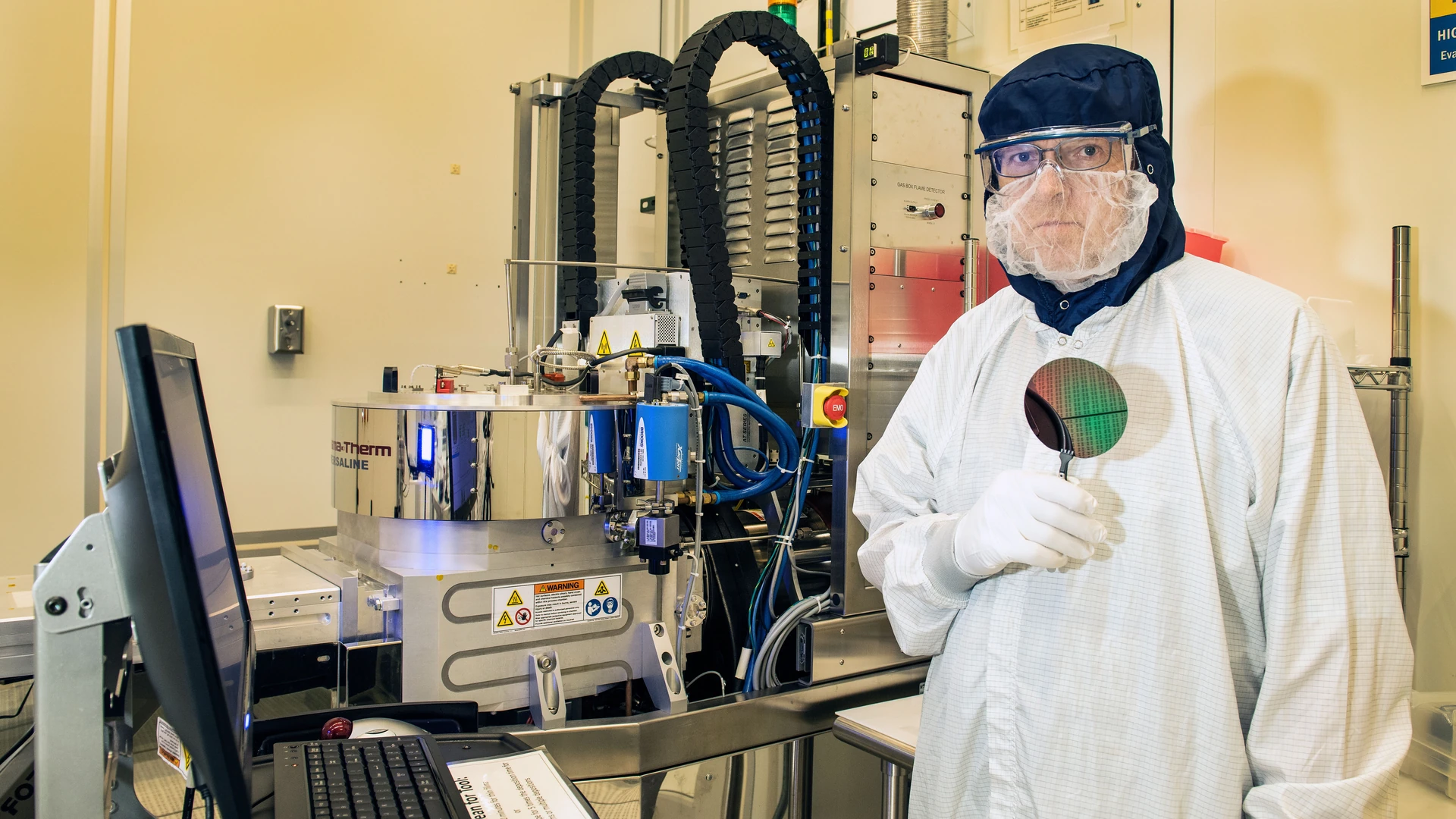
The hero photograph is a NIST image by Curt Suplee. It shows NIST process engineer Richard Kasica holding a silicon wafer in a cleanroom.
Browse current NIST jobs, explore the historical federal jobs archive, review federal workforce statistics and read more FederalHiringData investigations.
Continue reading
More from FederalHiringData
Data investigationsAugust 21, 2026
Federal Prisons Lost 1,166 Officers. Overtime Became the Backstop.
BOP staffing has begun a small rebound, but the officer corps remains thinner and the last public operational measures show rising overtime and augmentation.

Data investigationsAugust 23, 2026
NASA Cut Its Civil-Service Workforce 22%. Now It Wants Core Technical Work Back In-House.
NASA lost more than 4,000 civil servants before directing its centers to restore in-house engineering, operations and science capability.

Data investigationsAugust 18, 2026
FEMA's Public Workforce Count Fell 22% as GAO Warned of Readiness Risks
FEMA had 5,793 fewer covered civilian employees in June 2026 than in January 2025. GAO says the agency cut staff without the workforce planning needed to assess mission capacity.
Federal Hiring Data Weekly
Get the biggest federal workforce changes in your inbox.
Subscribe to Federal Hiring Data Weekly for federal hiring trends, salary data, agency movements, and original investigations, with email confirmation before delivery.