August 22, 2026
Northern Border Staffing Fell as Authorized Positions Rose
Northern Border Patrol sectors had more authorized positions but about 6% fewer assigned and working agents from fiscal 2019 through 2024.
By Evan Mercer
Published August 22, 2026Last edited August 22, 2026
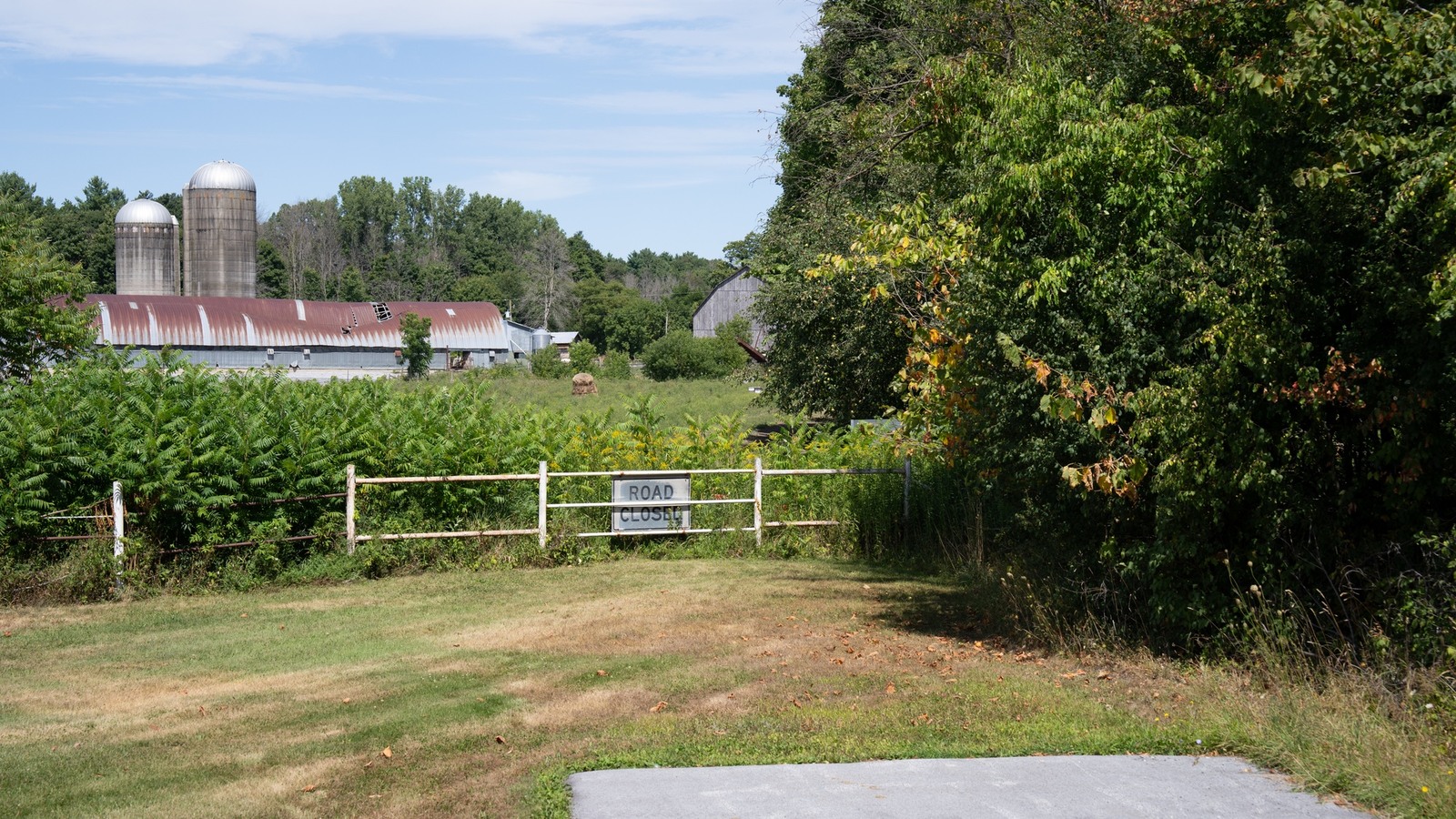
The United States' boundary with Canada stretches almost 4,000 miles across 12 states, more than twice the length of the land border with Mexico. That geographic fact does not establish how many agents the northern border needs. It does explain why a smaller workforce, dispersed across forests, waterways, mountains and remote communities, cannot be judged by a simple agents-per-mile ratio.
The stronger evidence is operational. From fiscal 2019 through 2024, authorized Border Patrol positions in northern sectors increased while the number of agents assigned and actually working there fell about 6%, according to the Government Accountability Office. Specialists who monitor surveillance systems filled only 88 of 115 authorized positions, a 77% staffing rate.
At the same time, apprehensions rose from 6,618 in fiscal 2019 to 24,968 in 2024 before falling in 2025 and remaining lower through April 2026. Those encounters were far below southwest-border volume, but the northern mission also includes drug smuggling, maritime and air approaches, ports of entry, commercial traffic and large areas where surveillance technology may be the only persistent presence.
The central problem is not that northern staffing should mirror the southwest. It is that CBP has not consistently filled the northern positions it authorized or maintained performance measures that show whether its mix of agents, aircraft, vessels, specialists and sensors is adequate.
Authorized positions did not become working agents
GAO's June 2026 testimony drew from its 2019 and February 2026 reviews of northern-border resources. The later work found a divergence between plans and deployment: authorized Border Patrol agents increased across the eight northern sectors from fiscal 2019 through 2024, but agents assigned to and working in those sectors declined by approximately 6%.
The phrase "working in" matters. An authorized position is permission to staff a job. An assigned agent is placed in a sector. The working count accounts for agents unavailable because of details and other reasons. A sector can therefore appear healthier on an authorization chart than on a shift roster.

GAO found variation across northern sectors. The ratio of working agents to authorized agents ranged from about 57% to 92% in fiscal 2024. A national average would conceal a sector operating with little more than half of its authorized complement.
Temporary deployments were one part of the gap. Northern agents can be sent to support operations elsewhere, including the southwest border. Leave, training and other absences also affect the working total. GAO did not argue that no agent should ever be detailed. It found that the accumulated difference limited northern sectors' ability to carry out planned operations.
Sensors still require people
The northern border relies heavily on cameras, radar sites, unattended ground sensors, aircraft and vessels because terrain and distance make constant physical patrol impractical. Technology expands what a small team can observe. It does not monitor itself.
Law Enforcement Information Systems Specialists are civilian employees who watch surveillance feeds, analyze information and support sector intelligence units. Northern sectors had 88 specialists filling 115 authorized positions in fiscal 2024. Sector staffing rates ranged from 57% to 92%, and GAO said officials identified understaffing as a factor affecting monitoring and intelligence work.
That 77% overall fill rate is not a direct measure of border security. It is a capacity warning. A sensor can produce an alert, but an employee must assess it, combine it with other information and determine whether an operational response is needed. Agents, dispatchers and aviation or marine units may then have to travel significant distances.
CBP agreed with GAO's recommendation to develop and implement a plan for filling and retaining those specialist positions. The recommendation is narrow and testable: document the gap, identify its causes, take actions and measure whether staffing improves.
Workload cannot be reduced to encounters
Northern Border Patrol apprehensions increased from 6,618 in fiscal 2019 to 24,968 in 2024, with especially sharp growth in 2023 and 2024. Public CBP data showed a drop in 2025 and generally lower levels through April 2026.
The change is operationally meaningful, but it should not be used to declare the border four times more dangerous or four times more demanding. Apprehensions depend on crossings, enforcement activity, definitions and the ability to detect people. They capture only one part of CBP's northern mission.
CBP officers at ports of entry process travelers and commercial traffic. Air and Marine Operations covers aviation and maritime domains. Border Patrol works between ports. Specialists monitor technology. Partner agencies participate in task forces. No single denominator combines those functions honestly.
Agents per mile is especially weak. A mile near a busy crossing, a maritime corridor or a population center creates a different workload from a remote mile with limited road access. The nearly 4,000-mile figure gives geographic context, not a staffing formula.
A larger CBP does not prove northern growth
FederalHiringData's calculation from OPM monthly employment files shows covered CBP civilian employment rising from 59,072 in January 2015 to 69,958 in June 2026. From December 2024 to June 2026, the covered organization grew by 3,345 employees, or 5%.

That is a whole-agency number. It includes Border Patrol, customs officers, mission support and other covered CBP employees across the country. It cannot be used to say northern sectors gained staff. GAO's sector-level data show that a growing national organization and a northern working-agent shortfall can coexist.
Federal Hiring Data Weekly
Get the biggest federal workforce changes in your inbox.
Subscribe to Federal Hiring Data Weekly for federal hiring trends, salary data, agency movements, and original investigations, with email confirmation before delivery.
The distinction will become more important as CBP uses new funding. GAO said 2025 and 2026 laws provided billions for hiring and training, including planned support for 5,000 CBP officers, 3,000 Border Patrol agents and 200 Air and Marine Operations agents. Another roughly $2 billion was available for recruitment and retention bonuses.
Those are funding and hiring plans, not people already working in northern sectors. The northern-border test is whether CBP can recruit, train, assign and retain employees in the places its staffing model says they are needed.
Recruiting was broad and persistent
The FederalHiringData historical USAJOBS archive contains 27,665 distinct announcements matched to CBP from March 2017 through Aug. 14, 2026. Border Patrol enforcement led the matched occupational series with 5,287 announcements. Customs and Border Protection officers accounted for 3,445, while general enforcement and compliance accounted for 1,967.

Annual announcements ranged from 2,197 in the partial 2017 archive to 3,834 in 2023. There were 2,861 in 2025 and 476 in partial 2026 coverage through Aug. 14. These agency-wide counts are recruiting signals, not northern-border hires. A national CBP announcement may cover many duty stations, and the same occupation can be advertised repeatedly.
The archive can still illuminate what staffing requires. CBP recruited not only uniformed agents and officers, but analysts, intelligence specialists, information-technology employees, mechanics, paralegals and program managers. Air and marine operations depend on maintenance and support. Technology-heavy surveillance depends on specialists. The staffing challenge is an ecosystem, not a single badge count.
Location-specific analysis is the next step. An announcement's duty station, relocation incentive, pay range and open duration can help identify persistent recruitment in remote northern communities. Those signals need to be linked to actual accessions and retention before they can establish whether an incentive worked.
CBP still lacks a complete northern scorecard
GAO has reported for years that Border Patrol and Air and Marine Operations lacked performance measures specific enough to assess northern-border effectiveness. National measures can look satisfactory while obscuring the particular geography, maritime exposure and resource gaps of the north.
Border Patrol was developing a Northern Border Index and anticipated new measures beginning in fiscal 2027. Air and Marine Operations had drafted a northern-region strategic plan and was working on implementation material. As of GAO's June 2026 testimony, the relevant recommendations remained open.
That gap limits public interpretation. Lower apprehensions may reflect fewer crossings, stronger deterrence, reduced detection or some combination. More technology may expand coverage without showing how often alerts led to interdictions. More authorized positions may not change operations if vacancies and details keep the working total low.
A credible scorecard would connect sector staffing, specialist coverage, aircraft and vessel availability, sensor uptime, response times and clearly defined outcomes. It should distinguish ports of entry from between-port activity and report temporary deployments that materially reduce local capacity.
Related research
Put this finding in context

Data investigationsAugust 21, 2026
National Park Visits Rose 13%. September Staffing Fell 17%.
The park system still builds a summer workforce, but same-month OPM data show a thinner permanent base beneath 323 million annual visits.
Data investigationsAugust 18, 2026
FEMA's Public Workforce Count Fell 22% as GAO Warned of Readiness Risks
FEMA had 5,793 fewer covered civilian employees in June 2026 than in January 2025. GAO says the agency cut staff without the workforce planning needed to assess mission capacity.
What adequate staffing would look like
Adequacy is not equal distribution. The southwest border's encounter volume, infrastructure and operational tempo differ from the north. The northern border's distances, water, weather, legal crossings and remote terrain create their own requirements.
CBP already has an internal statement of need in its authorized positions. Filling those positions, or publicly explaining why the model changed, is the first benchmark. Keeping trained personnel working in the sector is the second. Measuring whether the combined workforce and technology perform the mission is the third.
The 6% decline in working agents and the 77% specialist fill rate show a gap between the first two benchmarks. The unfinished performance measures leave the third unresolved.
For job seekers, broad CBP recruiting remains visible, but a historical posting is not currently open. The site's current jobs search, locations directory and occupation pages provide current listings. For policymakers, the more urgent question is not how many total CBP employees exist. It is whether the people, equipment and information systems assigned to each northern sector match a current, measurable mission.
Ports, between-port patrol and air operations are different workloads
Public discussion often compresses CBP into a single border workforce. The operating structure does not. CBP officers inspect people and goods at ports of entry. Border Patrol agents operate between ports. Air and Marine Operations supplies aviation and maritime capability across regions. Intelligence and surveillance specialists support detection and coordination.
The northern border adds major lawful travel and trade flows at ports that are not captured in Border Patrol apprehensions. Those crossings create inspection and facilitation work for officers, while a remote sensor alert creates a different sequence for a Border Patrol sector. Maritime activity may require an aircraft or vessel rather than a ground patrol.
This is why staffing should be reported by component and mission. A national increase in CBP officers does not fill a Border Patrol vacancy, and an additional Border Patrol agent does not replace a surveillance specialist. Temporary deployments can further separate assigned from available staffing.
GAO's findings are strongest where the denominator is exact: northern-sector authorized, assigned and working agents, and authorized versus filled information-systems specialists. Broader claims about all northern ports or air and marine personnel require corresponding component data that the headline figures do not provide.
Methodology and limitations
Operational findings come from GAO-26-109195, published June 30, 2026, and the underlying 2019 and 2026 GAO reports it summarizes. Apprehensions are people apprehended by Border Patrol, not all travelers, port activity, drugs seized or air and marine events. Staffing rates compare specific authorized, assigned or working universes and should not be generalized to every CBP component.
FederalHiringData calculated monthly covered CBP employment from OPM Federal Workforce Data from January 2015 through June 2026. That national agency series is shown for context only and cannot identify northern-sector staffing.
We counted distinct historical USAJOBS control numbers matched to CBP from March 1, 2017 through Aug. 14, 2026. Announcements can cover multiple vacancies and locations, recur or close without a hire. They do not equal accessions. The 2026 archive is partial and is not treated as a full-year comparison.
Readers can browse current CBP and other federal openings, examine federal hiring statistics, explore locations and read more workforce investigations.
Continue reading
More from FederalHiringData

Data investigationsAugust 18, 2026
IRS Workforce Fell 29% as GAO Warned of Filing-Season Risks
The IRS had 29,663 fewer covered civilian employees in June 2026 than in January 2025. GAO says workforce-planning gaps and post-filing pressures pose risks to future operations.

Data investigationsAugust 22, 2026
The GS-1102 Contracting Workforce Fell 32% After 2024
OPM files show 14,283 fewer covered GS-1102 employees by June 2026, a consequential decline that still requires agency-level reconciliation.

Data investigationsAugust 21, 2026
DOE Has an $8 Billion Cleanup Mission. Its Federal Oversight Workforce Fell to 856.
DOE's nuclear-cleanup office lost one-third of its federal staff in two years while engineering, contracting and safety-related vacancies widened.
Federal Hiring Data Weekly
Get the biggest federal workforce changes in your inbox.
Subscribe to Federal Hiring Data Weekly for federal hiring trends, salary data, agency movements, and original investigations, with email confirmation before delivery.