August 25, 2026
CDC Lost 3,636 Covered Employees. Health Science Took the Largest Hit.
CDC's covered workforce fell 28% after December 2024. Health-science and public-health program roles led the losses, while recruiting nearly stopped.
By Evan Mercer
Published August 25, 2026Last edited August 25, 2026
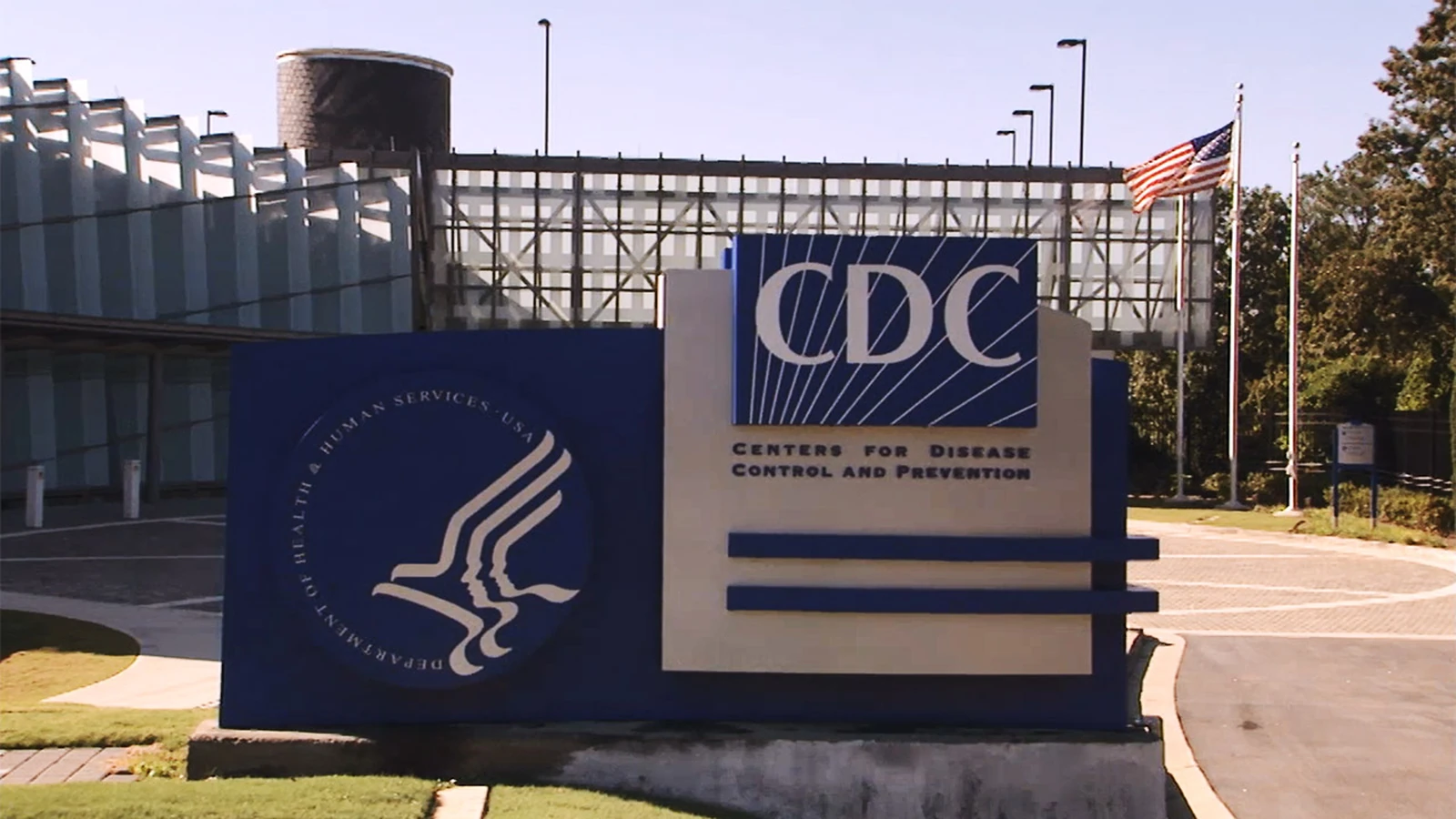
The Centers for Disease Control and Prevention entered the tenure of its new director with money attached to programs that, according to recent reporting, no longer had enough people to run normally.
At her first agency-wide staff meeting on Aug. 19, Dr. Erica Schwartz acknowledged understaffed congressionally funded programs and employee burnout, according to The Associated Press. A day earlier, AP had described an Alzheimer's program without staff and tobacco, epilepsy, sickle-cell and rape-prevention work that was inactive or nearly inactive after layoffs and extended administrative leave.
The public workforce record shows that this was not simply a story about a few empty offices. FederalHiringData's analysis of Office of Personnel Management records found 9,152 covered CDC civilian employees in June 2026, down 3,636, or 28.4%, from December 2024. That is a net change in onboard headcount, not a count of departures. It excludes contractors, state and local grantees, many commissioned officers and other people who contribute to CDC work.
The composition of the decline matters more than the headline alone. General Health Science lost 819 employees. Public Health Program Specialist lost 746. Together, those two occupational series accounted for 43% of the agency's net decline. Medical officers, microbiologists, statisticians, data scientists, grants managers and information-technology specialists also fell. The entry pipeline narrowed even more sharply: career-conditional and other probationary or trial-period employment fell 66.8%, while the under-35 workforce fell 45.9%.
CDC did not stop operating. It continued publishing surveillance and outbreak information, supporting laboratories and health departments, issuing grants, and producing the Morbidity and Mortality Weekly Report. The evidence instead points to a more uneven condition: core functions continued, while appropriated work and specialized capacity became disconnected in parts of the agency. Schwartz's immediate problem is not whether CDC still exists. It is whether a workforce built over two decades can be reconstructed around the missions Congress is still paying it to perform.
A two-decade expansion reversed in less than two years
CDC's covered workforce was not historically fixed at one size. Legacy OPM FedScope records show 7,297 employees in September 2000. The agency expanded after that, with pauses and pullbacks, reaching 12,820 by September 2024. The comparable annual series had grown by 76% over those 24 years.
The direction then changed quickly. Headcount was 12,788 in December 2024, 12,695 in February 2025 and 11,596 by May. It fell below 11,000 in August 2025 and stood at 9,769 at the end of that year. Monthly declines continued through the first half of 2026, reaching 9,152 in June, the latest OPM observation available for this analysis.

That June count was still above the 7,297 recorded in 2000. The recent contraction therefore did not erase the agency's entire long expansion. But it returned the covered workforce to a level below September 2009, when CDC had 9,358 employees in the same FedScope series.
HHS had announced a smaller planned reduction. Its April 2025 restructuring fact sheet said CDC would decrease by about 2,400 employees. The department said the decrease would be about 1,400 if roughly 1,000 employees expected to move from the Administration for Strategic Preparedness and Response were included in the CDC boundary.
The OPM record cannot be reconciled one-for-one to that plan. The promised ASPR transfer, centralized HHS functions and other organizational changes affect which employees sit inside CDC's measured subelement. But the observed decline of 3,636 from December 2024 through June 2026 is larger than either framing in the fact sheet. It shows the onboard outcome under OPM's CDC boundary, not merely a proposed reorganization target.

The distinction is important. A reorganization announcement describes intended structure. A workforce file records covered employees associated with the agency at a point in time. Neither alone proves how much operational work was completed, but the latter establishes the scale and timing of the capacity change.
Health and program occupations carried the largest numerical losses
CDC's two largest occupational series supplied the clearest signal. General Health Science fell from 3,215 employees in December 2024 to 2,396 in June 2026, a loss of 819, or 25.5%. Public Health Program Specialist fell from 2,437 to 1,691, a loss of 746, or 30.6%.
Those broad series cover work across centers and programs. A health scientist may conduct epidemiologic analysis, evaluate a prevention program, manage surveillance, or translate evidence into guidance. A public-health program specialist may oversee grants, coordinate partners, design interventions or administer disease-specific work. OPM occupation codes do not reveal which center, disease or congressional line item employed each person. The data can identify lost occupational capacity, not assign an employee to the Alzheimer's or tobacco program.
The decline extended beyond those two series:
| Occupation | Dec. 2024 | June 2026 | Change | Change |
|---|---|---|---|---|
| General Health Science | 3,215 | 2,396 | -819 | -25.5% |
| Public Health Program Specialist | 2,437 | 1,691 | -746 | -30.6% |
| Miscellaneous Administration and Program | 821 | 540 | -281 | -34.2% |
| Information Technology Management | 684 | 472 | -212 | -31.0% |
| General Arts and Information | 604 | 432 | -172 | -28.5% |
| Management and Program Analysis | 384 | 251 | -133 | -34.6% |
| Medical Officer | 360 | 246 | -114 | -31.7% |
| Contracting | 159 | 63 | -96 | -60.4% |
| Biological Sciences, broad series | 659 | 574 | -85 | -12.9% |
| Social Science | 143 | 79 | -64 | -44.8% |

Technical groups with smaller starting counts also contracted. Microbiology fell from 408 to 359. Statistics fell from 236 to 200, mathematical statistics from 114 to 87, computer science from 89 to 65, and data science from 63 to 44. Chemistry declined from 153 to 121. Grants management fell from 107 to 77.
These changes do not support a simple claim that only administrators were cut. Administrative, communications, procurement and support functions clearly declined. So did medical, laboratory, statistical, biological, data and public-health program occupations. Conversely, an occupational loss does not prove that a specific surveillance system stopped or that a disease outcome worsened. Capacity and outcome are different measures.
The pattern does explain why an appropriated program can remain on paper while losing the people who carry it. Program work depends not only on a disease specialist but on data systems, grants administration, contracting, communications, laboratories and management. Centralizing a support function may move employees out of the CDC subelement without eliminating their work. Eliminating or sidelining a program team can leave dollars available while interrupting implementation. Public OPM data cannot tell those cases apart employee by employee.
The personnel-action pipeline nearly stopped replacing departures
Headcount stocks show how many employees were onboard. OPM's separate personnel-action files show how unusual the flow became.
In calendar 2024, CDC recorded 1,114 accessions and 856 separations. In 2025, it recorded only 159 accessions against 3,100 separations. From January through June 2026, it recorded 83 accessions and 462 separations.

The 2025 separation file contains 957 voluntary retirements and 902 quits. It also contains 688 expired-appointment or other terminations, 575 reduction-in-force actions, 216 early-out retirements, 140 other retirements, 47 individual transfers out and 37 other separations. Those are personnel-action categories, not explanations of motive. A quit record does not say why an employee left. A retirement does not establish that restructuring caused it.
The action counts also should not be subtracted mechanically to reproduce the headcount line. Stocks and flows are separate OPM datasets. Effective dates, corrections, movement across organizational boundaries and other personnel processing differences prevent exact reconciliation. Their analytical value is directional: CDC moved from a year in which accessions exceeded separations to one in which replacement hiring was tiny relative to departures.
Government-wide policy helps explain that shift without making it CDC-specific. The January 2025 hiring freeze sharply restricted civilian hiring, and the later staffing-plan order continued controls while allowing exemptions for public safety and other approved positions. HHS could reassign people or approve selected hiring. The policy did not require every CDC occupation to fall equally, and it did not publish a CDC rebuilding target.
The newer-career bench thinned faster than the veteran core
The sharpest proportional decline was not in CDC's largest career group. It was among employees whose appointments represented the newer part of the pipeline.
OPM Tenure Group 2 includes career-conditional employees and others serving appointments that require a probationary or trial period. CDC had 2,609 such employees in December 2024 and 866 in June 2026. That was a 66.8% decline. Term, provisional and related Tenure Group 3 employment fell 41.2%, from 1,224 to 720. The career or no-restriction group fell 15%, from 8,695 to 7,393.
Age data point in the same direction. Employees under 35 fell from 1,885 to 1,020, a 45.9% decline. The 35-to-49 group fell 24.1%, and employees 50 or older fell 26.7%.

Neither measure is a perfect synonym for "early career." Some people enter federal service later in life. Tenure Group 2 includes more than one appointment type, and it is not a roster of probationary employees dismissed under one policy. But both measures show that CDC did not merely lose senior employees at retirement. The workforce segment most likely to become the next generation of experienced scientists, analysts and program leaders contracted disproportionately.
Federal Hiring Data Weekly
Get the biggest federal workforce changes in your inbox.
Subscribe to Federal Hiring Data Weekly for federal hiring trends, salary data, agency movements, and original investigations, with email confirmation before delivery.
That matters because specialized public-health work accumulates institutional knowledge. A microbiologist can be hired into an occupation code; becoming effective in a particular laboratory network, pathogen system or intergovernmental program requires additional experience. The OPM data do not measure that learning curve, and they cannot price the time required to rebuild it.
Congress funded programs that reporting found nearly empty
The strongest evidence of disconnection between money and people comes from reading two kinds of records together.
CDC's fiscal 2026 operating plan retained $246.5 million for tobacco, $41.5 million for Alzheimer's disease, $11.5 million for epilepsy, $6 million for sickle-cell research and $61.75 million for rape prevention. The operating plan is an official account of enacted program levels. It does not say how many federal employees administer each line.
AP's Aug. 18 investigation supplied the staffing evidence: no staff in the Alzheimer's program, staff cuts in the Office on Smoking and Health, and epilepsy, sickle-cell data and rape-prevention work described as inactive or nearly inactive. The reporting was based on interviews and internal conditions, not an official program-by-program headcount release.
| FY2026 program line | Enacted amount | Staffing status reported by AP |
|---|---|---|
| Tobacco | $246.5 million | Office staff were cut |
| Rape prevention | $61.75 million | Unit described as nearly inactive |
| Alzheimer's disease | $41.5 million | No staff reported |
| Epilepsy | $11.5 million | Program described as nearly inactive |
| Sickle-cell research | $6 million | Data work reported affected |
The table deliberately keeps the evidence streams separate. It does not claim that the entire appropriation was unspent, that grants stopped, or that every listed activity produced nothing. Federal program dollars may support awards to states, contractors and partner organizations even when a federal team is depleted. Existing agreements can continue. A current webpage can remain online. Those facts do not demonstrate that the federal office has enough employees to provide technical assistance, review performance, maintain data, make awards, answer congressional inquiries or plan the next funding cycle.
There are signs of continued machinery. CDC's chronic-disease center listed an Alzheimer's funding opportunity for fiscal 2026, and the agency's operating-plan page remained current. Those are meaningful counterexamples to the broadest interpretation of "dead." They show that at least some funding and administrative mechanisms persisted. They do not independently resolve AP's narrower claim that the federal teams responsible for work were empty or nearly empty.
CDC continued critical work, but continuity is not full capacity
Any assessment that stops at the staffing decline would miss what the agency still did.
CDC continued issuing outbreak and surveillance updates. Its MMWR publication remained active. The agency's current 2026 emerging-infectious-disease priorities commit to outbreak response, laboratory readiness, antimicrobial-resistance networks, advanced molecular detection, wastewater surveillance and port health. The priorities themselves include an unusually direct operational goal: ensuring the center has "staff, structure, and capacity to respond."
CDC also continued supporting state, local, tribal and territorial systems. Its fiscal 2026 congressional justification described 582 fellows deployed across 11 programs in fiscal 2024, with 51% stationed in state or local jurisdictions. The enacted operating plan retained $71 million for public-health workforce programs. CDC's workforce-development pages continued to offer fellowships, training and technical assistance.
These are not trivial residuals. Public-health capacity is distributed. A CDC employee may operate a national surveillance platform; a state laboratorian may perform testing; a university may receive a cooperative agreement; a contractor may maintain software; a fellow may serve in a local department. Federal headcount cannot represent the entire network.
But continued output does not prove unchanged resilience. A weekly publication can appear while a prevention grant team is depleted. An outbreak response can succeed by drawing employees from other work, increasing workload elsewhere. A current strategy can identify the need for laboratory staff without measuring whether the positions have been filled. The public evidence establishes activity, not a counterfactual showing what CDC would have accomplished with its former workforce.
The HHS contingency staffing plan illustrates the distinction. For a funding lapse, the department estimated that 4,111 CDC employees, 34% of the plan's workforce denominator, would be retained as exempt or excepted to carry out urgent activities. The plan lists outbreak response, the Vaccines for Children program, certain surveillance, World Trade Center health and other work that would continue. It also lists research, guidance, grants and many routine surveillance activities that would stop. A shutdown plan is not a restructuring plan, but it demonstrates that CDC's own mission is layered: preserving emergency functions is not the same as preserving every funded program.
Public recruiting has not shown a broad recovery
The historical recruiting record is the clearest public test of whether CDC had begun rebuilding through ordinary announcements.
FederalHiringData's historical USAJOBS archive contains 16,259 distinct CDC announcements opened from March 2017 through Aug. 14, 2026. Annual volume rose from a partial 580 in 2017 to 3,276 in 2023, then eased to 2,908 in 2024. It fell to 76 in 2025. The archive recorded 56 in 2026 through Aug. 14.

Related research
Put this finding in context

Data investigationsAugust 24, 2026
NOAA Lost 2,630 Employees. Its Technical Workforce Was Still Thinner in June 2026.
NOAA's covered workforce fell 21.1% from December 2024 through June 2026, with broad losses across science and technical occupations and only selective rebuilding.
Data investigationsAugust 25, 2026
EEOC Lost 447 Covered Employees. Its Federal Hearings Docket Rose 24%.
EEOC's private charge throughput held up as covered employment fell 21%, but its federal hearings docket rose while available judges declined.
Announcement counts are not hires. One announcement can cover several openings or locations, close without a selection, or be followed by another notice. Conversely, CDC can hire through paths not visible as a standard public announcement, including certain fellowships, commissioned service, transfers and approved exceptions. The chart measures visible recruiting activity, not onboard results.
Still, the collapse is too large to call a normal fluctuation in public posting volume. The archive had averaged thousands of announcements annually from 2020 through 2024. On Aug. 25, only one archived CDC announcement remained open: a supervisory research industrial hygienist position. That single-day count can change quickly and does not establish a hiring plan. It does show that a broad public recruiting campaign was not visible at the time of publication.
Schwartz's official leadership page was current through Aug. 21 and confirmed the new leadership structure. Neither it nor the other official material reviewed for this analysis gave a numerical goal for restoring career headcount, refilling scientific occupations or restaffing the five programs AP identified.
The absence of a public target does not mean no internal plan exists. It means progress cannot yet be judged against a disclosed denominator. A promise to advocate for the agency may matter inside HHS; it is not a staffing benchmark.
Rebuilding requires more than returning to one number
The 3,636 decline provides a scale, not a complete blueprint.
If CDC simply returned to its December 2024 headcount with a different occupational mix, program capacity could still differ. Replacing a departing grants manager with a health scientist changes one function; refilling a general health-science series without restoring a depleted disease team may change another. Contractors and centralized HHS services can perform work without appearing in CDC headcount, but they do not automatically reproduce program knowledge or governmental authority.
The new director therefore faces at least three separate reconstruction problems. The first is volume: whether CDC can add enough people to stop the decline. The second is composition: whether health science, public-health programs, medicine, laboratories, data, IT, grants and support functions are rebuilt in proportions that match the mission. The third is assignment: whether funded activities again have accountable teams with the authority and experience to execute them.
Public data can monitor the first two imperfectly. OPM will show monthly headcount and occupations. USAJOBS will show recruiting signals. Appropriations will show what Congress funded. The third problem requires transparency CDC has not yet provided: program-level staffing, operational milestones and explicit restoration targets.
This is also where restraint matters. The evidence does not show that the workforce decline caused a particular outbreak, death, delay or surveillance failure. It does not show that every function deteriorated. It does show that the reductions reached the scientific and program occupations at the center of CDC's work, that newer-career ranks contracted faster, and that ordinary recruiting remained far below its earlier scale.
The funded-but-unstaffed programs are not an accounting curiosity. They are a test of whether Congress's decision to buy a public-health capability can be translated into functioning teams. CDC's next phase will be measurable not when a budget line reappears or a page remains online, but when specialized people are again in place to do the work.
Methodology and limitations
FederalHiringData combined legacy OPM FedScope September employment snapshots for agency subelement HE39 from 2000 through 2014 with monthly OPM Federal Workforce Data for the same CDC subelement from 2015 through June 2026. The long-run chart uses September observations through 2025 and labels June 2026 as the latest, non-September point. The recent comparison uses December 2024 and June 2026, both modern monthly observations.
OPM headcount covers federal civilian employees in the measured CDC subelement. It does not include contractors, state or local grantee employees, every fellow, or all members of the U.S. Public Health Service Commissioned Corps. HHS reorganization and centralized functions may move employees across measured boundaries. The analysis therefore describes covered employment, not every person contributing to CDC's mission.
Occupation counts use OPM occupational series. They do not identify the center, division or disease program where an employee worked. The article does not assign occupational losses to the five programs in AP's report. Tenure Group 2 includes career-conditional employees and other appointments requiring probationary or trial periods; it is not identical to a roster of employees separated under one probation policy. Age is not a substitute for career stage.
Personnel-action data count accession and separation actions. They do not exactly reconcile two headcount stocks because effective dates, corrections, transfers and organizational movement differ. Separation categories describe the recorded action, not motive.
The USAJOBS analysis counts distinct control numbers for announcements whose stored agency name is Centers for Disease Control and Prevention. FederalHiringData historical coverage begins in March 2017, so 2017 is partial. The 2026 count runs through Aug. 14 and is also partial. Announcements are not applicants, vacancies, offers, hires or positions filled; one announcement can advertise multiple openings and a vacancy can be reposted.
Program amounts come from CDC's enacted fiscal 2026 operating plan and are shown in millions of dollars. Program staffing descriptions are attributed to AP's Aug. 18-19 reporting because no official program-by-program federal staffing roster was available. Funding, obligations, awards, onboard federal staffing and program output are separate measures.
The analysis was completed Aug. 25, 2026. It used no OpenAI API calls for research, analysis, writing, charts or imagery.
Sources and related reading
Primary sources include OPM Federal Workforce Data, CDC's fiscal 2026 operating plan, its fiscal 2026 congressional justification, the CDC leadership roster, HHS's restructuring fact sheet, and GAO's June 2026 federal workforce update. The current internal staffing account comes from AP's program investigation and report on Schwartz's first all-hands meeting.
Explore the broader data in Federal Hiring Statistics, review federal agency profiles, or browse current federal jobs. More FederalHiringData reporting is available in the article archive.
Continue reading
More from FederalHiringData

Data investigationsAugust 25, 2026
CFPB Lost 670 Covered Employees as Complaint Intake Reached 6.6 Million
Covered CFPB employment fell 38.2% while complaint intake reached 6.6 million and leadership narrowed supervision and enforcement priorities.
Data investigationsAugust 24, 2026
Federal Student Aid Lost 46% of Its Workforce. Two Loan-Servicer Checks Stopped.
Federal Student Aid stopped two contractor-oversight checks as its covered workforce fell by nearly half while the loan portfolio reached $1.724 trillion.

Data investigationsAugust 22, 2026
IHS Launched Its Largest Hiring Push. Its Covered Workforce Fell 458 by June.
IHS launched against severe provider vacancies, but covered employment fell 458 from January through June and the campaign still lacks a public numeric target.
Federal Hiring Data Weekly
Get the biggest federal workforce changes in your inbox.
Subscribe to Federal Hiring Data Weekly for federal hiring trends, salary data, agency movements, and original investigations, with email confirmation before delivery.