August 24, 2026
EPA Has $10.2 Billion in IRA Awards to Oversee. Its Workforce Is 26% Smaller.
EPA entered years of post-award monitoring with $10.2 billion in unaffected IRA obligations and 4,326 fewer covered employees than in September 2024.
By Evan Mercer
Published August 24, 2026Last edited August 24, 2026

The Environmental Protection Agency had already made the commitments. The harder part was still ahead.
As of March 31, 2026, EPA was overseeing $10.24 billion in Inflation Reduction Act obligations that were unaffected by a later rescission or by litigation over terminated programs. Only $685.6 million, or 6.7%, had been expended. The rest was not an open balance EPA could spend again. It had been legally committed to awards with performance periods that can last years.
EPA entered that long post-award period with a substantially smaller workforce. Public Office of Personnel Management files show 16,839 covered civilian employees at the agency in September 2024 and 12,513 in June 2026. That is a reduction of 4,326 employees, or 25.7%. Grants management, environmental protection, engineering, science, program analysis, financial administration, auditing, contracting, and legal occupation groups all became smaller.
The Government Accountability Office found that EPA retained its standard grant controls and planned an additional in-depth review for every IRA grant, far more extensive than its normal practice. Officials also said they were still evaluating staffing needs and using contractors to fill gaps. Separately, EPA's inspector general found that the agency lacked an agencywide grants workforce plan and was using workload benchmarks based on a 2005 study.
None of that proves EPA missed a review, approved an improper payment, or failed to enforce a grant because an employee left. It establishes a narrower and important test: the monitoring obligation continued after the award ceremony, while the federal workforce responsible for administrative, technical, and financial oversight had contracted sharply.
The $10.2 billion is the part still outside the legal fight
Congress originally provided EPA about $41.5 billion in supplemental IRA appropriations. That headline total no longer describes the operating portfolio.
In 2025, EPA terminated grants funded by $30 billion of those appropriations: $27 billion for the Greenhouse Gas Reduction Fund and $3 billion for Environmental and Climate Justice Block Grants. Recipients challenged some of those actions. A separate GAO funding-status review said the status of eight grants totaling $19.97 billion remained unclear as of April 2026 because of litigation.
GAO therefore analyzed the roughly $11.5 billion not affected by the terminations or lawsuits. A 2025 law rescinded about $1.16 billion in unobligated authority. EPA had obligated $10.243 billion before the rescission and had another $45.6 million unobligated. Expenditures of $685.6 million were a subset of the obligations.
| Funding concept | Meaning in this article | Amount reported by GAO |
|---|---|---|
| Appropriation | Budget authority Congress provided for the relevant unaffected IRA programs | About $11.5 billion |
| Rescission | Unobligated authority later canceled by law | $1.161 billion |
| Obligation | A legal commitment EPA made, primarily through awards | $10.243 billion |
| Expenditure | Cash paid from those obligations as recipients performed work | $685.6 million |

The small expenditure share is not a measure of delay or of the exact work remaining. Recipients draw funds at different points, and a large equipment or construction award can move from design to procurement to installation over years. Monitoring begins before the first payment and can continue after the last through audits and closeout.
It does show why the obligations cannot be treated as a completed policy event. EPA had made the commitments, but most cash movement and project execution within this unaffected portfolio remained ahead as of March 2026.
One award can generate years of federal decisions
Recipients of EPA grants generally submit periodic reports explaining progress against the milestones, activities, outputs, and outcomes in an approved workplan. Programs set the frequency, often quarterly or semiannually. Project officers review those reports and maintain contact with recipients. Grant specialists handle the administrative side, including award terms, payments, modifications, compliance, and closeout.
GAO described an additional layer for the IRA portfolio. EPA's Office of Air and Radiation planned an advanced programmatic monitoring review for every IRA grant at least once during its performance period. EPA's usual policy is to conduct such an in-depth assessment for at least 10% of active grants in a year. For the IRA portfolio, awards of $100 million or more were to receive two reviews. GAO counted 22 grants at or above that threshold.
The review examines progress, management, and expectations. It supplements recurring controls. OAR officials told GAO they reviewed drawdowns weekly against approved workplans; selected recipients reported project-officer check-ins as often as every two weeks or monthly.
| Oversight activity | What federal staff examine | Timing described by GAO |
|---|---|---|
| Performance reports | Progress against workplan milestones, outputs, outcomes, time frames, and spending | Quarterly or semiannual, depending on program |
| Project-officer contact | Implementation questions, progress, and emerging problems | Program-specific; some recipients reported biweekly or monthly contact |
| Drawdown review | Whether payment requests align with the approved workplan | OAR officials reported weekly review |
| Advanced programmatic monitoring | In-depth assessment of progress, management, and expectations | At least once for every IRA grant; twice for grants of $100 million or more |
| Closeout | Final financial, property, performance, and administrative requirements | After performance and payment activity ends |
EPA can withhold payments, suspend part of an award, or terminate it when a recipient does not meet the terms. GAO reported that two programs further along in performance, air-pollution monitoring and Climate Pollution Reduction planning grants, had not produced issues serious enough to require enforcement action at the time of its review. That is useful counterevidence: a smaller workforce did not automatically produce a documented enforcement failure.
The unresolved question is whether EPA can maintain the promised frequency and depth across the full performance cycle. A quarterly report does not review itself. A contractor can help prepare an analysis, but federal officials still decide whether a recipient complied, whether a payment should proceed, and whether an award should change.
EPA's workforce fell below its earlier 21st-century lows
FederalHiringData analyzed public FedScope and Enterprise Human Resources Integration records for EPA agency subelement EP00. The long-run series uses September snapshots from 2000 through 2025 and June 2026, the latest monthly observation available.
EPA had 18,596 covered employees in September 2000 and reached 18,923 in 2003. The count declined through much of the next decade, fell to 14,291 in 2019, and then recovered to 16,839 in September 2024. It stood at 15,817 one year later and 12,513 in June 2026, the lowest point in this 2000-to-2026 series.

Covered headcount is not full-time-equivalent employment. It is a count of employees represented in OPM's public personnel files at a point in time. EPA used another measure in a July 2025 workforce announcement, saying it had 16,155 employees in January and expected to reach 12,448 after voluntary departures and other reductions. Those figures are not spliced into the OPM series because coverage, timing, and methodology can differ.
The monthly OPM record shows the contraction accelerating late in 2025. Headcount stood at 16,931 in January 2025 and 15,817 in September before falling to 15,048 in October, 14,661 in December, 12,849 in January 2026, and 12,513 by June.

Personnel-action data provide another view. OPM records 4,444 EPA separations and 378 accessions in calendar 2025. Of the separations, 2,629 carry the Deferred Resignation Program indicator. That group includes 1,173 voluntary retirements, 816 quits, 630 early retirements, and ten other actions. Another 1,815 separations were not DRP-coded.

Action totals do not reconcile one-for-one with monthly headcount because transfers, appointments, corrections, timing, and coverage can move the measures differently. The gap nevertheless captures the scale of 2025 turnover.
The decline reached the occupations that make grant oversight possible
EPA grants are not managed by one occupation. Grant specialists in series 1109 handle administrative functions. Project officers can be environmental specialists, engineers, scientists, program analysts, or other technical employees who understand the work being financed. Attorneys, accountants, auditors, contracting specialists, and financial staff support decisions that cross legal and financial boundaries.
Every selected group was smaller in June 2026 than in September 2024.
| Occupation series | September 2024 | June 2026 | Change |
|---|---|---|---|
| Environmental protection specialist, 0028 | 1,688 | 1,166 | -522 (-30.9%) |
| General physical science, 1301 | 2,522 | 2,042 | -480 (-19.0%) |
| Environmental engineering, 0819 | 1,481 | 1,070 | -411 (-27.8%) |
| Management and program analysis, 0343 | 1,294 | 947 | -347 (-26.8%) |
| Natural resources and biological sciences, 0401 | 2,213 | 1,870 | -343 (-15.5%) |
| General attorney, 0905 | 1,122 | 836 | -286 (-25.5%) |
| Contracting, 1102 | 301 | 226 | -75 (-24.9%) |
| Financial administration and program, 0501 | 174 | 118 | -56 (-32.2%) |
| Auditing, 0511 | 144 | 111 | -33 (-22.9%) |
| Grants management, 1109 | 181 | 149 | -32 (-17.7%) |
Federal Hiring Data Weekly
Get the biggest federal workforce changes in your inbox.
Subscribe to Federal Hiring Data Weekly for federal hiring trends, salary data, agency movements, and original investigations, with email confirmation before delivery.

These are agencywide occupation series, not an IRA staffing roster. Public OPM records do not reveal who was assigned to an award or how many hours a project officer spent on it. The table cannot support a claim that EPA lost exactly 32 IRA grant specialists or 411 IRA engineers.
It does show that the surrounding capacity was not preserved while the total agency became smaller. The occupational groups that supply administrative review, technical judgment, financial controls, procurement knowledge, audit, and legal advice all contracted.
The reduction was also geographically broad. D.C. duty stations, which are headquarters-heavy, fell by 782 employees, or 19%, between September 2024 and June 2026. North Carolina fell by 433, Maryland by 309, California by 242, Georgia by 240, Illinois by 227, Virginia by 226, New York by 212, Texas by 186, and Washington state by 184.

Duty station is not organizational assignment, and D.C., Maryland, and Virginia are imperfect headquarters proxies. The data do establish that the contraction was not confined to Washington or one regional location.
The grants workforce plan was still unresolved
EPA's inspector general examined the grants workforce across annual and supplemental programs, not only the IRA. In May 2025, EPA was managing 8,581 grants valued at about $78.3 billion, including $60.2 billion awarded from supplemental appropriations under the Infrastructure Investment and Jobs Act and the IRA. From 2018 through May 2025, supplemental funding increased the number of grants under management by about 56% and their value by 338%, according to the OIG.
The audit found no agencywide plan devoted to the grants workforce. Hiring and staffing decisions were decentralized across program offices and regions. The workload benchmark for grant specialists was 60 grants; project-officer benchmarks ranged from three to 19. Both came from a 2005 study, before later federal rules placed greater emphasis on results and accountability. The workload calculations also excluded some pre-award and closeout duties.
The inspector general recommended a grants workforce plan and new benchmarks. EPA disagreed; both remained unresolved on the OIG page updated July 15, 2026. The agency said it would revisit them after the effects of deferred resignations, retirements, and reorganization were clearer. It agreed to improve workload-analysis documentation and communication.
The OIG found examples of strain in the broader grants portfolio. Region 9's Water Division lost six project officers and reassigned their grants to other certified staff. Region 10 Water lost ten; its average rose from ten to about 13 grants per project officer, still below the benchmark of 19. Managers expected higher workloads and slower grant administration to continue into fiscal 2026. Those are water-program examples, not evidence that the same thing happened in an IRA air grant. They show how an average below a benchmark can coexist with turnover, reassignment, training needs, and slower work.
EPA adjusted its staffing model and used contractors
There is also evidence that EPA did not simply ignore the workload.
Before four major OAR programs made their awards in 2023, officials estimated they would need the equivalent of about 211 full-time positions cumulatively through fiscal 2026, or roughly 70 each year. The programs were Climate Pollution Reduction Grants, Clean Ports, Clean Heavy-Duty Vehicles, and Air Pollution Monitoring.
Officials later told GAO that EPA made fewer and larger grants than anticipated. A lower award count reduced the overall staffing need, although a large award can sometimes require more oversight. OAR reviewed its hiring and staffing plans again at the beginning of fiscal 2025. After losing hundreds of employees across headquarters and regional offices through early retirements, it used annual appropriations, obligated IRA funds, and contractors to manage the work. Contractors were assisting project officers with advanced programmatic reviews.
That is meaningful mitigation, not proof that capacity is sufficient. Public records do not identify contractor staffing, hours, qualifications, costs by task, or completed review rates. Federal employees remain accountable for decisions that exercise agency authority.
The strongest public test is therefore operational. Did every IRA grant receive its promised advanced review? Did the 22 awards of $100 million or more receive two? Were reports reviewed on time? How often were corrective actions required? How long did modifications and closeouts take? Headcount describes available capacity; completion and timeliness measures would show what that capacity produced.
Related research
Put this finding in context

Data investigationsAugust 18, 2026
IRS Workforce Fell 29% as GAO Warned of Filing-Season Risks
The IRS had 29,663 fewer covered civilian employees in June 2026 than in January 2025. GAO says workforce-planning gaps and post-filing pressures pose risks to future operations.
Data investigationsAugust 23, 2026
The Forest Service Set a 4-Billion-Board-Foot Timber Goal. Key Staff Fell 22%.
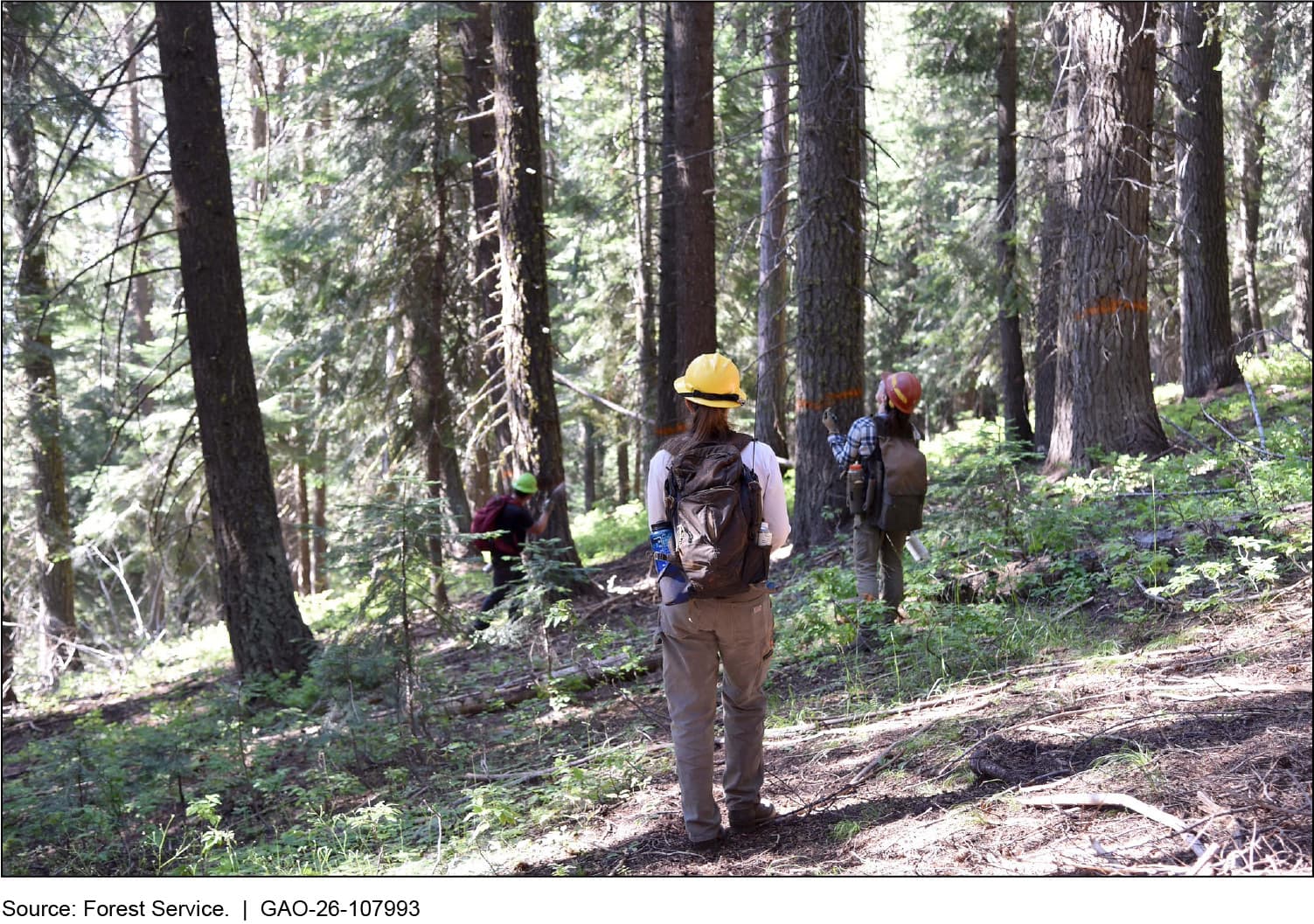
Timber sales rose 29% through June, but nine occupations needed to plan, contract and oversee forest projects had 1,445 fewer employees than in 2024.
Large regional awards make the continuing work visible
A bounded USAspending search illustrates the difference between an announced award and an executed project. It is not a complete accounting of the IRA portfolio, and USAspending outlays can lag agency systems. Three large awards in the unaffected program group show long performance periods and regional administration:
| Recipient and program | EPA obligation | Outlays in USAspending when retrieved Aug. 24 | Awarding office |
|---|---|---|---|
| South Coast Air Quality Management District, Climate Pollution Reduction Grants | $500.0 million | $0.7 million | Region 9 Grants Office |
| Port Authority of New York and New Jersey, Clean Ports | $451.6 million | $0 reported | Region 2 Grants Office |
| Connecticut Department of Energy and Environmental Protection, Climate Pollution Reduction Grants | $450.0 million | $9.8 million | Region 1 Grants Office |
The awards run through dates from December 2028 to October 2029. Their workplans include equipment, infrastructure, subawards, reporting, evaluation, and performance measures. A zero or small reported outlay does not establish nonperformance, especially when procurement precedes reimbursement. It illustrates why oversight extends beyond selection.
The same geography appears in the staffing model. Regional grants offices issue and administer awards, while program offices and OAR coordinate with regional project officers. EPA told GAO that frequent meetings with regional counterparts were part of the process for grants managed outside headquarters. A staffing analysis that looks only at D.C. would miss much of that operating structure.
Recruiting activity has not yet restored the earlier workforce
The FederalHiringData historical USAJOBS archive contains more than 14,000 EPA announcements opened since its coverage begins in March 2017. It shows 2,104 distinct announcements in 2024. The 2025 archive is incomplete for EPA, so this article does not treat its partial count as a hiring trend or compare it with 2024.
For 2026, the archive contains 161 distinct EPA announcements opened through Aug. 13. Program management, natural resources and biological sciences, attorneys, physical scientists, investigators, program analysts, IT specialists, environmental protection specialists, and environmental engineers appear among them. Recent postings show recruiting activity, including supervisory technical positions and program leadership.
Announcements are not vacancies, selections, offers, or hires; one can cover multiple grades, locations, or anticipated needs. OPM's June headcount still showed EPA 4,326 employees below September 2024. The evidence supports recruiting activity, not a completed rebuild.
EPA's grant portfolio now offers a measurable way to judge that rebuild. Staffing does not need to return to a particular historical peak to be adequate. It needs to support the controls EPA said it would perform: recurring reports, drawdown review, recipient contact, advanced monitoring, enforcement when warranted, and closeout.
The commitments have already been made. The capacity question will be answered over the next several years, one review, payment decision, corrective action, and completed award at a time.
Methodology and limitations
FederalHiringData analyzed public OPM FedScope and Enterprise Human Resources Integration records for EPA agency subelement EP00. The long-run series uses September snapshots from 2000 through 2025 and the June 2026 monthly file as the latest observation. Monthly detail begins in January 2024. Counts cover employees represented in those files and exclude workers outside OPM's public data population.
Headcount is not FTE. EPA's July 2025 release used a different January measure and a forecast, so its values are not spliced into the OPM series. Percent changes use OPM covered headcount unless another source is named.
Occupation comparisons use September 2024 and June 2026. Series are broad classifications, not offices, duties, or award assignments. Duty-station geography is not organizational geography; states can contain regional offices, laboratories, and other units.
Accessions and separations come from OPM personnel-action files. Calendar 2026 is through June. Action totals do not reconcile one-for-one with point-in-time headcount because of transfers, timing, appointments, corrections, and coverage. The Deferred Resignation Program indicator identifies actions coded in the source as connected to that program; it does not describe each employee's reason or work assignment.
Funding and oversight findings come from GAO-26-108084, released July 31, 2026, and EPA OIG report 26-P-0017, released March 11 and updated online July 15. The $10.243 billion and $685.6 million figures are as of March 31, 2026 and exclude terminated programs affected by litigation. They should not be combined with the OIG's broader May 2025 portfolio of 8,581 grants and $78.3 billion, which included annual, infrastructure, and IRA awards under a different scope and date.
The USAspending review used EPA as awarding agency, grant and cooperative-agreement types, an Aug. 16, 2022-to-Aug. 24, 2026 window, and the phrase Inflation Reduction Act. FederalHiringData reviewed three large CPRG and Clean Ports award records. They are illustrative, not exhaustive; outlays can be revised after retrieval. No contractor headcount is inferred.
The USAJOBS analysis counts distinct control numbers attributed to the Environmental Protection Agency in the FederalHiringData archive. Coverage begins in March 2017. EPA's 2025 archive is incomplete and is excluded from trend interpretation. The 2026 count is through Aug. 13 and incomplete. Announcements are not hires.
This analysis does not determine whether a particular award was adequately monitored, whether staffing caused an improper payment, or whether program outcomes were achieved. Those questions require award-level performance, review, enforcement, and closeout records. Sources were checked through Aug. 24, 2026. Readers can browse current federal openings, examine broader federal hiring statistics, use the agency directory, or read more FederalHiringData investigations.
Continue reading
More from FederalHiringData
Data investigationsAugust 18, 2026
FEMA's Public Workforce Count Fell 22% as GAO Warned of Readiness Risks
FEMA had 5,793 fewer covered civilian employees in June 2026 than in January 2025. GAO says the agency cut staff without the workforce planning needed to assess mission capacity.

Data investigationsAugust 24, 2026
Payroll Estimates Were Revised Down. BLS's Workforce Is 20% Smaller Than in 2024.
The July jobs report revised May and June payrolls down by 103,000. Revisions are normal, but BLS is now producing key labor statistics with a much smaller workforce.

Data investigationsAugust 23, 2026
DOD Has a $285 Billion Maintenance Backlog. Its Facilities Workforce Is Shrinking.
DOD's reported repair backlog rose 80.8% after inflation while a selected civilian facilities-and-trades workforce proxy fell 11.4% after January 2025.
Federal Hiring Data Weekly
Get the biggest federal workforce changes in your inbox.
Subscribe to Federal Hiring Data Weekly for federal hiring trends, salary data, agency movements, and original investigations, with email confirmation before delivery.