August 28, 2026
Only 8.6% of Public USAJOBS Announcements Listed Veterans. That Is Not the Preference Rate.
A 3.1 million-announcement analysis shows why the USAJOBS Veterans label cannot tell applicants where preference applies.
Published August 28, 2026Last edited August 28, 2026

Veterans preference has a visibility problem on USAJOBS. The site gives applicants a clear Veterans hiring-path label, and referral notices can tell nonveterans that preference eligibles stood ahead of them. It is easy to combine those signals into one rule: if the announcement says Veterans, veterans go first; if it does not, preference is absent.
That rule is wrong in both directions.
FederalHiringData analyzed 3,096,908 distinct USAJOBS announcements opened from March 2017 through Aug. 27, 2026. Among 1,258,511 announcements whose stored audience text opened a path to the public, just 107,721 also carried the separate Veterans path. That is 8.6%.
The figure is not the share of public hiring governed by veterans preference. It shows something more useful: the Veterans label is not a preference switch. Ordinary competitive examining can apply preference even when a public announcement does not display a separate Veterans path. Conversely, a Veterans path can provide access to a merit-promotion or special-authority process in which ordinary preference points do not operate the same way.
The practical question is therefore not, "Does the Veterans icon appear?" It is, "Under which authority and competition is this vacancy being filled?"
The labels describe eligibility lanes, not one ranking rule
USAJOBS hiring paths answer the first question in an application: who may apply? They do not by themselves answer whether a person is qualified, how the agency will rate qualified applicants or which statutory preference procedure governs the certificate.
FederalHiringData found 1,046,551 announcements with a Veterans-path signal in the stored hiring-path or audience text. Of those, 938,830, or 89.7%, did not list the public. And 958,074, or 91.6%, also carried a status or internal-competition signal such as federal employees, merit promotion or an agency-only path.

Those combinations are not contradictory. A veteran may qualify for a special hiring authority or for access to a competition that is not open to every member of the public. A current federal employee may be eligible through status and through a veteran-specific route. An applicant can meet more than one path without receiving multiple preference bonuses.
The archive also contains 1,150,790 public-path announcements without the separate Veterans label. That does not make them nonveteran jobs. For a competitive-service job filled through public competitive examining, qualified preference eligibles may receive preference under the governing rules whether or not USAJOBS displays a separate veteran eligibility lane.
The label overlap varied over the archive. It was 9.4% of public-path announcements in the partial 2017 period, ranged from 8.2% to 9.7% from 2018 through 2024, then fell to 5.3% in 2025 and 4.8% through Aug. 27, 2026.

That decline should not be read as a sudden collapse in legal preference. USAJOBS fields, announcement templates and agency posting practices changed across the period. Legacy records often placed detailed text in `who may apply`; modern records more often use standardized hiring-path labels. The annual series measures what the announcement metadata said, not what happened on a referral certificate.
Preference applies inside specific competitions
OPM's veterans guide says preference applies in competitive examining, most excepted-service hiring under part 302, and certain temporary, term and overseas appointments. It does not apply to promotion, reassignment, transfer or reinstatement.
In public competitive examining, an agency first determines whether an applicant is eligible and meets the qualification standard. Preference does not turn an unqualified applicant into a qualified one. The applicant still must submit the required documents and establish the necessary experience, education, license or other condition.
For category rating, qualified candidates are placed into quality categories instead of receiving one continuous numerical rank. Preference eligibles are listed ahead of non-preference eligibles within their category, subject to the rules OPM describes. Some preference eligibles with compensable service-connected disabilities receive additional placement protections for many positions below GS-9. The details depend on the position and the applicant's preference category.
The familiar five- and 10-point descriptions refer to statutory preference categories, not universal boosts on every federal selection. Five-point preference generally covers qualifying active-duty service under the applicable conditions. Ten-point categories include eligible disabled veterans, certain Purple Heart recipients and some derived-preference family members. USAJOBS tells applicants to establish the claim with records such as a DD-214 and, when required, an SF-15 and supporting evidence.
Not every person who served has preference for every application. Eligibility depends on service dates, campaign or expeditionary participation, discharge character, disability evidence and other statutory conditions. Some retirees face additional restrictions. Derived preference can belong to an eligible spouse, widow, widower or parent rather than to the veteran. USAJOBS may use the same compact Veterans path for people whose legal bases differ substantially. Applicants should answer the preference questions from their own records instead of treating veteran status as a self-executing score.
Preference also constrains selection more precisely than the phrase "go first" suggests. An agency generally cannot pass over a preference eligible to select a non-preference candidate in circumstances covered by the statute without following the applicable pass-over procedure. OPM reviews some pass-over requests, including certain cases involving veterans with compensable service-connected disabilities. That protection is serious, but it operates within a particular certificate after eligibility, qualification and category placement. It does not require an agency to fill the job, interview every referred veteran or select the highest-preference applicant when the lawful certificate gives it more than one available preference eligible.
This is why a public-only announcement can still matter greatly to a preference-eligible veteran. In the archive, control 874000000, a competitive-service Medical Support Assistant posting, listed the public but not a separate Veterans path. The missing label does not decide the preference question. The competition and authority do.
VEOA opens a door; it does not add preference points
The Veterans Employment Opportunities Act is commonly misunderstood because USAJOBS can show Veterans alongside federal-employee and merit-promotion paths. VEOA lets qualifying veterans compete for certain merit-promotion opportunities outside the hiring agency. It is access to the competition.
OPM is explicit: veterans preference is not a factor when an applicant competes under VEOA. Once admitted to that merit-promotion competition, the VEOA applicant is assessed under the same procedures used for other eligible candidates. Eligibility under VEOA also does not guarantee referral or selection.
That distinction is visible in real announcement text. A 2026 Defense Information Systems Agency Budget Analyst posting, control 861601600, listed competitive-service federal employees, career transition and Veterans. Its clarification named current permanent DoD employees, VRA employees, VEOA applicants and other groups. The Veterans path signaled a route into a non-public competition; it did not mean 5 or 10 points would be added to a merit-promotion score.
FederalHiringData found 110,172 archive announcements with explicit VEOA text, but that count is a conservative text finding with a major time break. Almost all came from legacy 2017-2018 wording such as "Status Candidates (Merit Promotion and VEOA Eligibles)." Modern standardized labels often omit the acronym. The series cannot show that VEOA use disappeared, and this article does not present it as a trend.
VEOA also differs from the Veterans Recruitment Appointment. OPM describes VRA as an excepted-service authority that can support noncompetitive appointments through GS-11 for eligible veterans. When an agency considers two or more VRA candidates for a position and one is preference eligible, part 302 preference procedures can apply. VRA eligibility and preference eligibility are related but not identical.
The separate authority for veterans with a service-connected disability of 30% or more permits noncompetitive appointment at any grade when its requirements are met. Again, that authority is not a 10-point competitive-examining calculation. The archive's generic Veterans labels cannot reliably tell which veteran authority an agency intended, so FederalHiringData does not assign each labeled announcement to VEOA, VRA or the 30% authority.
Direct Hire is the clearest exception
OPM's Direct Hire Authority guidance describes a different process. Agencies must provide public notice and applicants must be qualified, but the authority removes the ordinary competitive rating and ranking, veterans preference and rule-of-three procedures for those selections.
That does not mean veterans cannot be hired under Direct Hire. It means ordinary preference does not control the ordering. Nor does a Veterans label override the authority.
FederalHiringData used a deliberately narrow measure: titles containing `Direct Hire` or `Direct-Hire`. It found 16,572 such announcements, including 15,917 with a public path. Only 310 of those public title-labeled records also displayed Veterans. Because some agencies describe the authority outside the title, 15,917 is a floor, not a complete Direct Hire count.
NASA control 864190500, for an Information Technology Specialist, illustrates the clean version: the title said Direct Hire and the audience said the public. A group of FAA Aviation Safety Inspector postings displayed public, Veterans, disability and special-authority paths while the title also said Direct Hire. The combination is not proof that ordinary preference applied. Applicants must read the appointment and authority language, not infer the ranking rule from one icon.
The Veterans path was concentrated in large operating agencies
The Veterans label appeared across government, but the volume was not evenly distributed. Veterans Health Administration led with 112,345 announcements. The Army Corps of Engineers followed with 35,351; Army Installation Management Command had 29,167; Air Force Materiel Command had 28,372; and Army Reserve Command had 26,876.
Federal Hiring Data Weekly
Get the biggest federal workforce changes in your inbox.
Subscribe to Federal Hiring Data Weekly for federal hiring trends, salary data, agency movements, and original investigations, with email confirmation before delivery.

These are announcement counts, not veteran hires and not vacancies. One announcement can advertise one position, many positions or an open-continuous register. VHA's 697,840 total announcements across the archive also give it a much larger posting denominator than most agencies. The ranking describes where applicants frequently encountered the label, not which agency was most favorable to veterans.
The occupation pattern was broad. Miscellaneous Administration and Program series 0301 led with 95,269 Veterans-path announcements, followed by Management and Program Analysis 0343 with 63,810, Information Technology Management 2210 with 46,338, Miscellaneous Clerk and Assistant 0303 with 45,104, and Human Resources Management 0201 with 42,521.

This is not a list of occupations reserved for veterans. It reflects the scale and audience choices of the announcements. The same occupational series can be filled through a public competitive exam, merit promotion, Direct Hire, an excepted-service authority or another route.
Grade patterns reinforce that point. FederalHiringData placed records by their parsed GS or GG low and high grades. GS 8-12 accounted for 474,734 Veterans-path announcements; GS 1-7 for 324,835; and GS 13-15 for 231,898. In every band, most of the Veterans-path records did not simultaneously list the public.

The Veterans label therefore reaches far beyond entry-level hiring. But the grade distribution cannot establish that veteran applicants were referred or hired at those grades. The archive contains postings, not applicant outcomes.
Veteran hiring remained substantial even as its share declined
OPM's Federal Workforce Data provides a separate lens. FederalHiringData aggregated the authoritative veteran indicator in current-version accession and employment records. Veterans accounted for 84,760 of 256,761 covered accessions in 2015, or 33.0%. In 2024, they were 62,181 of 276,214, or 22.5%. From January through June 2026, they were 17,485 of 85,514, or 20.4%.
Veterans were a larger share of the covered workforce than of accessions throughout the recent series. They represented 654,121 of 2,065,866 covered employees in December 2015, or 31.7%, and 530,076 of 1,953,300 in June 2026, or 27.1%.

Those measures answer a different question from USAJOBS. Accessions are personnel actions weighted by OPM's count field; workforce is a point-in-time covered headcount. Neither reveals which hire claimed preference, used VEOA or entered through Direct Hire. The OPM universe also does not cover every federal personnel system, and 2026 is partial.
The decline is still important context. It rebuts the idea that a legal preference rule mechanically determines the composition of every hiring cohort. Agency demand, occupation mix, qualifications, applicant pools, hiring authorities, military-to-civilian transitions and departures all can affect the totals. This analysis does not isolate their effects.
What a referral notice can and cannot tell you
A message saying an applicant was not referred because preference eligibles had priority can be accurate without meaning a veteran was selected. It usually describes the construction or use of a particular certificate: qualified preference eligibles occupied positions ahead of non-preference candidates under the applicable procedure, or the agency did not reach the lower group.
The notice does not reveal the full applicant pool. It does not establish how many veterans applied, how each person was rated, whether the certificate was used, whether interviews occurred or whether anyone accepted a job. A later cancellation or selection from another certificate can leave the original referral result unchanged.
It also does not mean an unqualified veteran displaced a qualified nonveteran. Preference applies after the agency establishes eligibility and qualifications. Documentation matters. A veteran who fails to submit a required DD-214, SF-15 or disability letter may not receive the claimed preference. A preference-eligible applicant who lacks the required specialized experience can still be found unqualified.
Related research
Put this finding in context

Data investigationsAugust 21, 2026
The Veterans Health Administration's Federal Workforce Fell by 28,342. Its Care Forecast Kept Rising.
VA's health workforce contracted after late 2024 even as patient, visit and community-care demands remained large. The losses reached clinical and coordinating roles.
Federal workforceAugust 27, 2026
Federal Hiring Rebounded 27% in 2026. It Was Still 41% Below 2024.
Federal accessions and USAJOBS announcements recovered from the 2025 trough, but headcount kept falling and the rebound remained uneven.
For a nonveteran, being eligible for a public announcement is not the same as being within reach for referral. That can be frustrating, but the useful response is to identify the governing process. Was this competitive examining with category rating? Was it Direct Hire? Was the applicant evaluated under a public certificate or another path? The answer cannot be extracted from the Veterans label alone.
Read four fields together before applying
The archive's real combinations suggest a practical way to read an announcement.
Start with This job is open to. A public-only path can still use competitive veterans preference. A Veterans-plus-federal-employees announcement may instead be opening a VEOA or another veteran-authority lane into a status competition. A public-plus-Veterans listing can support more than one certificate or eligibility route.
Then read Clarification from the agency. The standardized icons are compact; the clarification can name VEOA, VRA, military-spouse preference, internal organizational limits or another condition. Control 882553400, a U.S. Army Corps of Engineers Product Coordinator posting, listed Veterans with status-style paths and not the public. Its audience is a different competition from a public announcement even though both can appear in the same search results.
Next identify the service and hiring authority. Competitive, excepted and Direct Hire procedures are not interchangeable. A direct-hire title is a strong signal, but the full announcement is authoritative. If the authority is unclear, the agency contact can explain which certificate or path applies.
Finally, separate eligibility from qualification. Claim every path and preference category that is accurate, but address the specialized experience and other requirements independently. Preference can change order or priority within a covered process. It does not supply missing experience, education, licensure or documents.
That reading takes more work than checking one badge. It also avoids the two most common errors: assuming a public-only announcement gives veterans no preference, and assuming every Veterans-labeled announcement awards preference points.
An agency may also advertise one position through more than one announcement or build more than one certificate from a single announcement. A public certificate, a merit-promotion certificate and a special-authority referral can coexist without using identical ranking rules. The archive cannot link those certificates or determine which one produced a selection. For applicants, that makes the path claimed on the application consequential even when the job title and duties are identical.
The icon is useful, but the authority decides
USAJOBS needs a short label for a complicated body of law and personnel practice. The Veterans path serves that purpose. It helps eligible applicants find opportunities beyond the general public route and alerts them to supporting-document requirements.
The FederalHiringData archive shows why the label cannot carry more weight than that. Fewer than one in 11 public-path announcements also displayed Veterans. Nearly nine in 10 Veterans-path announcements were not open to the public, and more than nine in 10 also carried an internal or status signal. Direct-hire titles created another visible exception. Real postings combined these labels in ways that only make sense when eligibility and ranking are kept separate.
Veterans preference remains consequential. It can determine who stands ahead within a competitive certificate, and agencies must follow the applicable protections. But "veterans always go first" is not a usable description of federal hiring. The better rule is narrower: establish your eligibility, identify the authority, prove your qualifications and submit the documents that support the preference or hiring path you claim.
The icon points to the door. It does not tell you how everyone inside the room will be ranked.
Methodology and limitations
FederalHiringData analyzed 3,096,908 distinct USAJOBS announcement control numbers opened March 1, 2017 through Aug. 27, 2026. The query combines the historical USAJOBS archive with current `Job` records whose control numbers are not already archived; one overlapping source control was excluded. The unit is an announcement, not a vacancy, applicant, referral, selection, hire or employee.
Public and Veterans classifications use normalized stored `hiringPaths` and `whoMayApply` text. Status/internal signals include federal-employee, agency-only and merit-promotion language. Generic Veterans labels cannot identify a specific authority. Explicit VEOA text is a floor and is not comparable over time because the underlying metadata changed. Direct Hire is a conservative title-only floor. Grade uses parsed GS/GG values. The downloadable aggregate table contains archive and OPM summaries without applicant data.
OPM accessions and employment come from Federal Workforce Data current-version records and use the published `count` weight and `veteran_indicator`. Employment uses each year's latest available snapshot; 2026 is June. The covered workforce is not every federal personnel system. Announcement and OPM measures are shown separately and never treated as equivalent.
FederalHiringData has no applicant-level veteran status, preference category, ratings, referral certificates, interviews or selections. It cannot measure how often preference changed an outcome or whether an individual notice was correct. The analysis also cannot identify authority from an icon when the announcement text is ambiguous.
Primary rules come from OPM's Vet Guide for HR Professionals, competitive hiring guidance, Direct Hire guidance and special hiring authorities for veterans, along with USAJOBS veterans guidance.
The topic was selected partly because a r/usajobs discussion urging applicants to claim veterans preference drew about 451 points. Reddit was used only as a demand signal. Its votes and anecdotes are not evidence for any rule, archive count or hiring outcome.
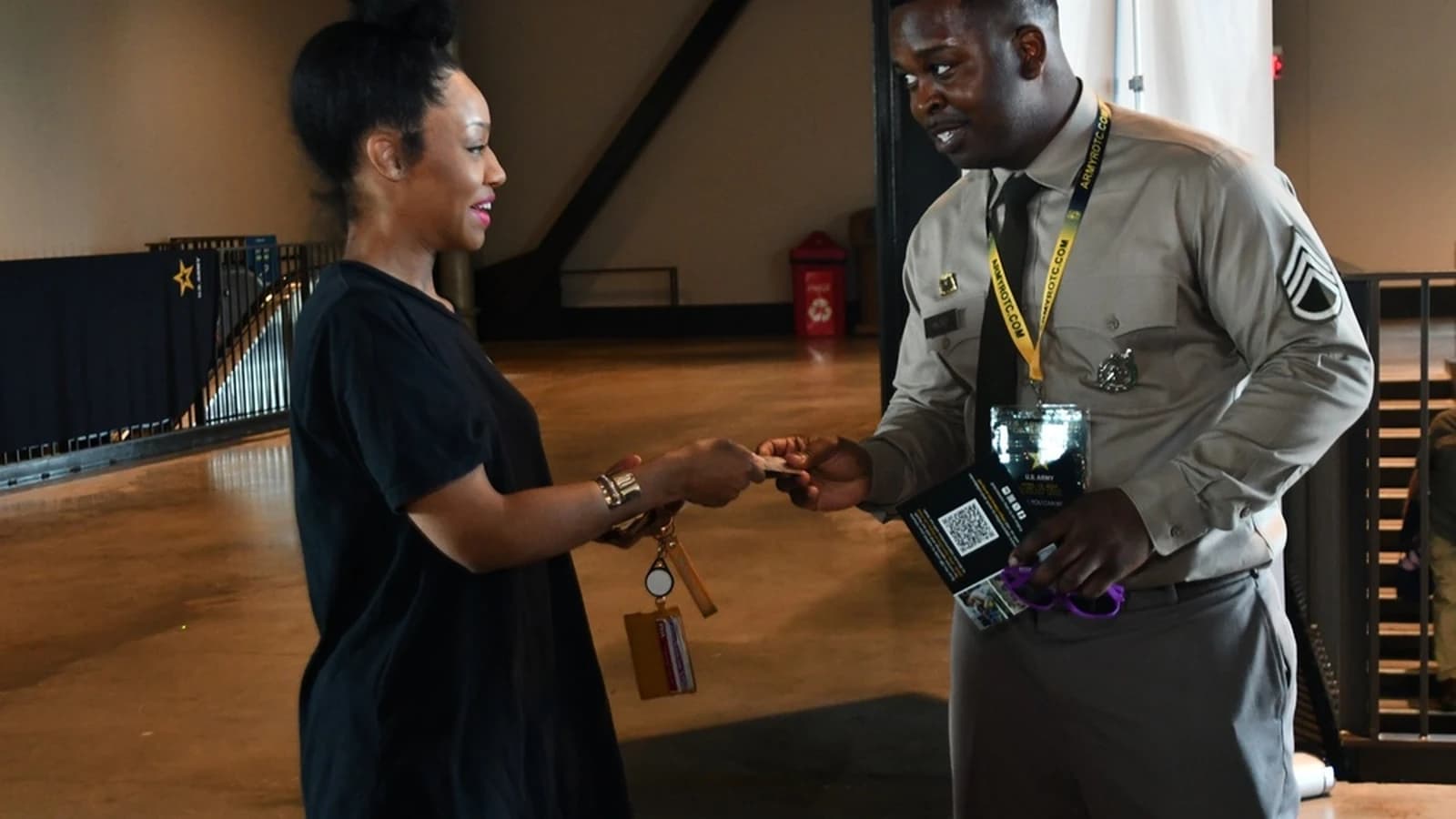
Photo: Master Sgt. Arthur Wright, District of Columbia National Guard, via DVIDS, public domain.
Continue reading
More from FederalHiringData
Pay and benefitsAugust 27, 2026
Eight GS-15 Steps Pay the Same in San Francisco. Federal Pay Compression Has Spread to 37 Localities.
FederalHiringData found 21,453 identifiable GS-15 employees in officially capped steps as the 2026 ceiling flattened upper rates in 37 locality tables.

Data investigationsAugust 26, 2026
NIH Counted 1,096 Data-Science Staff. It Still Cannot Say How Many It Needs.
NIH learned to count a broad data-science workforce, but GAO says it still lacks a staffing requirement as headcount and technical recruiting contracted.

Data investigationsAugust 25, 2026
CFPB Lost 670 Covered Employees as Complaint Intake Reached 6.6 Million
Covered CFPB employment fell 38.2% while complaint intake reached 6.6 million and leadership narrowed supervision and enforcement priorities.
Federal Hiring Data Weekly
Get the biggest federal workforce changes in your inbox.
Subscribe to Federal Hiring Data Weekly for federal hiring trends, salary data, agency movements, and original investigations, with email confirmation before delivery.