August 30, 2026
12,500 Federal Workers Could Qualify for 25% Prescribed-Fire Pay. It Is Not a 25% Annual Raise.
OPM estimates 12,500 federal workers could be affected by a new 25% prescribed-fire differential. FederalHiringData explains who qualifies, what the pay can add and why it is not an annual raise.
Published August 30, 2026Last edited August 30, 2026
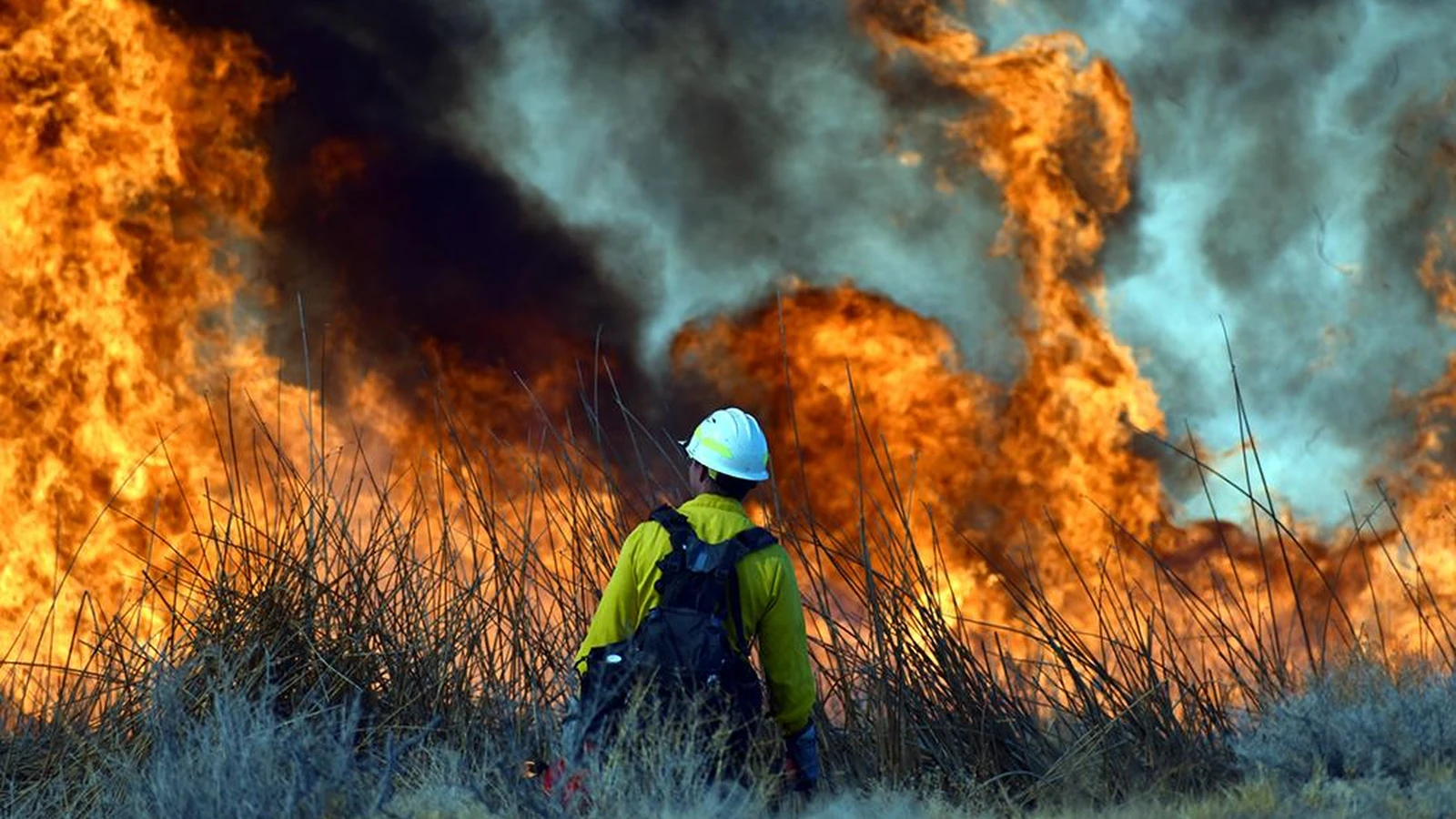
The number that will draw attention is 25%. The limiting words are qualifying prescribed-fire work.
The Office of Personnel Management has finalized a new pay differential for federal employees who directly implement or control a prescribed fire from the fireline. Beginning with the first pay period that starts on or after Sept. 14, 2026, covered General Schedule and prevailing-rate employees can receive a 25% differential under the rules for their pay systems.
It is a meaningful change. It is not a 25% annual salary increase.
The final rule makes eligibility depend on what an employee is doing, where the employee is doing it and whether the work falls inside the covered fireline activities. OPM estimated that about 10,000 General Schedule employees and 2,500 Federal Wage System employees at the Agriculture and Interior departments could be affected. The agency estimated annual costs of about $20 million at Agriculture and $12.5 million at Interior.
FederalHiringData's analysis of June 2026 personnel records shows why those estimates need a careful denominator. The Forest Service and selected Interior fire organizations employed 20,695 people in the two core fire series, 0456 and 0462. That proxy is 8,195 larger than OPM's potentially affected estimate. It does not show that OPM missed workers. It shows that an occupation code is broader than a duty-level pay entitlement.
An employee can hold a classic fire title and spend some workdays outside qualifying prescribed-fireline activity. Another employee can hold a different title and potentially qualify while assigned to a firefighting crew performing the covered work. The rule follows duties, not branding.
This is the central finding: the government has recognized prescribed fire as hazardous operational work for pay purposes, but it has not converted every federal fire job into a year-round 25% raise.
The rule covers direct fireline implementation
Prescribed fire is intentionally applied under a plan to meet land, habitat or fuels objectives. That separates it from an unplanned wildfire, but it does not remove smoke, heat, falling-material and operational hazards from the work.
OPM's rule covers an employee who is a member of a firefighting crew on the fireline and is directly implementing or controlling a prescribed fire. The final text identifies ignition, holding, patrol, mop-up, fireline construction and snag felling as covered activities. Those examples describe the operational period when the fire is being put on the ground, kept within control lines and made secure.
The boundary matters just as much. Pre-ignition preparation is not automatically covered. Moving staff and equipment into place is not covered merely because a burn is planned. Waiting for the right weather window is not covered. OPM also declined requests to add smokejumper proficiency or training jumps and broad aviation, ramp or tanker-base activities to this prescribed-fire category.

These lines will sometimes feel artificial in field operations. A crew may spend the morning staging equipment, transition into ignition and holding, then patrol after the active firing period. The employee's mission does not suddenly become unimportant during preparation. The regulation nevertheless requires payroll to distinguish covered exposure from surrounding work.
That distinction answers one likely misconception. A job announcement with "wildland firefighter," "fuels" or "prescribed fire" in the title is not a promise that every paid hour receives the differential. The announcement identifies a role. The pay decision must identify the covered duty and apply the rules of the employee's pay system.
The opposite is also possible. The final rule is not confined to series 0456 or 0462. OPM rejected a title-only approach and explicitly framed coverage around prescribed-fireline duties. A natural-resources specialist, biological technician, equipment operator or other employee could be relevant if the person is actually assigned as a crew member and performs a listed activity. That does not make every adjacent occupation eligible; it prevents the title from deciding the question by itself.
Why 25% is not an annual raise
For a General Schedule employee, hazardous duty pay is calculated from the employee's basic hourly rate. OPM's pay administration guidance explains that when an employee performs qualifying hazardous duty, the differential is paid for all hours in pay status on that day. It can apply on a day containing overtime, but the differential is computed from the basic hourly rate rather than the overtime rate.
That day-based treatment can be valuable. It still is not a permanent increase to the underlying annual rate. A worker does not receive 25% during ordinary office days, training that falls outside a listed category, travel, preparation or every day of the fire season simply because prescribed fire appears in a position description.
The illustrations below use 2026 Rest of U.S. step 1 rates for the GW fire grades. They show the arithmetic, not an individual entitlement.

At GW-3 step 1, an eight-hour example adds $42.28 before deductions. At GW-5 it adds $50.74, at GW-8 it adds $64.80 and at GW-11 it adds $80.16. A different step or geographic rate changes the result. So do actual hours in pay status and the agency's determination that the duties qualify.
OPM's regulatory estimate for the Forest Service assumed that roughly 80% of operational firefighters would participate in prescribed-fire work and used about 250 prescribed-fire operation hours per participating employee. The agency warned that actual hours would move with conditions and wildfire priorities.
Applying 250 hours to the same Rest of U.S. step 1 examples produces additional gross pay from about $1,321 at GW-3 to $2,505 at GW-11.

Those figures are not a forecast. They deliberately illustrate why "25% hazard pay" and "25% annual raise" are different statements. A full-time worker's annual schedule contains about 2,087 hours. Two hundred fifty qualifying hours are roughly 12% of that schedule. The differential applies to the covered hours or days under the applicable regulation, not to an imaginary 2,087-hour prescribed fire.
Federal Wage System employees use a different formula
The General Schedule examples should not be pasted onto every wage-grade employee.
Related research
Put this finding in context

Federal payAugust 30, 2026
Up to 400 Federal Positions May Pay $400,000. 99.6% of Near-$400,000 Salaries Were Medical.
OPM opened a narrow route to $400,000 basic pay for national-security investment talent. FederalHiringData finds 99.6% of existing near-$400,000 reported salaries were medical under separate systems.

Federal payAugust 29, 2026
2,392 Active Federal Job Posts Spanned GS Steps 1-10. Higher Starting Pay Still Requires Approval.
FederalHiringData matched 2,392 active postings to complete GS step ladders and found 722 with explicit higher-starting-pay language.
Under the Federal Wage System environmental differential regulation, the applicable Part II differential is calculated from the WG-10 step 2 rate for the local wage area. For a category paid on an "hours in pay status" basis, coverage can extend to all pay-status hours on the day of exposure. The regulation also addresses how environmental differential pay interacts with overtime, holiday and Sunday pay and certain benefits.
The result is that two people on the same burn can have different payroll mechanics. One may be on a GW or GS schedule using hazardous duty pay. Another may be a WG employee using environmental differential pay. Their grade, step, wage area, work schedule and other premium-pay coverage matter.
OPM estimated that 2,500 Federal Wage System employees could be affected, but the local personnel file contains a much larger set of wage-system employees in the six fire organizations reviewed here: 5,819 WG, 473 WS and 396 WL employees. That broader group includes maintenance mechanics, engineering equipment operators, laborers and many other occupations. It is not a count of prescribed-fire crew members.
The difference is analytically important. Counting everyone in a potentially relevant pay plan would overstate eligibility. Counting only 0456 wildland firefighters would understate the possibility of collateral-duty coverage. The accurate unit is the employee-duty-day documented under the rule.
OPM's 12,500 estimate is not a roster
OPM described approximately 12,500 Agriculture and Interior employees who could be affected: about 10,000 in General Schedule categories, including GW, and 2,500 in the Federal Wage System. No commenter challenged that estimate during the rulemaking, according to the final rule.
FederalHiringData used OPM's June 2026 employment data to construct a reproducible but intentionally broader comparison. We counted series 0456, Wildland Fire Management, and 0462, Forestry Technician, at the Forest Service and the Office of the Interior Secretary, Bureau of Land Management, Indian Affairs, National Park Service and U.S. Fish and Wildlife Service.
That produced 20,695 employees: 9,664 in series 0456 and 11,031 in series 0462. By pay plan, 16,112 were GW and 4,583 were GS. The Forest Service accounted for 16,609 of the combined proxy and the selected Interior organizations for 4,086.

The comparison is not evidence of an 8,195-person omission. Series 0462 has historically included forestry technicians whose work may be outside active prescribed fire. Series 0456 is more specific, but a worker still does not spend every day performing a covered fireline duty. OPM's estimate also includes Federal Wage System workers who sit outside the two-series proxy.
Put differently, the two numbers answer different questions. The local proxy asks how many workers sit in two core occupational series in the principal fire organizations. OPM's estimate asks how many people might be affected by the new category under assumed participation and work patterns. The first is a workforce denominator. The second is a regulatory impact estimate.
This is why FederalHiringData does not label either number "eligible firefighters." Eligibility is a payroll and assignment determination that the public OPM file does not contain.
Permanent and seasonal workers both matter
The June 2026 core-series proxy was mostly permanent, but not entirely. It contained 15,390 employees in permanent appointment categories and 5,305 in nonpermanent categories.

That mix matters because prescribed fire does not fit neatly inside a single emergency season. Agencies burn when fuels, weather, staffing and smoke conditions align. A permanent employee may work on planning, fuels, wildfire response and prescribed fire across the year. A temporary employee may arrive for a narrower operational season and still perform a qualifying duty.
The rule does not create a permanent-versus-seasonal eligibility test. It creates a duty test. Appointment status can affect scheduling, benefits and continuity, but it does not replace the question of whether the employee was a crew member directly implementing or controlling the fire.
The permanent share also complicates a common public image of the federal fire workforce. These are not only short-term summer crews waiting for wildfire dispatches. Many employees support year-round fuels, preparedness, resource management and operational work. The differential attaches to one hazardous part of that portfolio.
FederalHiringData's earlier wildland firefighter workforce analysis examined staffing composition and the nonpermanent rebound separately. This article does not reuse that staffing thesis. It asks how a new pay category maps onto a mixed workforce and why assignment-level records are necessary to know who benefits.
Federal Hiring Data Weekly
Get the biggest federal workforce changes in your inbox.
Subscribe to Federal Hiring Data Weekly for federal hiring trends, salary data, agency movements, and original investigations, with email confirmation before delivery.
Prescribed fire has become a major operational workload
The pay change arrives after a period of increased prescribed-fire activity. The Forest Service's fiscal 2026 budget justification reports that it treated 3.686 million National Forest System acres for hazardous fuels in fiscal 2024. Prescribed fire accounted for 2.186 million of those acres, or 59%.
The agency described the prescribed-fire result as a record and about 10% above fiscal 2023. It also placed the prior 10-year average at 1.5 million acres. Those figures measure acres, not employee exposure hours. They establish the scale of planned fire as an agency operation.
The distinction between acreage and labor is crucial. A large burn does not require a fixed number of employees per acre. Terrain, fuel type, complexity, smoke constraints, ignition method, holding needs and interagency participation all change the staffing pattern. The acreage record therefore cannot be multiplied by a simple wage rate to estimate payroll cost.
It does help explain the policy concern. Agencies have asked crews to apply fire intentionally as a risk-reduction and ecological tool while the pay rules more clearly recognized hazards on wildfire incidents. Commenters argued that the distinction undervalued prescribed-fire exposure and could make the work harder to staff. OPM's rule closes that categorical gap for the covered activities.
OPM cited 2,142 reported smoke or inhalation incidents from 2018 through 2023 and 15 fatalities associated with prescribed fire from 2003 through 2023. Those counts do not establish the risk on any individual burn, and the rulemaking record does not provide a per-hour comparison with wildfire work. They support the narrower proposition that a planned burn can still expose workers to serious hazards.
USAJOBS shows a long-running fuels workforce, not an eligibility list
FederalHiringData queried its current and historical USAJOBS archive for a bounded fire-announcement proxy. We counted series 0456, plus selected land-management series only when the title contained a fire-related signal, at the Forest Service or selected Interior fire organizations.
The archive returned 937 announcements in the partial 2017 period, 1,004 in 2018, 1,132 in 2023 and 1,029 in 2024. It returned 508 from Jan. 1 through Aug. 30, 2026. Within the 2026 group, 79 titles contained "fuels" or "prescribed." Current production data contained 120 active announcements in the bounded proxy at capture time.

These are announcements, not vacancies, applications, hires or employees. One announcement can cover multiple locations or an unspecified number of openings. Calendar 2017 begins in March in the historical archive, and 2026 ends on Aug. 30 for this analysis. Neither partial year should be compared as a full-year total.
The pay fields show the workforce's changing advertised baseline, but not hazard-pay receipts. The median annual advertised range in the proxy rose from about $36,611-$52,893 in the partial 2017 cohort to $61,950-$87,038 in 2025 and $67,617-$94,687 in 2026 through Aug. 30. Hourly records were much less common and the median hourly values moved from roughly $14-$16 in the partial 2017 cohort to about $25 in 2026.
Those are announcement medians across a changing mix of grades, locations and appointment types. They are not a same-job wage index. They also exclude the new differential, which depends on duties performed after appointment rather than a guaranteed annual salary range in the announcement.
Applicants should therefore read a job posting in layers. The base range describes the position's scheduled pay. The announcement may discuss overtime, incident-response pay, bonuses or other benefits. Prescribed-fire hazard pay is a separate conditional payment. If the role involves fuels work, the applicant should ask how the agency identifies qualifying duties, documents covered days and explains the interaction with overtime or other premium pay.
What workers and supervisors will need to document
The final rule solves the legal category, not every implementation question in advance.
For employees, the practical record is the assignment: crew membership, location on the fireline, activity performed and hours or day in pay status. A position description that mentions prescribed fire may support context, but it cannot establish that a particular Tuesday involved ignition, holding or mop-up.
For supervisors and timekeepers, consistency will matter. Similar crews should not receive different treatment because one unit uses a clearer incident form or timekeeping note. Agencies will need instructions that connect operational terminology to the regulatory categories without treating every incident-adjacent task as covered.
For unions and employee representatives, the implementation boundary is likely to matter more than the headline rate. Disputes may concern when preparation ends, when patrol begins, whether a worker was on the fireline, or how mixed-duty days are recorded. The rule supplies the legal categories; local documentation will determine whether those categories produce reliable pay.
For Congress and public oversight, OPM's estimate creates a benchmark. Future reporting could show the number of employees paid, covered hours or days, agency, pay system, cost and geographic distribution without publishing personal records. That would let the public compare actual use with the 12,500-person and $32.5 million regulatory estimates.
The strongest case for broader coverage - and OPM's answer
Workers raised a reasonable objection during rulemaking: preparation, aviation support and training can also involve danger and are essential to fire operations. Excluding those duties from this one category does not prove they are safe or unimportant.
OPM's answer was regulatory specificity. The agency said the new category implements Congress's prescribed-fire authority and must identify the circumstances that trigger the differential. It left existing hazardous-duty or environmental-differential categories in place where another listed hazard applies, but it did not convert operational proximity into automatic coverage.
That approach protects the distinction between base pay and exceptional pay. It also creates an implementation risk: if agencies define "directly implementing or controlling" too narrowly, workers performing inseparable operational duties may see the rule as a promise that does not reach their work. If agencies define it too broadly, payroll could drift beyond the final text.
The correct response is not to call every fire employee eligible or to dismiss the rule as symbolic. It is to publish clear examples, train supervisors, preserve assignment records and report actual use.
Methodology and limitations
FederalHiringData reviewed OPM's final rule published Aug. 14, 2026, with an effective date of Sept. 14, 2026 and applicability beginning with the first pay period starting on or after that date. The controlling date comes from the official rule. Secondary summaries that use Sept. 13 appear to be describing the adjacent pay-period boundary differently; this article follows the official text.
The pay illustrations use OPM's 2026 Rest of U.S. GW step 1 hourly rates: $21.14 at GW-3, $25.37 at GW-5, $32.40 at GW-8 and $40.08 at GW-11. The eight-hour calculation is hourly basic rate times 25% times eight. The 250-hour calculation uses the same formula and OPM's regulatory participation assumption. Neither illustration determines an employee's actual entitlement, net pay or wage-area rate.
The local workforce analysis uses OPM's June 2026 normalized employment file. The core proxy includes series 0456 and 0462 at Forest Service agency code AG11 and Interior subelements IN01, IN05, IN06, IN10 and IN15. Headcount weights are summed. Permanent means reported appointment codes 10, 15, 30 or 38; nonpermanent means 20, 40 or 48. The proxy is not an OPM eligibility category.
The USAJOBS analysis used a read-only production snapshot captured Aug. 30. The production Job table contained 113,285 rows and the historical archive contained 2,984,987 records, with historical open dates beginning March 1, 2017. The bounded fire proxy includes series 0456 or selected adjacent series 0401, 0404, 0455, 0460 and 0462 when the title contains a fire-related signal and the hiring organization matches a Forest Service or Interior fire organization. Counts are distinct control numbers.
The active snapshot contained 120 matching announcements, 119 using a GW pay plan and one using GS. This is a recruiting snapshot, not a workforce census. The historical archive and current table can differ in field completeness, and title matching can miss relevant jobs or include jobs whose actual duties do not qualify.
Forest Service prescribed-fire acreage comes from the agency's fiscal 2026 budget justification. Acres are not labor hours and are not added to Interior's all-treatment acreage, which uses a broader measure. GAO's earlier estimate of about 18,700 federal fire and support personnel provides historical context but uses another scope and date.
Research, calculations, writing, headline testing and graphics used no OpenAI API calls.
Readers can review FederalHiringData's separate analysis of wildland fire staffing and hiring, browse current federal jobs, examine federal workforce statistics, or read more FederalHiringData investigations.
Related research
More from FederalHiringData
Pay and benefitsAugust 28, 2026
1.64 Million Federal Workers Pay 4.4% Into FERS. The 0.8% Cohort Is No Longer the Majority.
OPM's actuarial counts show the 4.4% FERS-FRAE tier became the majority in 2023, while the same-pay deduction gap reaches $3,600 at $100,000.
Pay and benefitsAugust 27, 2026
The Median FEHB Family Increase Took 94% of a Rest-of-U.S. GS-7 Raise
OPM plan-level rates show the median 2026 family premium increase absorbed 94% of one Rest-of-U.S. GS-7 step 5 scheduled raise.
Pay and benefitsAugust 27, 2026
Eight GS-15 Steps Pay the Same in San Francisco. Federal Pay Compression Has Spread to 37 Localities.
FederalHiringData found 21,453 identifiable GS-15 employees in officially capped steps as the 2026 ceiling flattened upper rates in 37 locality tables.
Federal Hiring Data Weekly
Get the biggest federal workforce changes in your inbox.
Subscribe to Federal Hiring Data Weekly for federal hiring trends, salary data, agency movements, and original investigations, with email confirmation before delivery.