August 30, 2026
Federal Agencies Recorded 463,736 Departure Actions Since 2025. Former Workers Can Now Get Their Files Online.
OPM opened an online route for former federal workers to retrieve personnel files after 463,736 non-transfer departure actions since January 2025.
Published August 30, 2026Last edited August 30, 2026
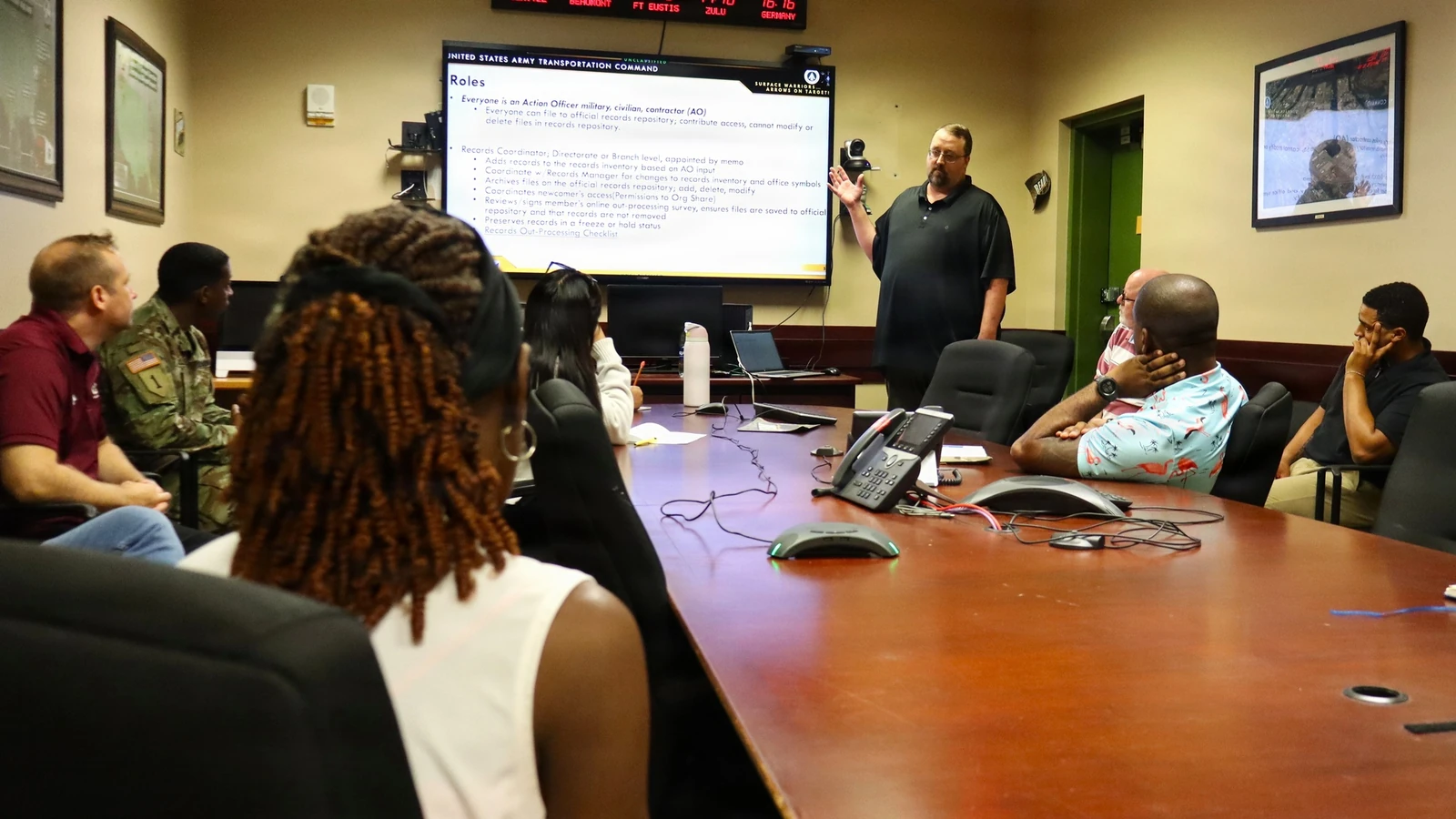
Leaving a federal job used to close the easiest door to a worker's own personnel file at almost the same moment the documents became most important.
The Office of Personnel Management changed that in August. Its new Documents Request Service lets eligible former federal employees sign in through Login.gov, request their electronic Official Personnel Folder and receive a secure download without government-network access. OPM says fulfillment should generally arrive within about 24 hours.
The timing matters. FederalHiringData's analysis of OPM personnel-action files found 463,736 non-transfer departure actions from January 2025 through June 2026. The total includes quits, retirements, reductions in force, terminations or expired appointments and other separations. It excludes 17,118 individual and mass transfer-out actions because those can represent people moving from one covered federal employer to another rather than leaving government.
The count is not 463,736 unique people. OPM's public files aggregate processed actions, and one person can generate more than one action. It is nevertheless a direct measure of administrative workload and potential demand: hundreds of thousands of records documenting the end of federal appointments were processed during the workforce contraction.
In 2025 alone, agencies recorded 379,339 non-transfer departure actions, almost exactly double the 189,629 recorded in 2024. Another 84,397 appeared from January through June 2026. Over the same broader contraction, OPM-covered headcount fell from 2,312,301 in December 2024 to 1,953,300 in June 2026, a decline of 359,001.
That is the practical significance of the new portal. OPM has removed much of the paper-and-fax friction for former workers whose records are already in participating agencies' eOPF systems. It has not eliminated every record gap, replaced every offboarding document or made a personnel folder identical to a complete personal archive.
The service restores access after agency credentials stop working
Current employees generally reach eOPF through their agency's government network, computer, PIV card or email credentials. Once the agency processes a separation, that access ends. OPM's post-separation guidance has long advised employees to download documents before leaving because agency access is terminated at separation.
The new service creates a public-facing route back to the folder. OPM says it is intended for separated federal employees whose personnel records are maintained in eOPF. It also covers current employees whose agency does not provide the government equipment needed to reach eOPF. Current employees who already have normal eOPF access should continue using that system.
The process has five practical steps.

First, OPM tells former workers to wait at least 30 days after separation. A final separation SF-50 and other closing documents may be posted after the effective date. A request made too soon can return an incomplete folder.
Second, the user signs in at myopf.opm.gov with Login.gov. The email associated with that account matters because OPM uses it for the fulfillment notice. Third, the user completes identity verification when prompted. OPM describes the service as using Login.gov identity assurance rather than an ordinary username-and-password lookup of sensitive records.
Fourth, the user requests the documents. OPM says the service processes the request and sends a fulfillment email in approximately 24 hours. Fifth, the user follows a time-limited link to a password-protected ZIP file and saves the folder. An expired link can be replaced by submitting a new request.
The security steps are not decorative. An Official Personnel Folder can contain Social Security-related identifiers, appointment history, pay and grade changes, benefits elections, military-service credit documents and other private employment records. The National Archives notes that post-1951 civilian folders remain in OPM's legal custody and are restricted under the Privacy Act. A faster request path still has to establish that the requester is the person whose file is being released.
The portal is not for the general public, third-party requesters or records that were never stored in eOPF. If the system cannot match a record, or the former agency did not participate, OPM directs the person to the National Personnel Records Center or the former employing agency.
The 2025 separation wave was unusually concentrated
The 2025 total was not merely a modest increase spread evenly across the year.
FederalHiringData classified OPM's public separation categories into departure actions and transfers. We excluded individual and mass transfers. The remaining categories produced 379,339 actions in 2025, 100.0% more than in 2024 and higher than every complete year in the comparable 2015-2025 series.

The historical comparison begins in 2015 because 2014 coverage in the local action series is incomplete. The last bar, 2026, ends in June and must not be compared with a full year as though both periods contain 12 months.
September 2025 was the decisive month. OPM files record 132,266 non-transfer departure actions, including 71,221 quits and 53,192 retirement actions. That one month represented 34.9% of the year's departure total. December added another 45,016, driven by 35,299 retirement actions.

OPM's Deferred Resignation Program indicator appears on 138,037 of the 2025 departure actions, or 36.4%. That does not mean every other action was unrelated to the broader workforce changes. It means the public file explicitly flags that subset. FederalHiringData does not infer program participation where the indicator says no.
Related research
Put this finding in context
Data investigationsAugust 25, 2026
The Mine Safety and Health Administration Recorded One Inspector Accession and 140 Separations in 2025. Training Takes Two Years.
MSHA's newer inspector bench thinned sharply while the agency maintained a large mandatory-inspection program whose completion data remain difficult to verify.
Data investigationsAugust 25, 2026
The Nuclear Regulatory Commission Recorded 215 Engineering Separations in 2025. It Recorded 17 Accessions.
NRC's two largest engineering series recorded 215 separations and 17 accessions in 2025 as advanced-reactor applications and engagements expanded.
The category mix also resists a single-word description such as layoffs. Quits were the largest group at 163,698, or 43.2% of the year's non-transfer departure actions. Retirement categories contributed 150,299, or 39.6%. Terminations and expired appointments accounted for 37,970, reductions in force for 10,739 and other separations for 16,633.

Those administrative labels matter. A termination category can include the expiration of a temporary appointment; it is not automatically a disciplinary firing. A quit action does not reveal motive. A retirement action does not show whether a person had planned to retire before a policy change. A reduction-in-force action is more specific, but the public aggregate still does not identify the individual circumstances.
The correct conclusion is narrower: the personnel system processed a historically large volume of non-transfer departures in 2025, across several legal routes, and the volume produced a large population that may need proof of service after agency access ended.
A folder is more than the last SF-50
The SF-50, Notification of Personnel Action, is the best-known federal employment record. OPM calls it the official record that a personnel action was effected. It can show the agency, position, occupational series, grade, pay, tenure, appointment type, retirement coverage and nature and effective date of an action.
That makes the separation SF-50 especially useful, but it does not make every earlier SF-50 disposable. A worker's record can include appointments, promotions, changes in work schedule, pay adjustments, conversions between appointment types, transfers, retirement-plan changes and corrections. The history can matter when a future agency, retirement specialist or benefits office has to reconstruct service.
OPM's personnel-folder guidance describes four broad purposes: proving a valid federal appointment, verifying military-service credit, establishing federal employment history and recording benefits elections. The practical retention list follows those purposes.
| Document or record | Why it is worth keeping | Important limit |
|---|---|---|
| Complete eOPF Employment Folder | Preserves the government's assembled record of appointments, actions and elections | It contains only documents actually filed in eOPF |
| Separation SF-50 | Shows the final action, effective date, tenure, position and other service details | Check it for accuracy after the agency posts the final version |
| Earlier SF-50s | Documents promotions, grade and pay history, transfers, conversions and retirement coverage | One final SF-50 may not prove every earlier period or change |
| Benefits election and beneficiary forms | Records health, life-insurance and beneficiary choices that may matter later | Keep current copies and do not assume every payroll or provider record is in eOPF |
| DD-214 and military-service deposit records | Can support credit for leave, reduction in force or retirement | Military service and deposit status require their own supporting evidence |
| Retirement service records and estimates | Helps identify credited service, coverage and deposits before a claim is adjudicated | An estimate is not a final retirement determination |
| SF-8, final earnings-and-leave statement and tax records | Can support unemployment, leave-payout and tax questions after departure | These may arrive through payroll or a separation package rather than eOPF |
This is not a recommendation to place sensitive records in an unprotected cloud folder or ordinary email account. Former employees should use secure storage, protect passwords, avoid sharing the ZIP file and keep a backup appropriate to the sensitivity of the information. The convenience of a download creates a new personal custody responsibility.
Workers should also review the folder rather than treating its size as proof of completeness. OPM says DRS can provide only documents that already exist in eOPF. A missing final SF-50, military deposit record, court order, beneficiary form or corrected action cannot be recovered merely by requesting the same incomplete folder again.
A useful review starts with chronology. The appointment, promotion, conversion, transfer and separation actions should form a coherent sequence, with no unexplained break in service or conflicting effective date. Grade, step, work schedule, retirement plan and duty station should match what the employee remembers for each period. Benefits elections and military-service records deserve a separate check because their consequences can surface years after departure. If something appears wrong or absent, the downloaded folder is a starting point for a documented inquiry to the former agency, payroll office, retirement system or records center. DRS makes retrieval faster; it does not turn an unreviewed file into proof that every personnel action was processed correctly.
Why the records matter for reemployment and retirement
A former employee applying to return to government may need a separation SF-50 to prove status or reinstatement eligibility. OPM's reinstatement guidance says an applicant generally uses a separation SF-50 showing tenure group 1 or 2. A former employee seeking a higher grade or greater promotion potential may still have to compete under merit-promotion rules; possession of an SF-50 is evidence, not a selection guarantee.
The need extends beyond job applications. OPM says federal service must be verified before it can be credited for retirement benefits. An employee can remember working at an agency for a certain number of years and still face a records problem if the official file does not establish dates, coverage, deposits or the nature of the appointment.
The SF-50 is also connected to payroll and benefits records. OPM's processing guide says payroll records, including retirement, tax and Thrift Savings Plan records, reflect the salary or pay documented on the SF-50. That does not mean an SF-50 alone proves every deduction, contribution or account balance. It means a wrong personnel action can propagate into other systems and should be corrected.
The new service therefore matters to people who do not plan to return to federal employment. A former worker may need proof for a retirement claim, service-credit dispute, benefits question, employment verification or background investigation. OPM's post-separation FAQ says SF-50s can verify service for retirement or reemployment, and that NPRC can release verified employment data with the person's authorization.
The system also gives agencies a route to recall a former employee's folder from NPRC for litigation, correction, audit or investigation. That is a separate agency process; it does not give a former supervisor or unrelated third party open access to the file.
Federal Hiring Data Weekly
Get the biggest federal workforce changes in your inbox.
Subscribe to Federal Hiring Data Weekly for federal hiring trends, salary data, agency movements, and original investigations, with email confirmation before delivery.
Hiring data cannot tell us how many former workers returned
The contraction did not stop all hiring. OPM accession files record 123,216 new-hire appointment actions in 2025 and 83,686 from January through June 2026. The same files record 3,753 transfer-in actions in 2025 and 1,828 through June 2026.

Those numbers do not produce a trustworthy rehire count. The public accession categories identify competitive-service, excepted-service and Senior Executive Service new-hire appointments, plus transfers. They do not cleanly distinguish every first-time entrant from every former employee returning after a break.
Length-of-service fields cannot safely solve the problem. Prior military service, creditable civilian service, data defaults and unusual values can affect the field. Appointment type also describes the new appointment, not whether the person once held a different federal job. FederalHiringData therefore reports the public categories and leaves rehire volume unknown.
That limitation makes records access more relevant, not less. A former employee can return through several hiring paths, but an aggregate hiring table cannot establish that person's prior tenure or service. The applicant's SF-50 and official folder can.
The action totals also do not mechanically reconcile with point-in-time headcount. Accessions and separations are flows; headcount is a stock measured on a date. Transfers, delayed processing, corrections, reorganizations, coverage changes and multiple actions can create differences.

The headcount series supplies scale, not a person-by-person bridge. It fell 237,652 from December 2024 to December 2025 and another 121,349 by June 2026. FederalHiringData does not subtract one action table from another and label the remainder missing workers.
The online service still has boundaries
OPM's launch announcement describes a major improvement over a process that could involve paper forms, a former agency or the National Personnel Records Center. Its user guide is more specific about the boundaries.
The first boundary is participation. A person whose former agency never used eOPF may still need NPRC or the agency. The second is record matching. DRS may fail to locate a folder when the identifying information does not match. The third is timing. OPM warns that a request in the first 30 days can precede the final documents.
The fourth boundary is completeness. DRS distributes the folder on file; it does not investigate whether every action was correctly recorded. Former workers who find an error may need a Privacy Act amendment request or help from the agency that created the record.
The fifth is historical custody. NARA says civilian Official Personnel Folders for workers separated after 1951 are maintained by the National Personnel Records Center, while OPM retains legal custody. Records less than 120 days past separation may still be with the last employing agency. OPM's eOPF FAQ describes transfers generally occurring 30 to 60 days after the separation action is processed. Those timeframes describe different operational guidance and should not be treated as a guarantee that every folder moves on one exact day.
The final boundary is evidence. OPM has not published DRS usage, successful-match rates, completion-time distributions or the share of recent separated employees covered by participating eOPF agencies. The approximately 24-hour statement is a service description, not an independently measured median. FederalHiringData cannot yet say how many of the 463,736 departure actions produced people eligible for or using DRS.
What a careful exit should look like now
The new portal should change offboarding advice, but not erase it.
Before separation, an employee should review the active eOPF, save the complete folder securely, identify missing service periods and obtain contact information for the servicing HR and payroll offices. The employee should also save records that may live outside eOPF, including final leave-and-earnings statements, tax documents, retirement estimates, insurance correspondence and any agency separation package.
After separation, the worker should watch for the final SF-50 and compare it with the expected action. OPM advises waiting at least 30 days before using DRS so that final documents can be filed. A person with an urgent deadline should not assume the online route will cure a missing record; contacting the former agency or NPRC may still be necessary.
When the folder arrives, the user should download it before the link expires, preserve the password separately, make a secure backup and inspect the contents. A folder that opens successfully can still omit a document.
The government also has work to do. Agencies should put DRS instructions in separation materials, tell employees when their final SF-50 is filed and provide a clear correction channel. OPM should publish aggregate service measures such as requests, successful matches, median fulfillment time, incomplete-record complaints and referrals to NPRC without exposing personal information.
Those measures would show whether the portal is serving the population implied by the personnel-action surge. They would also distinguish a successful website launch from a successful records-access program.
Methodology and limitations
FederalHiringData analyzed OPM normalized employment, accession and separation files in its local research warehouse. The separation series covers 2013 through June 2026, but the annual comparison begins in 2015 because 2014 is incomplete in the assembled current series.
Departure actions include Quit (SC), Voluntary Retirement (SD), Early-Out Retirement (SE), Other Retirement (SG), Reduction in Force (SH), Termination/Expired Appointment/Other (SJ), and Other Separation (SL). Individual Transfer Out (SA) and Mass Transfer Out (SB) are excluded. The records are weighted aggregate personnel actions, not unique people. Labels describe OPM's broad public categories and do not establish motive, fault or the facts of an individual case.
The 2026 personnel-action period ends June 30. It is a six-month partial year. Headcount uses point-in-time OPM-covered employment in December 2024, December 2025 and June 2026. Covered headcount is not full-time-equivalent employment and does not include every federal entity.
Accession context includes OPM competitive, excepted and Senior Executive Service new-hire appointment categories. Transfer-in categories are shown separately. The public fields do not support a defensible rehire count, so none is estimated.
Service details come from OPM's Aug. 2026 launch announcement, DRS agency communication and user guide; OPM personnel documentation, reinstatement and processing guidance; and National Archives civilian personnel-record instructions. The article distinguishes OPM's approximately 24-hour fulfillment description from observed performance because no public performance distribution was found.
Research, calculations, writing, headline testing and graphics used no OpenAI API calls.
Former workers can start with the official Documents Request Service guide. Readers can also browse current federal jobs, review federal workforce statistics, explore federal occupations, or read more FederalHiringData investigations.
The portal's most important promise is modest and concrete: separation no longer has to mean losing the fastest route to the personnel file. Whether that promise works at the scale created by the 2025 workforce contraction will depend on record completeness, identity matching and transparent service performance.
Related research
More from FederalHiringData

Data investigationsAugust 23, 2026
The Secret Service Added 451 Employees. GAO Still Wants Proof Its Agents Can Train Enough.
Secret Service headcount grew 5.6% after June 2024, but the current protective-training rate and revised staffing requirement remain undisclosed.

Data investigationsAugust 23, 2026
ICE Received 150,000 Applications. Its Workforce Grew by About 9,600 at the Peak.
OPM recorded 10,030 new-hire actions during ICE's surge, but tentative offers were not final hires and covered employment had receded by June.
WorkforceAugust 28, 2026
The FBI Ordered a 260-Person Analytical Surge. Its Intelligence Series Had Fallen by 305.
The FBI ordered a 260-person analytical surge after its 0132 workforce fell by 305. Public records show the scale but not the opportunity cost.
Federal Hiring Data Weekly
Get the biggest federal workforce changes in your inbox.
Subscribe to Federal Hiring Data Weekly for federal hiring trends, salary data, agency movements, and original investigations, with email confirmation before delivery.