August 22, 2026
One OSHA Inspector for Every 84,000 Workers
Federal and state workplace-safety programs expected about 1,720 inspectors for 144 million workers in 2026, while OSHA's own workforce contracted.
By Evan Mercer
Published August 22, 2026Last edited August 22, 2026
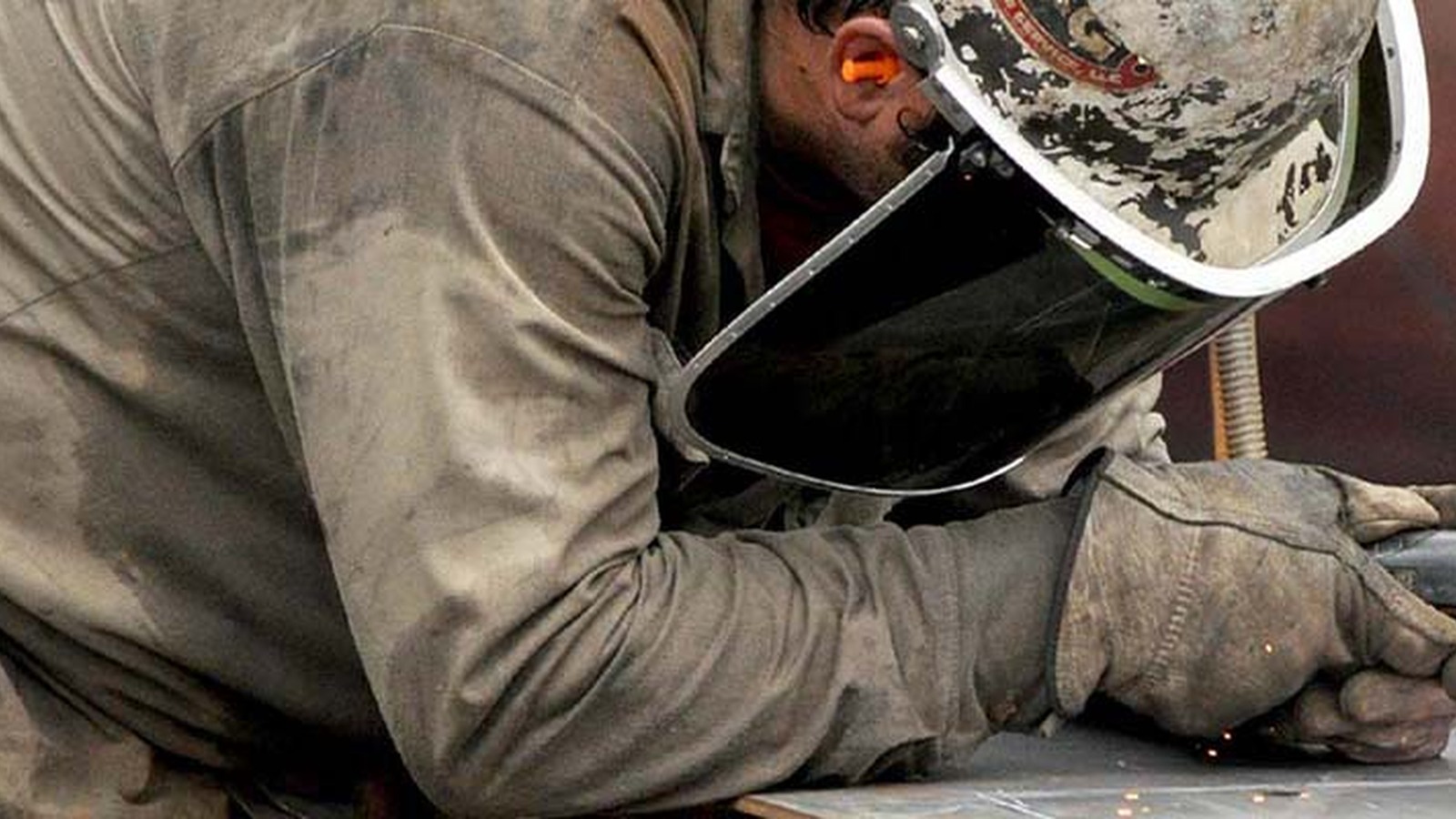
Federal OSHA and state workplace-safety programs expected to have about 1,720 inspectors covering 144 million workers in 2026. That works out to roughly one inspector for every 84,000 workers.
The ratio is a warning about scale, not an inspection schedule. Inspectors do not visit every worker, workplaces differ in risk and state plans carry a large share of enforcement. OSHA also responds to fatalities, severe injuries, complaints and referrals while running programmed inspections aimed at hazards and industries.
Still, the denominator is enormous. The Department of Labor's inspector general identified limited inspection resources as a continuing management challenge, while OSHA's fiscal 2026 plan anticipated about 24,929 federal inspections. Even if every inspection reached a different establishment, federal inspectors could physically visit only a small fraction of covered workplaces in a year.
The policy question is not whether every workplace should receive an annual visit. It is whether federal and state programs have enough trained safety and health professionals to target the right establishments, respond to urgent reports and enforce standards across a growing and changing economy.
The 84,000 ratio combines two enforcement systems
The Occupational Safety and Health Act permits states to operate approved occupational-safety and health programs. Federal OSHA directly enforces in states without a state plan and retains roles in all states. State plans cover private-sector workers in many jurisdictions and state or local government workers in others.
The Labor Department inspector general's 2026 management-challenges report combined federal and state-plan inspectors to calculate the national ratio: approximately 1,720 inspectors and 144 million covered workers.

That combined figure should not be described as 1,720 federal OSHA inspectors. Nor should the 144 million be treated as a list of workers each inspector is personally assigned. It is a contextual workload ratio across two connected systems.
State-plan expansion and staffing changes can alter the federal-state mix without changing national coverage. A sound time series therefore reports federal compliance officers and state-plan inspectors separately before showing the combined total.
An inspection is a targeted intervention, not a census
OSHA prioritizes imminent dangers, catastrophes and fatalities, worker complaints and referrals. It also conducts programmed inspections under national, regional and local emphasis programs. Health inspections may address exposures that require sampling and specialist analysis; safety inspections can focus on physical hazards and work practices.
The fiscal 2026 budget plan projected 24,929 federal inspections. That number is an operating target, not the total including state-plan inspections. It also does not describe complexity. One case may involve a focused complaint, while another covers a fatality, multiple contractors or a long health investigation.
Workers per inspector and establishments per inspector provide scale but not productivity. A low ratio does not guarantee effective targeting, and a high ratio does not show how many hazards were missed. Inspection outcomes, timeliness, hazard correction and repeat violations are needed alongside volume.
Fatalities and severe-injury reports are similarly important workload signals, but they cannot be used to claim that inspector staffing caused national injury trends. Employment mix, reporting, hazards, employer practices and economic cycles all change at the same time.
The covered federal OSHA workforce contracted
FederalHiringData's calculation from OPM monthly employment files shows covered OSHA employment declining from 2,157 in January 2015 to 1,488 in June 2026, a 31% reduction. From December 2024 alone, the decline was 363 employees, or 19.6%.

That is the entire covered OSHA organization, not a count of front-line compliance safety and health officers. It includes managers, attorneys, analysts, technical specialists, whistleblower staff and administrative support. State-plan employees are outside the federal OPM total.
The decline nevertheless matters to capacity. Inspectors need legal, laboratory, data, training and administrative support. A shrinking agency can preserve front-line positions while losing support, or lose inspectors while total support remains. Only occupation- and function-level reporting can distinguish those outcomes.
The combined 1,720 inspector estimate and the 1,488 federal agency headcount should never be compared as if they describe the same people. One includes state inspectors and isolates inspection personnel; the other covers the federal organization.
Recruiting centered on safety and industrial hygiene
The FederalHiringData historical USAJOBS archive contains 2,657 distinct announcements matched to OSHA from August 2017 through Aug. 14, 2026. Safety and occupational health management led with 924 announcements. Industrial hygiene accounted for 581, safety engineering 181 and general investigation 144.

The occupational mix reflects the dual mission. Safety specialists may assess machines, fall protection or construction conditions. Industrial hygienists evaluate chemical, biological and physical exposures that can require sampling and technical interpretation. Engineers and investigators support specialized cases.
Agency-wide announcement counts reached 555 in 2019 and 524 in 2022, then fell to 87 in 2023, 120 in 2024, 17 in 2025 and 41 in partial 2026 coverage. The sharp change may reflect hiring policy, standing announcements or organizational recruiting choices. It cannot be converted directly into inspector accessions.
Announcements can advertise multiple positions and locations, and recurring postings can represent persistent recruitment. A useful hiring audit would connect vacancy announcements to applications, selections, entry dates, training completion and retention.
Geography makes the national ratio incomplete
Workplace risk and inspector access vary widely. Construction sites open and close. Agriculture and maritime work have distinct jurisdictional rules. Chemical manufacturing may require specialized health expertise. Remote regions create travel time that a national worker ratio cannot capture.
Federal Hiring Data Weekly
Get the biggest federal workforce changes in your inbox.
Subscribe to Federal Hiring Data Weekly for federal hiring trends, salary data, agency movements, and original investigations, with email confirmation before delivery.
State plans also differ in size and industry mix. Some cover both private and public employment; others cover only public employees while federal OSHA handles the private sector. Comparing inspection totals without the corresponding covered universe would be misleading.
A geographic capacity analysis should report inspectors, covered workers, establishments and travel areas by federal region or state plan. It should also show vacancies and the share of inspectors qualified for health, process-safety or other technical work.
Retirement exposure matters because an experienced inspector cannot be replaced immediately. New compliance officers require training, supervised field work and familiarity with standards and evidence. Hiring counts should therefore be paired with time-to-qualification and attrition.
New methods can extend reach but not remove enforcement work
OSHA can use rapid-response investigations, employer submissions, outreach, data targeting and remote communication in appropriate circumstances. These tools can address reports without deploying an inspector in every case and can help focus limited field resources.
They are not interchangeable with on-site inspection. Some hazards require observation, measurements, employee interviews or physical evidence. The right mix depends on the allegation, workplace and legal requirements.
Technology can improve targeting if data are timely and complete. It can also reproduce reporting gaps: employers that do not report or workers who cannot safely complain may remain less visible. A performance system should track which cases receive on-site, remote or other responses and whether hazards are corrected.
The state-federal structure adds another coordination need. Comparable definitions make it possible to identify whether a lower field count reflects deliberate triage, staff shortages or a shift to another response method.
What adequate inspection capacity would show
The national ratio will remain large because OSHA is not designed to inspect every establishment every year. Adequacy would instead show up in response times for fatalities and complaints, completion of high-hazard programmed work, timely abatement, sustainable caseloads and enough specialists for complex health investigations.
OSHA and state plans should publish filled and vacant inspector positions, hires, separations, qualification status and inspection activity under consistent definitions. Federal and state totals should remain distinct. Establishment and worker coverage should be dated and aligned to the same jurisdiction.
The 1-to-84,000 figure is useful because it prevents the public from imagining universal physical coverage. It is dangerous if treated as proof that each inspector must somehow inspect 84,000 individual workers or that adding one inspector produces a predictable change in injuries.
For job seekers, safety, industrial hygiene and engineering remain specialized federal career paths. Historical announcements are not current vacancies. Readers can browse current jobs, explore occupations and compare federal hiring statistics.
Inspection capacity is ultimately a targeting system supported by people. The current numbers show that those people operate against a vast denominator while the covered federal agency workforce has become smaller.
Federal and state inspection totals answer different questions
Related research
Put this finding in context
Data investigationsAugust 19, 2026
Social Security Has 85% More Beneficiaries per Worker Than in 2000
Social Security added 25 million beneficiaries while losing 9,600 full-time permanent workers. Recent service gains show what technology changed—and what a thinner workforce still risks.
Data investigationsAugust 21, 2026
DOE Has an $8 Billion Cleanup Mission. Its Federal Oversight Workforce Fell to 856.
DOE's nuclear-cleanup office lost one-third of its federal staff in two years while engineering, contracting and safety-related vacancies widened.
Federal OSHA's planned 24,929 inspections are only one part of national enforcement. State plans conduct their own inspections under approved programs. Adding them can describe combined activity, but comparisons over time must account for changes in plan coverage, reporting and jurisdiction.
Programmed inspections target establishments or hazards using selection criteria. Unprogrammed inspections respond to events such as complaints, referrals, fatalities and catastrophes. A rising unprogrammed share can consume capacity even if the annual total is stable, because urgent or complex cases may displace planned work.
Safety and health inspections also have different resource demands. A safety inspection may identify visible fall, guarding or trench hazards. An industrial-hygiene case can require sampling, laboratory analysis and evaluation of exposure over time. Counting both as one inspection is valid for volume but not for hours or technical demand.
State programs should be compared with their own covered employment and establishment universes. Some states have large, dispersed workforces; others concentrate employment in fewer urban areas. Industry composition changes the risk profile. A single national ratio cannot allocate those differences.
Complaints and severe reports make capacity time-sensitive
Workers and representatives can file complaints, and employers must report certain fatalities, in-patient hospitalizations, amputations and losses of an eye. Those reports create decisions about whether to inspect, investigate through another method or refer work.
The operational measure is not only how many reports arrive. It is how quickly the program evaluates them, how consistently it applies triage rules and whether serious hazards are corrected. A backlog in complaint screening can matter even if the annual inspection count ultimately meets a target.
Rapid-response methods can ask an employer to investigate and document correction without an immediate site visit. That can extend reach when the allegation is suitable. It also places importance on verification and follow-up. Public reporting should distinguish that response from a completed on-site inspection.
Workforce composition is part of the enforcement model
The USAJOBS archive shows safety and occupational health management plus industrial hygiene accounting for most specialized OSHA recruiting. Those occupations are complements. Safety expertise cannot fully substitute for exposure science, and a technical inspection still needs legal and administrative follow-through.
Experience shapes case quality. Inspectors learn interviewing, evidence preservation, standard application and industry processes over time. Supervisors and senior specialists review difficult cases and train newer staff. A headcount held flat by entry-level hiring may still carry less effective capacity after experienced separations.
The most useful staffing report would therefore include filled and vacant positions, occupation, grade, tenure, training status and geographic assignment. It should show state-plan personnel under comparable fields while preserving their separate employers and authorities.
Vacancy duration is another useful measure. A position that remains open for months can reduce geographic or technical coverage even when a national authorized total is unchanged. Reporting time-to-fill and training completion would expose that lag.
Methodology and limitations
The combined inspector, worker and workers-per-inspector figures come from the Labor Department Office of Inspector General's 2026 Top Management and Performance Challenges. The federal inspection plan comes from OSHA's fiscal 2026 budget material. The report's federal and state universes are kept separate.
FederalHiringData calculated monthly covered OSHA employment from OPM Federal Workforce Data from January 2015 through June 2026. This is an agency-wide federal count, not a count of inspectors, and it excludes state-plan personnel.
We counted distinct historical USAJOBS control numbers matched to OSHA from Aug. 29, 2017 through Aug. 14, 2026. Announcements may cover multiple vacancies, repeat or close without a hire. They are recruiting signals, not staffing or inspection totals. The 2026 archive is partial.
No causal link is drawn between staffing and injury or fatality trends. Readers can browse current safety jobs, review occupational series, compare agency hiring and read more FederalHiringData investigations.
Continue reading
More from FederalHiringData
Data investigationsAugust 20, 2026
OPM Says 7% of Federal Workers Are Early Career. Its 33% Hiring Target Counts Something Else.
Under-30 hires already topped one-third of external federal hiring in fiscal 2024 and 2025, but OPM's new target uses a broader unpublished numerator.

Data investigationsAugust 21, 2026
VHA's Federal Workforce Fell by 28,342. Its Care Forecast Kept Rising.
VA's health workforce contracted after late 2024 even as patient, visit and community-care demands remained large. The losses reached clinical and coordinating roles.
Data investigationsAugust 21, 2026
National Park Visits Rose 13%. September Staffing Fell 17%.
The park system still builds a summer workforce, but same-month OPM data show a thinner permanent base beneath 323 million annual visits.
Federal Hiring Data Weekly
Get the biggest federal workforce changes in your inbox.
Subscribe to Federal Hiring Data Weekly for federal hiring trends, salary data, agency movements, and original investigations, with email confirmation before delivery.