August 23, 2026
FAA's Aviation-Weather Network Was Designed for 90 Meteorologists. Staffing Fell to 69.
The last verified federal count found 69 meteorologists in a 90-position aviation-weather design. Public records show recruiting in 2026, but not a verified recovery.
By Evan Mercer
Published August 23, 2026Last edited August 23, 2026
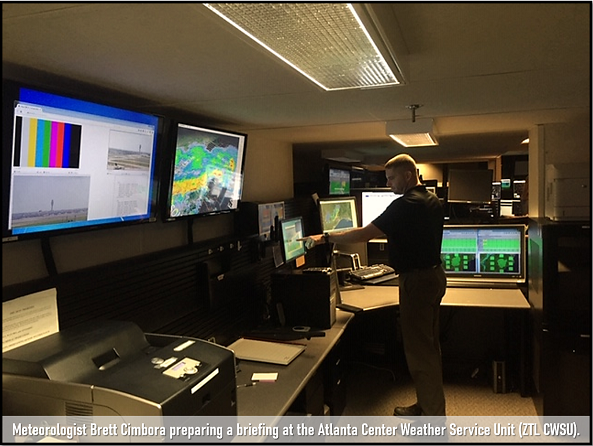
In June 2025, the federal weather network embedded inside the nation's busiest air-traffic facilities was operating with 69 active meteorologists. Its 2016 staffing design called for 90.
At the Oakland Center Weather Service Unit, one National Weather Service meteorologist was active in a unit designed around four. Boston, Houston, Jacksonville and Washington each had two. Five units lacked a meteorologist in charge. The Air Traffic Control System Command Center had four active meteorologists against a six-position design.
Those are the latest center-by-center figures the public record supports. They come from a Government Accountability Office review completed in 2025. GAO still listed its recommendation for a joint FAA-NWS staffing assessment as open in June 2026.
There are signs of rebuilding. Commerce told GAO that the Weather Service had recently hired two CWSU meteorologists in August 2025. Three CWSU-specific announcements in the FederalHiringData USAJOBS archive recruited at nine duty locations in January 2026. Broader NOAA personnel data shows meteorologist accessions outnumbering separations during the first half of 2026.
None of that establishes a current CWSU total. The most defensible 2026 conclusion is that the aviation-weather workforce entered a rebuilding period without a public accounting of whether the 21-center network had recovered, what staffing level FAA and NWS ultimately agreed to fund, or whether a proposed 64-person service model was put into effect.
A 90-position design that never reached 90
Center Weather Service Units put NWS meteorologists inside the Federal Aviation Administration's 21 air route traffic control centers. Their job is not to direct aircraft. It is to translate forecasts, radar, turbulence, icing and convective weather into briefings and decision support tailored to a center's airspace.
The arrangement grew out of aviation-weather reforms after a fatal 1977 weather-related crash. A 1983 plan called for four meteorologists at each center. The 2016 interagency agreement retained that center staffing design and added six positions at the national Command Center, for 90 total.
The network did not actually employ 90 people in the recent period GAO reviewed. It averaged about 81 active meteorologists from 2019 through 2024. FAA then capped reimbursable staffing at 81 for fiscal 2025. By June 2025, the active count had fallen to 69: 65 across the CWSUs and four at the Command Center.
| Aviation-weather staffing measure | Meteorologists | What the number means |
|---|---|---|
| 2016 agreement design | 90 | Four at each CWSU plus six at the Command Center |
| 2019-2024 active average | 81 | Average observed staffing, not the design total |
| Fiscal 2025 cap | 81 | Maximum FAA-funded positions for the year |
| June 2025 active | 69 | Latest verified network total located for this analysis |
| Fiscal 2026+ concept | 64 | Prospective model described to GAO, not confirmed as implemented |

The 64-person figure needs particular care. During GAO's review, the Transportation Department described a possible model that would place meteorologists at strategic field-support locations rather than preserve the existing staffing pattern at every center. GAO warned that FAA and NWS had not completed the operational analysis needed to understand the risks. Public records reviewed for this article do not show that the model became the final fiscal 2026 agreement.
The shortage was uneven across the country
A national total can hide which facilities have the least local coverage. In June 2025, eight CWSUs had the designed four active meteorologists, and eight had three. Four had two. Oakland had one.

The five meteorologist-in-charge vacancies were at Boston, Fort Worth, Jacksonville, Oakland and Washington. A leadership vacancy does not mean no forecasting occurred, but it adds a management gap to an already thin operating roster.

FAA's January 2026 air-traffic order still described an interagency agreement assigning NWS meteorologists to the Command Center and each air route traffic control center. It also described a typical 16-hour CWSU day that could be extended when weather required. That operating structure makes the distribution important: a three-person unit is not simply one-fourth less staffed than a four-person unit if leave, training or a severe-weather event concentrates the work.
Remote backup preserves service, but it is not identical
The aviation-weather system has redundancy. Another CWSU or a national weather desk can provide support when a local unit is short or unavailable. FAA also has traffic managers, controllers and weather tools outside the CWSUs.
GAO found a practical limit to treating remote coverage as interchangeable. Backup meteorologists may not have the same familiarity with local airspace, recurring weather patterns and center procedures. They may also lack access to specialized systems available inside the supported facility. Remote backup is a safety and continuity measure; it is not proof that local capacity no longer matters.
The counterevidence is important. FAA told GAO that 81 funded positions were sufficient and said it had not identified safety or preparedness concerns caused by the lower staffing level. Four small or cargo airlines and a pilots' association interviewed by GAO said they had not encountered a direct problem tied to CWSU staffing. Those interviews were not representative of the entire industry, but they argue against claiming that every vacancy produced an operational failure.
The evidence therefore supports a capacity question, not a safety verdict. FAA manages more than 45,000 flights on a typical day, and weather is a major source of disruption. The agency reports that weather caused 74.26% of system-impacting delays longer than 15 minutes from June 2017 through May 2023. That historical delay share does not show that CWSU staffing caused a delay, and it should not be used that way.
Federal Hiring Data Weekly
Get the biggest federal workforce changes in your inbox.
Subscribe to Federal Hiring Data Weekly for federal hiring trends, salary data, agency movements, and original investigations, with email confirmation before delivery.
The broader meteorologist workforce contracted sharply
CWSU staffing cannot be reconstructed from government-wide personnel files. OPM data identifies employees by agency and occupational series, not by the FAA facility they support. It can, however, show the labor pool around the embedded aviation subset.
FederalHiringData counted 2,377 NOAA employees in occupational series 1340, Meteorology, in January 2025. The count was 2,158 in June 2026, down 219 or 9.2%. The selected annual series reached its low point at 2,143 in January 2026 before rising modestly by June.

This is a NOAA-wide measure. It includes Weather Service meteorologists outside CWSUs and should not be presented as an aviation-staffing trend. It does show that attempts to rebuild the small FAA-support network took place inside a larger occupation that had just lost substantial headcount.
Personnel actions sharpen that context. NOAA series 1340 recorded 30 accessions and 277 separations in calendar 2025. Fifty-seven of the separations carried a deferred-resignation-program indicator in the OPM file. During January through June 2026, the pattern reversed: 87 accessions and 49 separations, for a net gain of 38.

The 2026 gain is real within the broader series, but it cannot answer the central CWSU question. It does not identify how many accessions joined an aviation unit, how many experienced forecasters transferred, or whether the five leadership vacancies were filled.
January recruiting reached nine CWSU locations
The historical USAJOBS archive provides the clearest public sign of targeted CWSU hiring after GAO's snapshot. Three announcements opened Jan. 16, 2026, all using direct-hire authority and closing Jan. 29.
| Archived announcement | Grade | Duty locations listed | Announced salary range |
|---|---|---|---|
| Supervisory Meteorologist, 854580500 | GS-13 | Fort Worth, Hilliard and Oakland | $106,437-$172,980 |
| Meteorologist, 854581100 | GS-12 | Auburn, Houston, Indianapolis, Miami and Palmdale | $90,234-$135,657 |
| Meteorologist, 854581600 | GS-12 | Anchorage | $101,206-$131,571 |
Related research
Put this finding in context

Data investigationsAugust 21, 2026
National Park Visits Rose 13%. September Staffing Fell 17%.
The park system still builds a summer workforce, but same-month OPM data show a thinner permanent base beneath 323 million annual visits.
Data investigationsAugust 18, 2026
FEMA's Public Workforce Count Fell 22% as GAO Warned of Readiness Risks
FEMA had 5,793 fewer covered civilian employees in June 2026 than in January 2025. GAO says the agency cut staff without the workforce planning needed to assess mission capacity.
The nine locations are not nine confirmed vacancies. Only the Anchorage announcement stated a single opening. A multi-location announcement can create a pool from which an agency fills fewer positions than the number of locations listed. Nor does a closed announcement establish that a selection entered on duty.
The wider USAJOBS signal also changed abruptly. FederalHiringData found 476 distinct NOAA/NWS/Commerce series 1340 announcements opened in 2024, 48 in 2025 and 17 in 2026 through Aug. 14. Announcement counts measure recruiting events, not positions, applicants or hires, and the 2026 period is incomplete.

Together, the personnel and announcement records show a rebound attempt after a severe 2025 contraction. They do not show whether the rebound reached the facilities that GAO found most exposed.
The missing number is now the most important one
The federal response can be evaluated with a short scorecard. First, publish the current active count across the 21 CWSUs and Command Center. Second, disclose the staffing number and service design in the current FAA-NWS agreement. Third, show which centers have local coverage, leadership vacancies and remote-backup arrangements. Fourth, complete the joint risk assessment GAO requested.
Without that information, the public is left comparing a June 2025 roster, a proposed 64-person concept, two reported hires and three recruiting announcements. Those pieces describe movement, but not resolution.
The strongest current finding is not that the network is still at 69. It is that 69 remains the last verified network total even after GAO kept its recommendation open in June 2026. A workforce that provides localized weather judgment across the national airspace system should not require inference from old staffing charts and archived job notices to determine whether its coverage has recovered.
Methodology and limitations
FederalHiringData reviewed GAO-25-108597, including its center-level June 2025 staffing table, stakeholder evidence, remote-backup discussion and recommendation updates. The January 2026 operating structure comes from FAA Order JO 7210.3EE. The historical delay share comes from the FAA weather-delay FAQ and is labeled with the agency's June 2017-May 2023 period.
The OPM analysis filters NOAA agency subelement CM54 and occupational series 1340 in FedScope and Federal Workforce Data. September snapshots are used through 2024, with selected January, June and September observations in 2025-2026. Personnel actions use full calendar years through 2025 and January-June for 2026. These measures cover the broader NOAA meteorologist occupation, not only CWSUs.
USAJOBS counts use distinct archived control numbers with series 1340 and NOAA, NWS or Commerce identifiers. Announcements are not vacancies, applications, selections or hires. The archive is complete through Aug. 14, 2026 for the period discussed here. The three CWSU recruiting notices are reported separately from the wider series.
NWS's public CWSU overview says 84 meteorologists support the units, but the page does not provide an as-of date and conflicts with GAO's documented June 2025 count. This analysis uses the dated GAO figure and does not infer a later total. No final fiscal 2026 agreement staffing number or evidence that the proposed 64-person model was implemented was located.
The hero image shows meteorologist Brett Cimbora preparing a weather briefing at the Atlanta CWSU. It is a NOAA/National Weather Service image from the agency's CWSU overview. Explore current FAA jobs, meteorology announcements, federal workforce statistics, the related investigation of the FAA controller hiring pipeline, and more FederalHiringData research.
Continue reading
More from FederalHiringData
Data investigationsAugust 22, 2026
CBP Added 206 Northern Agent Positions. The Number of Agents Fell by 125.
CBP authorized a larger northern Border Patrol workforce, but onboard agents fell and support positions remained unfilled as one sector drove the 2024 encounter surge.
Data investigationsAugust 23, 2026
The Forest Service Set a 4-Billion-Board-Foot Timber Goal. Key Staff Fell 22%.
Timber sales rose 29% through June, but nine occupations needed to plan, contract and oversee forest projects had 1,445 fewer employees than in 2024.
Data investigationsAugust 21, 2026
DOE Has an $8 Billion Cleanup Mission. Its Federal Oversight Workforce Fell to 856.
DOE's nuclear-cleanup office lost one-third of its federal staff in two years while engineering, contracting and safety-related vacancies widened.
Federal Hiring Data Weekly
Get the biggest federal workforce changes in your inbox.
Subscribe to Federal Hiring Data Weekly for federal hiring trends, salary data, agency movements, and original investigations, with email confirmation before delivery.